
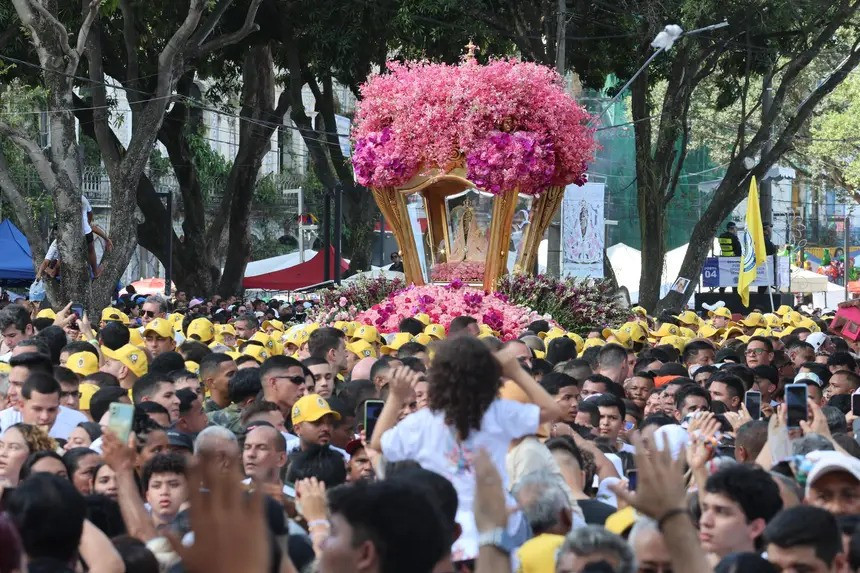
In Brazil, neopentecostalism has grown so rapidly over the past three decades that it could overtake the once-dominant Catholic Church by 2042. However, a Marian celebration continues to draw more than 2 million people to the streets of Belém, a city in the northern state of Pará.
The Círio de Nazaré (Nazareth Procession) traces its origins to a devotion that emerged in the Portuguese town of Nazaré in the 12th century. In Pará, however, the devotion has its own history.
It began around the year 1700, when a man named Plácido, still described today as a caboclo—a person of mixed Indigenous and European ancestry—is said to have found a wooden statue of Our Lady of Nazareth near a small stream on the outskirts of Belém. He took it home, but the statue later disappeared. The next day, he found it in the woods again. This happened repeatedly, until people came to believe they were witnessing a miracle.