In a recent pew research center survey of 25 countries, a single question drew widespread attention. “The United States,” Pew reported, “is the only place we surveyed where more adults (ages 18 and older) describe the morality and ethics of others living in the country as bad (53%) than as good (47%).”
Many of us will find this striking but not necessarily surprising. In his March 15 New York Times column, David French describes our present moment as “end-stage polarization.” His first sentence identifies Trump as the symptom, not the cause: “Does anyone think a healthy nation with a healthy political culture would elect a man like Donald Trump not once, but twice?” The issue, French continues, goes beyond the obvious moral divides about policy; it reflects the erosion of deeper shared values and of a sense of common humanity. The Pew study is a snapshot of a much deeper crisis. There is evil around us and in our midst. We do not know where this will lead.
Read our latest issue or browse back issues.
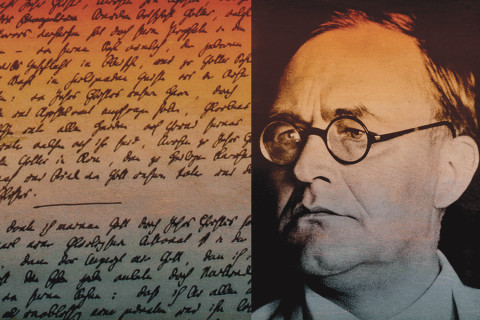
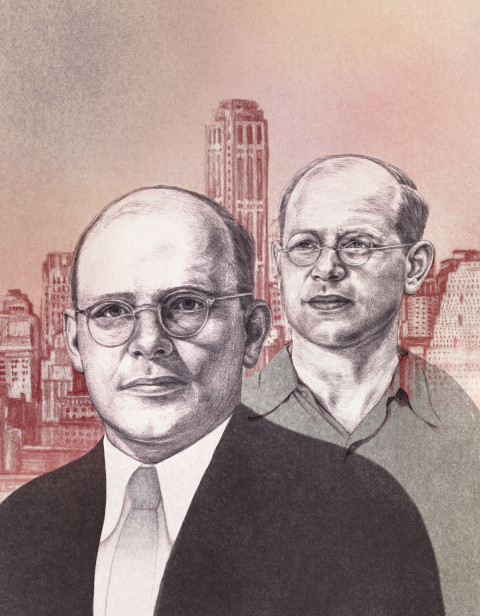
Such concerns are both subtext and context of Dietrich Bonhoeffer’s essay “Protestantism Without Reformation,” written in 1939 in New York. His comparison of the US and German church landscapes is often read in conjunction with his remarks about American Christianity during his earlier period at Union Theological Seminary (1930–1931), including his scathing pronouncement that “there is no theology here.” In his 2010 biography, for example, Eric Metaxas writes that Bonhoeffer “equated the [American] fundamentalists with the [German] Confessing Church. Here they were fighting against the corrupting influences of the theologians at Union and Riverside [Church], and at home the fight was against the Reich church” (see review in the October 19, 2010, issue).
As a general editor of the English edition of the Dietrich Bonhoeffer Works series, I came across multiple quotes that similarly lament the state of theology in both countries. In fact, from the 1920s on, Bonhoeffer seems to have bemoaned the lack of theological substance wherever he went. Writing to theologian Paul Lehmann after his return to Berlin in 1931, Bonhoeffer observed that “at the present time the type of students studying theology is quite disappointing. All other professions are more than full and this leads many to theology today who should not touch it.” One year later, he groused to Erwin Sutz that in Berlin “there is almost no one with whom one can talk reasonably about theology.” A 1936 letter to Karl Barth described his Finkenwalde seminarians as “empty both with regard to theological knowledge and certainly with regard to familiarity with the Bible.”
But two people who knew Bonhoeffer well in 1931 and 1939 tell a different story. In a 1961 comment on Hans Hillerbrand’s article “Dietrich Bonhoeffer in America,” Lehmann—who became Bonhoeffer’s close friend at Union—argues that “Bonhoeffer was not an unyielding and unrelieved critic of what he found at the Seminary” and says that Bonhoeffer’s words had been taken out of context. And Felix Gilbert, a childhood friend, was struck by Bonhoeffer’s enthusiastic account of his experiences at the seminary and in American churches, particularly around the social gospel.
By the time Bonhoeffer returned to New York in 1939, he had been sobered by the German Protestant experience under the Nazi dictatorship. On the surface, “Protestantism Without Reformation” is a scholarly comparison of the European churches that emerged from the Reformation with the US denominational and free church system. A crucial difference is the creed shared by Reformed, Lutheran, and United traditions in the German church and the absence of such a unifying creed among American churches. As Bonhoeffer notes, these different church systems led to very different understandings of religious freedom. Neither system, he observes, prevents the misuse of religion by political leaders or ideologically driven factions within the church.
Bonhoeffer had witnessed the catastrophic consequences of this in Germany. In 1933, the heresies of the pro-Nazi “German Christians”—and their attempt to create a church law conforming to the April 1933 state racial laws—launched the Kirchenkampf (church struggle), leading to the May 1934 Synod of Barmen. From the very beginning, the church opposition to the German Christians included the most politically diverse group imaginable, ranging from Swiss theologian Karl Barth (who accused them of heresy) to decorated war hero and pastor Martin Niemöller (who had voted for the Nazis in November 1932) to Berlin ecumenist Theodor Heckel (who, in 1933, was among the founders of the Young Reformation movement to which Bonhoeffer belonged, but who increasingly aligned himself with the church government and in 1935 warned the Gestapo to watch Bonhoeffer).
The Barmen synod was attended by delegates from 26 of the 28 regional churches. Those delegates included German Christians and Nazi Party members (such as Stephanie von Mackensen, who became Bonhoeffer’s stalwart supporter in the Pomeranian Confessing Church). Written by Karl Barth and based upon the core tenets of Reformation creeds, the Barmen Declaration of Faith drew clear lines between Christian doctrine and German Christian heresies—and it was unanimously approved. The deep political divisions among the delegates were momentarily bridged because most Protestant leaders wanted to retain institutional control of their church and feared the most extremist German Christians. In October 1934, Adolf Hitler abandoned his goal of a state-controlled church, distanced himself from the German Christians, and warned clergy and bishops not to engage in political opposition. In 1945 German Protestant and Catholic church leaders could truthfully tell Allied military authorities that they were the only institutions to avoid state control.
But the result was a German Protestant Church—representing two-thirds of the German population—that included everyone from the German Christians to people like Bonhoeffer. It was led by church president Friedrich Werner, a comparatively moderate German Christian who managed to bring the most conservative Lutherans on board and to marginalize the more radical wing of the Confessing Church, the “Dahlemites,” who sought to break from the official church. (In 1935 Niemöller argued that the real threat to the Confessing Church came “from the middle,” from church leaders who were willing to compromise with the Nazi state for the sake of church unity.) After the October 1934 Dahlem synod, Bonhoeffer called for the Confessing Church to break away, and he was alone in demanding that international churches recognize the Confessing Church as the only true church in Germany. Though he lost both battles, he never stopped defending Barmen and the Confessing Church.
The German churches had a common creed; the US churches had the First Amendment. Neither system, notes Bonhoeffer, prevents politicians or church factions from misusing religion.
The American Protestant landscape of that day was no less politically fraught. There has never been a unifying shared creed or church polity across the broad spectrum of American Protestantism. Instead, there is the common ground created by the First Amendment to the US Constitution, which protects the rights of all religious groups. That common ground has been the foundation of interreligious and interdenominational relations in this country, but it precludes the line that was drawn so decisively at Barmen: the clear theological distinctions between state authority and that of the church (though Barmen’s aftermath illustrates how messy such distinctions, even decisively drawn, can be).
As Bonhoeffer notes in his 1939 essay, this also means that American moral battles spill into the public square. A historical look at the United States in the early 20th century confirms his point: The fundamentalism wars, the rise in anti-immigration sentiment and isolationism, the resurgence of the Ku Klux Klan, and the alarming growth of anti-Catholicism and antisemitism are a few examples. In 1941 the American Council on Public Affairs published a study titled Organized Anti-Semitism in America: The Rise of Group Prejudice During the Decade 1930-40, which decried “the growth of fascism in the United States.” That report documented the activities of organizations like the Christian Front, the Defenders of the Christian Faith, and the Crusader White Shirts.
Emphasizing their shared democratic values, mainline Protestant, Catholic, and Jewish organizations mobilized against this religious extremism. Everett Clinchy, the first director of the National Conference of Christians and Jews (founded in 1927), didn’t even like to use the word religious. The NCCJ “trio tours” (featuring a Catholic priest, a Protestant minister, and a rabbi) steered clear of theology, focusing instead on building moral consensus among different faith communities. Despite this approach, the NCCJ increasingly became divided by the differing political concerns of its membership. American Jews wanted a stronger condemnation of Nazi antisemitic policies. American Catholics sided largely with General Franco’s Nationalists in the Spanish Civil War, while Jews and Protestants sided with the Popular Front. There were contentious debates among mainline Protestants about potential US involvement in another European war.
In 1939, German Protestantism was confronting the limits of what a common confession can offer when dealing with a totalitarian state. The theological common ground established at Barmen had shattered under the political pressures of National Socialism. In the United States, Protestants (and, on the interfaith front, their Jewish and Catholic partners) were hitting the limits of what common ground in the public sphere could offer.
Bonhoeffer’s essay goes into exhaustive detail about theological self-understandings on either side of the Atlantic, but his ultimate concern is the Christian understanding of religious freedom in 1939 and its implications for church and faith. The challenges to true freedom were different in Nazi Germany than in the cacophony of US Christianity, but both had real-world consequences, requiring a new level of clarity and decision.
While the essay can be read purely as a scholarly deep dive, it reflects the urgency of that moment and Bonhoeffer’s fears for the future of his church. Bonhoeffer and his brother Karl Friedrich arrived in the United States on June 12, 1939, and departed together 24 days later. Karl Friedrich, an internationally renowned physicist and chemist, was considering a position at the University of Chicago. He had tried to leave Nazi Germany in 1933, applying unsuccessfully to the Emergency Committee in Aid of Displaced Foreign Scholars. By 1939, he had been nominated three times for the Nobel Prize (ultimately he would be nominated six times). He was already being pressured to join the Nazi nuclear project that had begun that April.
Their sense of urgency was shared by Bonhoeffer’s ecumenical colleagues in New York. Henry Leiper, the Federal Council of Churches European liaison who invited him, had fought throughout the 1930s to change US immigration laws. But even after the 1938 pogroms, 71 percent of Americans objected to accepting German Jewish refugees. Leiper and other religious leaders lobbied in 1939 for the Wagner-Rogers Bill, which would have allowed 10,000 Jewish children to enter the United States. It didn’t even make it out of committee. The Bonhoeffer brothers’ ship from Southampton would have passed, at great distance, the MS St. Louis and its Jewish passengers, who were returning to Europe, having been denied entry into the United States. The antisemitism and anti-immigration sentiment that led to that tragedy intersected with growing isolationism, especially among mainline Protestants. Bonhoeffer’s childhood friend Gilbert recalled that in 1939 Bonhoeffer was “astonished” to hear of American reluctance to get involved in the imminent war.
Bonhoeffer spent those weeks praying, struggling with his conscience—and writing “Protestantism Without Reformation.” It is striking what he didn’t do. Leiper had organized a committee of seminarians from Union and Jewish Theological Seminary to mobilize around refugee issues. There is no evidence that Bonhoeffer met with them. Nor does he seem to have returned to Abyssinian Baptist Church in Harlem. He met Gilbert one evening for dinner, and the two old friends spent the entire night walking the streets “rather endlessly,” as Gilbert recalled, discussing whether Bonhoeffer should return to Nazi Germany. (Gilbert left Germany as a Jewish refugee in 1933, later becoming a renowned European historian at Princeton.) Lehmann later pondered whether Bonhoeffer “was trying to gain time for himself in order to gain the kind of perspective upon events in Germany. . . . America seemed to him the only viable haven of time and perspective.”
While Bonhoeffer was trying to discern the right decision in that moment, the essay’s deeper questions are those he wrestled with throughout his adult life: How does our lived Christian faith empower the life of the church in the world? How do we follow Christ in a way that meets our present moment but also offers a foundation for future generations? How do Christians follow their Lord, as he wrote to his friend Eberhard Bethge on July 21, 1944, “living fully in the midst of life’s tasks, questions, successes and failures, experiences, and perplexities—[taking] seriously no longer one’s own sufferings but rather the suffering of God in the world”?
Bonhoeffer’s essay underscores the contradictory forces within the Christian church: its vibrant existence in a wide range of cultures and systems and its immense internal diversity. Ultimately, faith is not the product of our capacity to find common ground over things we disagree about, nor can it flourish when it is grounded solely in a shared creed. Neither the priestly nor prophetic aspects of Christianity resolve this issue. The true freedom of the church lies elsewhere.
Rereading Lehmann’s 1961 comments about Bonhoeffer’s essay, I am struck by how weaponized Bonhoeffer has become in American Christianity—a symbol for political talking points rather than an insightful observer of the church in a particularly haunting moment. French’s New York Times column concludes with similar reflections. As French notes, some of the most politically transformative religious thinkers are those who manage to speak to that divine spark in circles beyond their own. The writings of Martin Luther King Jr., Howard Thurman, Abraham Heschel, Dorothy Day, and Mahatma Gandhi transcend their religious traditions and their politics. In fact, only when one speaks from that deeper place and to that deeper place in another person can such transformation—and a different path into the future—occur. For me, this 1939 essay marks such an attempt by Bonhoeffer.
For obvious reasons, we often interpret Bonhoeffer’s return to Nazi Germany in 1939 as a move toward resistance. But he returned primarily for the sake of his family, his church, and especially his seminarians. From the beginning of his theological work, he understood the church as the embodied community in which we encounter Christ and do God’s work in a modern age. Toward the end, he foresaw that it would need to take a new form, one in which Germans had been sobered by their complicity with evil.
Lehmann’s essay concludes:
Historical events in which one is oneself involved seem to elude responsible judgment. . . . There are always complexities which do not yield their true significance until long after the events. Theology and the American churches offer no exception to these difficulties. Nonetheless, it is also true that certain observers have a way of “discerning the signs of the times,” a gift which makes them not merely reporters but interpreters as well. Bonhoeffer’s uniqueness as a theologian of increasingly formative power may be regarded as including this special gift of interpretation.
That, to Lehman, is “the substance of Bonhoeffer’s prophetic stewardship of his sojourn in America.”