

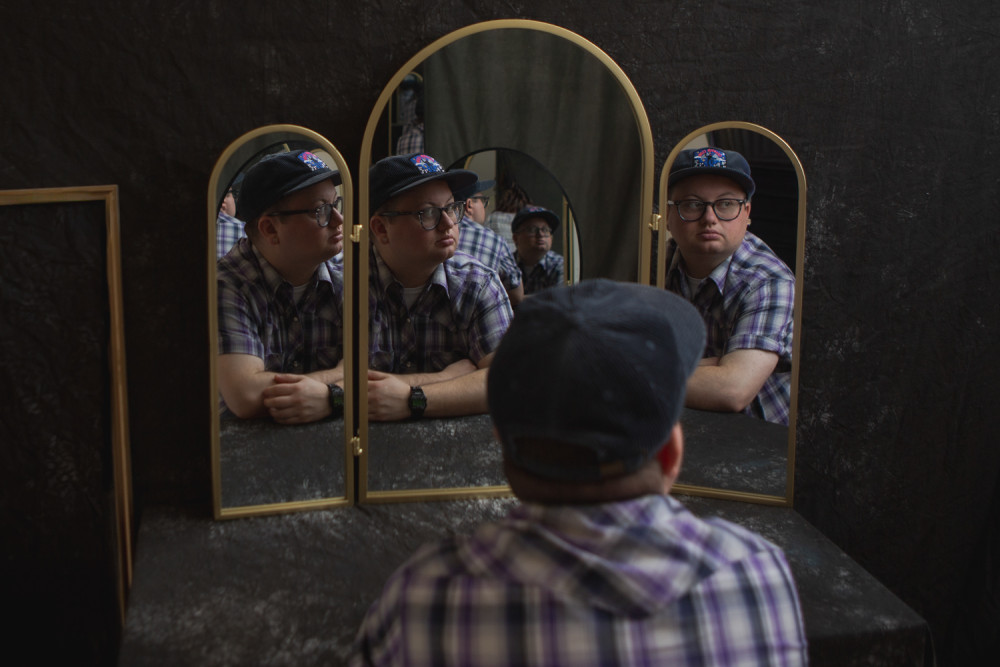
There are many arguments against God’s existence and many against the existence of transgender people, though the people making them tend to be different. As a trans man who transitioned while attending seminary, I am in the awkward minority of those who insist upon the existence of both. My tendency when I encounter either debate is to get defensive. Just look around you! I want to shout. But then I remember Thomas Aquinas.
In the Summa Theologica, Aquinas seeks to demonstrate the existence of God in five ways, each using known facts. His arguments range from the cause of motion to possibility and necessity to the design of nonconscious beings. But Aquinas’s work was not about debating atheists. He was writing in 13th-century Europe, where his readers were a bunch of other monks and friars. God’s existence was assumed as axiomatic—therefore, none of Aquinas’s five ways is watertight as a formal proof. Nor does he claim that they are original arguments; he borrows freely from Aristotle and others from antiquity. I point this out not because I’m concerned that the contemporary reader will misunderstand the five ways as an apologetic, but because I don’t want to be misread as an apologist myself.
Try as I might, I have a hard time imagining my readers as being anything but cisgender. In a women’s studies class in college I learned about the female gaze, an effort by feminists writers and filmmakers to describe themselves and the world as they experience them rather than through the norms and expectations of men. Women must consciously construct the female gaze in a patriarchal culture; the ability to interpret their lives from their own perspectives is a learned skill. So, too, I am attempting to cultivate my own transgender gaze.