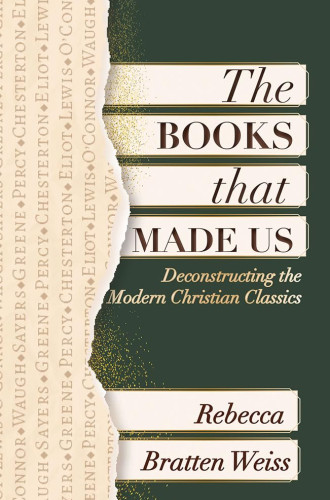
The Books That Made Us
Deconstructing the Modern Christian Classics
In her new book, Rebecca Bratten Weiss takes on the literary legacies of major authors now considered royalty in the hallowed halls of the Catholic imagination. Among them are G. K. Chesterton, T. S. Eliot, Dorothy Sayers, Evelyn Waugh, Graham Greene, C. S. Lewis, J. R. R. Tolkien, Flannery O’Connor, and Walker Percy.
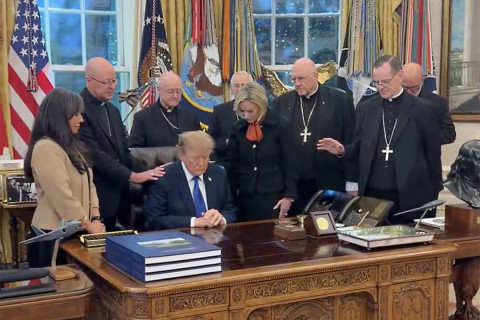
A lot has been made of the Catholic imagination, from Andrew Greeley’s 2001 book on the subject to the Future of the Catholic Imagination conference held biennially since 2015. But it’s Walter Brueggemann’s The Prophetic Imagination that may best describe Bratten Weiss’s accomplishment in The Books That Made Us. Brueggemann writes that the prophetic imagination envisions a possible world in which justice, compassion, and freedom oppose the regime of the “royal consciousness,” the systemic powers that damn the present to a denial of both its own necessary death and the new life that could spring from its demise. Brueggemann critiqued this “royal consciousness” in 1978, in a post-Nixon America. Bratten Weiss—in her own way, on her own terms—performs a similar critique of the Catholic intellectual tradition, showing the ways in which that tradition, in order to gain political power, has sold itself out to the MAGA movement under Trump.
Bratten Weiss tells of her reaction to Trump’s arrival on the political scene in 2016. At the time, she considered herself pro-life, to the point of feeling “pressured to vote for the Republican candidate because of the abortion issue,” but she couldn’t see Trump, with his reputation and rhetoric, as “a viable pro-life option.” By 2020, during the COVID-19 pandemic, Bratten Weiss had begun to deconstruct her faith: to examine things like her tradition’s obsession with “Disney princess theology,” described by Erna Kim Hackett as a worldview in which Christians always see themselves as the princess in the story, never the antagonist or villain.