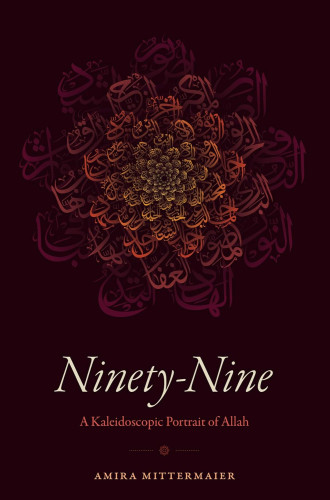
Ninety-Nine
A Kaleidoscopic Portrait of Allah
One morning in Agouza, Egypt, near Cairo, Amira Mittermaier passes an older woman selling flatbread from small plastic bags. She hears the woman utter two words, yā Karīm, O Generous One, and turns around. No one else is there, and the woman is not addressing her. She is addressing God. Perhaps also herself, standing in the heat, calling on generosity in a life that has not offered her much of it.
Mittermaier writes the scene up in her field notes that evening. She wonders whether she had any business listening at all. “Maybe that form of God-talk is none of my business. Maybe all those utterances and prayers are not for me to eavesdrop on.” She decides, at the least, to buy bread from the woman the next morning. The next morning, the woman is gone. “People disappear into Cairo’s dense urban fabric. God’s traces remain.”
That scene, early in Ninety-Nine: A Kaleidoscopic Portrait of Allah, holds almost the whole book in miniature. A prayer addressed to no human listener and an anthropologist who cannot decide whether to witness or withdraw. A figure who vanishes, leaving only a trace of what was addressed. The book, made up of 99 short chapters drawn from more than 100 conversations the author had with Egyptians about who God is to them, proceeds by accumulating such traces rather than by pinning anything down. The number in the title is significant. In Islamic tradition the names of God are conventionally counted as 99, but the classical list is contested; some traditions say there are 3,000, of which 1,000 were given only to the angels. Ninety-nine points beyond counting, toward the more.