Online Columnists

Why do Christians support internment camps?

The answer seems to be about race, according to new polling.

A poll from the Public Religion Research Institute has gained some notoriety recently for data that seemed to show American Christians “sour[ing]” on President Trump’s immigration policies. While that is certainly one part of the data, I was drawn to a more disturbing set of polls. When pollsters asked Americans whether undocumented immigrants ought to be held in “internment camps” until they can be deported, 41 perce of them said yes.

That’s a startling statistic, but it gets worse for those of us who care about the church. White evangelicals (63 percent), White Catholics (55 percent) , and White mainline Protestants (49 percent) were all more likely than the average American to say yes. It’s not as if all faith-based groups were so callous; Jews, Black mainline Protestants, and Hispanic Catholics and Protestants were all less likely to advocate for internment camps.

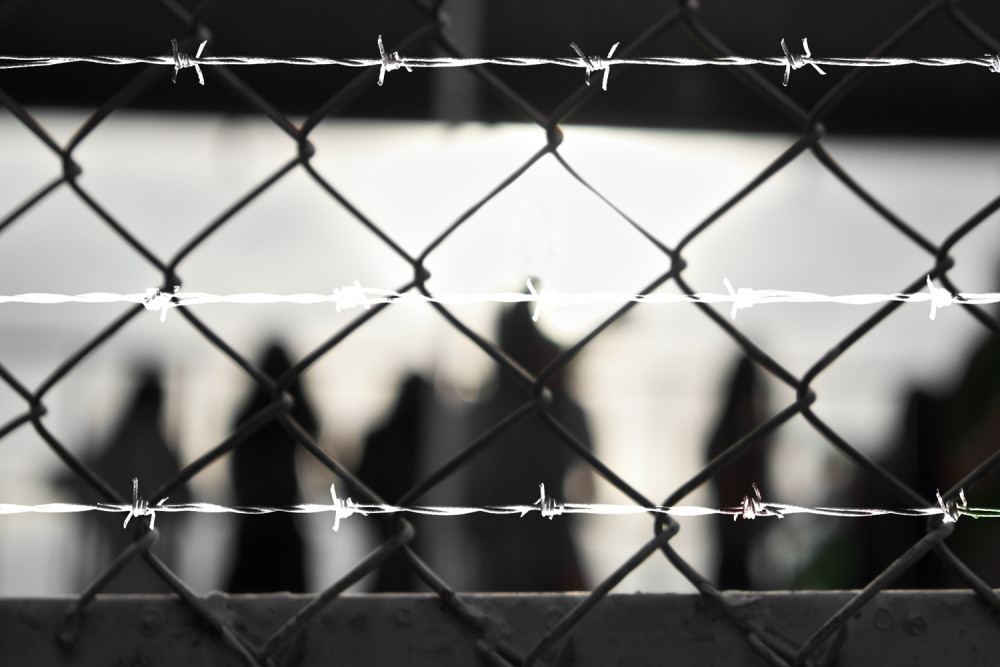
We shouldn’t read this poll as support for some future plan of action. The ICE detention facilities that dot our landscape in this country are internment camps. Our neighbors are held there without access to due process and in conditions that are tantamount to torture. In the Broadview ICE Processing Center, which I have worked to shut down, a federal judge compared the living conditions to Auschwitz. We are already using internment camps, no matter what name we use for them.
The use of internment camps for Japanese immigrants and Japanese Americans in WWII is widely admitted to be one of the bleakest moments for American democracy over the past hundred years. From 1942 to 1945 over 100,000 people of Japanese ancestry were held in facilities. They were systematically denied due process, had their property confiscated, were kept under guard in desolate areas, and became prisoners—all because of their ancestry.

What’s worse, a vast majority of Americans supported it at the time. In a 1942 poll, 93 percent of Americans favored internment camps for non-citizen Japanese residents in America, while 59 percent supported internment of Japanese-Americans. Only 1 percent opposed the internment of Japanese immigrants, and only 25 percent opposed the internment of Japanese Americans. It took decades, but hard work from activists affected by the civil rights abuses of the camps resulted in the Civil Liberties Act of 1988, which finally granted them reparations.

The long view of history often makes things clear that were not apparent in the moment. While the use of internment camps in 1942, from our viewpoint today, is clearly wrong, that historical lesson hasn’t been learned by our society or our churches. From the data, one of two things seems to be occurring: Either there is simply no teaching going on in churches that links scripture to the current regime of ICE cruelty, or there is teaching, and it’s being ignored.

It’s likely to be a mix of the two, and there is some data to support the latter option. Polling also shows that solid majorities of mainline Protestant clergy think that the church ought to address social issues, while congregants in those traditions are only half as likely as their clergy to think the same.

Perhaps the most consistent strain of thought in scripture centers on how we treat the “stranger.” Right from the start the Hebrew Bible invites us into a story that links how we treat strangers with how we treat God. The New Testament also offers a radical vision of what it means to welcome the stranger, one that harkens back to that first encounter in Genesis. Jesus tells us that how we treat the most vulnerable is how we treat him: “Truly I tell you, just as you did it to one of the least of these brothers and sisters of mine, you did it to me” (Matthew 25: 40). Literally, what we do or withhold from them is what we do or withhold from God. It is hard to get more explicit than that.

If worshipping a God who identifies with the vulnerable makes us more likely than the average American to support horrific treatment of immigrants, then something has gone horribly wrong. It seems obvious to me that racial identity is more important in these spaces than the Gospel.

That is a failure of discipleship. When the church speaks out forcefully on issues, it still has the ability to shape hearts and minds. In the 1940s, when most Americans were supportive of internment camps for Japanese Americans, the American Baptist Home Mission Societies and the American Friends Service Committee opposed those moves. They advocated for the people who were trapped there and provided ministry to them. They did not forget, and they did not look away.

That strikes me as just the sort of witness we need today, and many mainline and evangelical bodies are speaking out. But that message needs to make it to more local churches. The Christian tradition makes ethical demands of its adherents. By heeding them, we are being invited into God’s dream of the people that we could be.

The Americans who supported Japanese internment could not imagine their role in one of our country’s greatest moral failures. They believed they were taking reasonable action in response to a crisis. What seems clear to me is that people will look back on this era in the same way. We are in a moment of great historical significance. History might not repeat itself, but it often rhymes, and that rhyme is getting louder and louder. If the church is going to mean something, then the folks who are in our pews must hear that what we do to our immigrant neighbors and siblings is what we do to God.

Everything that matters flows from this all-important truth, and it’s not too late to grasp it.

Michael Woolf

Michael Woolf is an online columnist for the CENTURY, senior minister at Lake Street Church in Evanston, Illinois, and author of Confronting Islamophobia in the Church (Judson). 

All articles »