Online Columnists

What US veterans taught me about The Odyssey

Christopher Nolan joins Simone Weil in a long tradition of reading the poem as a condemnation of war in all times and places.

Over this past year, I helped lead a reading group on The Odyssey at the local Veterans’ Affairs office. Building on the psychiatrist Jonathan Shay’s books Odysseus in America and Achilles in Vietnam, the group is part of a program that gets veterans to reflect on Odysseus’s troubled homecoming as a way of processing their own.

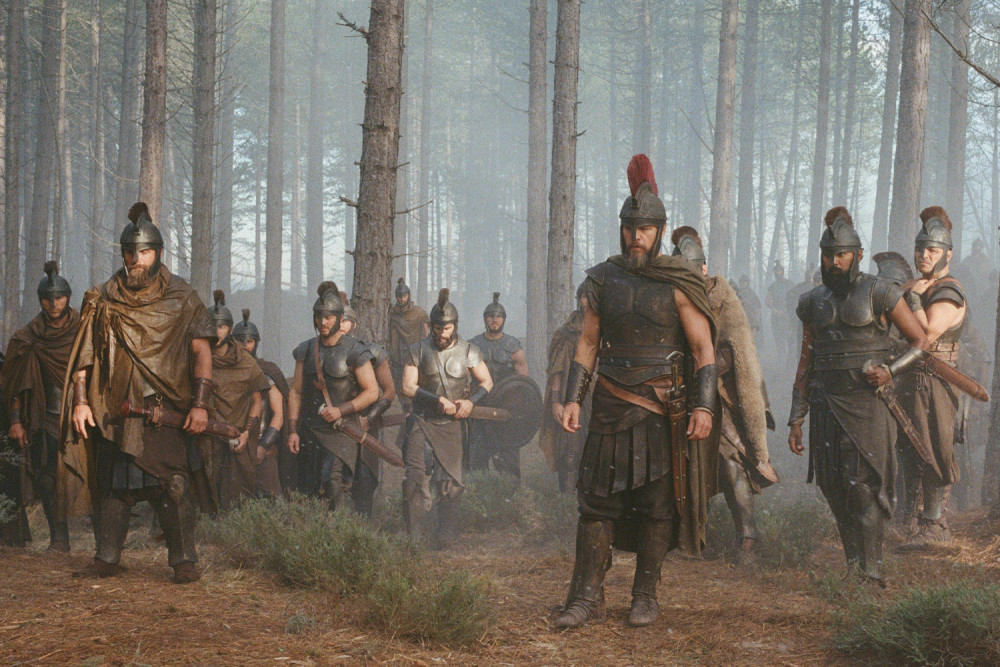
Serendipitously, Christopher Nolan’s film adaptation came out a few weeks after my reading group finished. For critics like Homer translator Emily Wilson, the movie fails as an adaptation because its “relentlessly didactic” antiwar message and anachronistic depiction of Odysseus as a guilt-ridden sufferer of PTSD are twenty-first century impositions on a nearly 3,000-year-old poem. But these were exactly the themes that the men in my group, coming to the text with no background knowledge but their own experience of war, saw in The Odyssey. These themes of guilt, civilizational bankruptcy, and opposition to war have also been picked up by readers of Homer from Euripides to Simone Weil. In Weil’s characteristically idiosyncratic reading, this is what marks Homer as having had an “intimation of Christianity” nearly a century before Christ. Despite its flaws, Nolan’s movie belongs to this long tradition of antiwar readings of Homer that stretches through Euripides, Weil, and the veterans in my reading group.

Where the movie fails as an adaptation of Homer isn’t its relentless antiwar message, but that its hostility to war, and its insistence that to wage war is at least as bad for the soul as to suffer war, aren’t relentless enough. Nolan is right that Homer has something to say to us about our own “civilization’s” moral bankruptcy and self-destructive spiral of warmaking. But he sells Homer short. A more authentically Homeric reading of our American present would be even more pessimistic about America’s past and future, and would welcome its collapse as perhaps the only path forward for humanity. And as Weil suggests, Christian theology can always learn more from returning to Homer and his treatment of war.


The veterans in my reading group quickly agreed on two things: They read the poem as Homer’s attempt to describe PTSD thousands of years before that concept would exist, and they did not like Odysseus. The two were related. They seemed to dislike Odysseus because he was too familiar, he was too close to the reasons they were at the VA in the first place. A veteran of a pointless, decade-long war, Odysseus had invaded a place on the other side of the world, inflicted and suffered horrific violence for no real reason, and seemed haunted both by having failed to bring his men home and by having killed in war (this is subtle in the poem, but it’s there, as when Odysseus hears a bard sing about the sack of Troy and then is said to “shriek” and weep “just like a woman would weep” whose city has been sacked).

What most affected the group about the poem is also Nolan’s preoccupation in the film—whether Odysseus even wants to, or ever really can, go home. But the veterans had a stronger reading of this than Nolan. Where the film has Odysseus remember his adventures with the cyclops and other monsters in quasi-therapy sessions with Calypso, in the poem these are stories he tells, and usually, when Odysseus is telling a story, he’s lying. The way my group saw it, it took Odysseus ten years to get home not because he kept getting attacked by monsters and roped into adventures but simply because he didn’t want to. After ten years at war, war had become his home. They knew of what they spoke. They were all at the VA because some part of themselves didn’t want to come home from war. The way they put it, after one has been in combat, only combat feels like real life, and the monotony of civilian life (going to work, paying the bills) feels like a charade. But they also all understood that what Odysseus struggles to learn is what they themselves were struggling to learn: War is the charade, the fantasy, the escape. The humdrum responsibilities of ordinary life are what’s real.

This idea, that war is an all-destroying evil that ensnares and degrades those who think they’ve “won” at least as much (and in fact a great deal more) than those who know they’ve lost, is famously Simone Weil’s reading in her essay on The Iliad, written from the depths of World War II. For Weil, Homer was divinely inspired and his poems reveal the same truth revealed by the gospels: God is “withdrawn from all contact with might.” Weil believed the Trojan War was a real historical event, one that left its mark forever on Greek culture. “Greek history,” she wrote, “began with an atrocious crime: the destruction of Troy.” What is unique about ancient Greek culture, at least Weil’s version of it, is that instead of mythologizing this conquest as a moment of founding glory, “the Greeks were haunted by the memory of it; that is, by remorse.” (I am convinced that Nolan has read Weil’s Intimations of Christianity among the Ancient Greeks.)

Remorse for the destruction of Troy wasn’t enough to prevent the Greeks from repeating their founding crime again and again. But Homer remained a well from which some Greeks could draw opposition to war and compassion for the day’s designated enemy. Euripides’s tragedies, written centuries after Homer when Athens was its own mighty empire destroying cities across the sea, dramatized the Trojan War from the perspective of its victims. And in Weil’s telling, the gospels themselves carried forward the Homeric spirit in a time of Roman hegemony, teaching that God is not the author of the world’s violence but the supreme sufferer of it, the lamb slain from the foundations of the world. For Euripides, Weil, and the veterans in my reading group, a relentlessly antiwar message and attention to the psychological disfigurements that come with inflicting violence on others aren’t anachronistic impositions on Homer but are right there on the page.

This reading of Homer as the great antiwar poet understands The Odyssey as speaking beyond its immediate context to condemn war in all times and places. Nolan clearly belongs in this lineage and wants to bring Homer to bear upon the dying American empire and the endless yet accelerating insanity of the War on Terror. But despite the movie’s heavy-handed message that destroying civilizations abroad will inevitably destroy civilization at home, it pulls back from Homer’s starker antiwar conclusions.

The film’s biggest departure from the poem, and not coincidentally, its weakest moment, is the ending. In the movie, Odysseus returns home, kills the wicked suitors with the help of Telemachus—who thereby becomes a man and makes himself worthy of the throne—and literally rides off into the sunset with Penelope. Mycenaean civilization may be doomed, as Odysseus reminds us in a voiceover (the movie is as much an adaptation of Eric Cline’s pop-history 1177 BC: The Year Civilization Collapsed as it is of The Odyssey), but at least Ithaca has a newly wise and blood-baptized king to steer it through the dark times to come.

In the poem, however, things aren’t so tidy. The slaughter of the suitors is followed by Telemachus’s gratuitous slaughter of the female slaves who have waited on him his whole life. Odysseus orders these murders, telling Telemachus to run through the women with his sword, but Telemachus instead builds a strange contraption to hang them all slowly and at the same time—thus showing himself heir to the technical brilliance that invented the Trojan Horse, but what was with Odysseus still connected to combat becomes with Telemachus nothing but brutality against the defenseless. The families of the dead suitors then descend on the palace to avenge their loved ones, and Odysseus gathers his father and Telemachus to fight them off. In depicting the violence on Ithaca, the language of The Odyssey shifts into a deliberate repetition of the language of The Iliad. A character throws a spear; it thuds through the skull of its target;“mist creeps over” the dead man’s eyes as the victor “vaunts” over his body. The Odyssey is less about Odysseus coming home than it is about Troy coming home. After ten years of wandering, Odysseus is still at Troy, and now it’s in his house, in his son. Reading the poem with veterans of America’s wars, I couldn’t help but think of news stories of young soldiers deploying to Iraq and Afghanistan only to serve under their own fathers who had been there for 20 years. The veterans in my reading group couldn’t help but think of people they knew who repeated war’s violence in their homes, against their wives or themselves.

In Weil’s reading of Homer, the destruction of Troy can never be moved past, but the refusal to move past it can itself found a culture. Here may be the faintest glimpse of a future for America. We are the destroyers of innumerable Troys: Gaza, Fallujah, My Lai, Hiroshima, all the way back to Pequot Fort. Nolan’s wholly un-Homeric ending typifies the American response to its founding and refounding crimes—the wounded hero, remorseful but no less heroic, sails forth into new frontiers that never stop opening to embrace him. Weil’s interpretation of Greek culture shows how Homeric remorse is something deeper than the “stabbing and crying” of Nolan’s movie. Her Greeks paradoxically approached redemption only by refusing to believe their culture could ever be redeemed from its past. They knew that whatever horizon they sailed to would only bring them back to Troy, for the simple fact that they were the ones sailing there. Whatever greatness the Greeks achieved, for Weil, was downstream of their ceaseless efforts to remember and repent—like Euripides, whose greatest artistic achievements were his frantic attempts to stop his own day’s war. It might not carry much water as a reading of Greek history, but it’s a good prescription for our present. If there’s a path forward for humanity, it runs through America’s well-deserved and self-inflicted collapse. And if Weil is right about the source of Homer’s poetry, willing this collapse isn’t only in the spirit of Homer. It’s also in the spirit of the gospels.

Mac Loftin

Mac Loftin is an online columnist for the CENTURY. He earned his PhD from Harvard University, where he studied the relationship between Christian theology and political thought. He is the author of In the Twilight of the Christian West: A Theology of Mourning and Resistance (Orbis).

All articles »