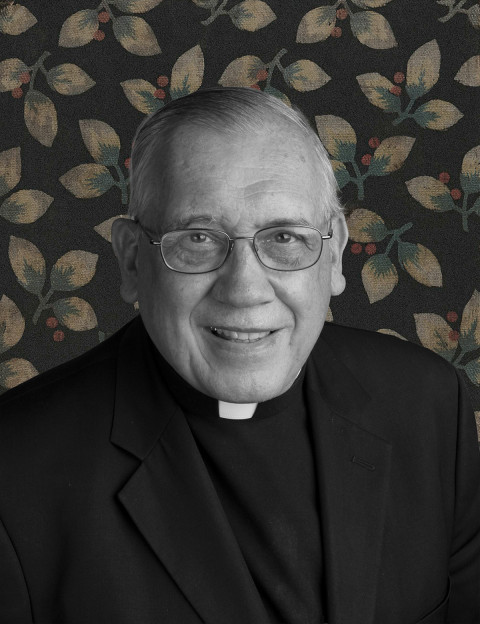
John T. Pawlikowski, who died earlier this year, was a pioneer in Christian-Jewish relations, ecumenical and multifaith dialogue, and global ethics. I first encountered the fruits of his life of partnership with Jews and Christians in 1996, when I found his 1982 book Christ in the Light of the Christian-Jewish Dialogue at a religious supply store. I didn’t know how to pronounce his name properly. But a Jewish philosopher had recently invited me into an interfaith study of the scriptures, and looking at John’s book I knew I needed to learn from his wisdom.
A few years later I joined the faculty of McCormick Theological Seminary in Chicago, and I realized that John was teaching a few blocks away at Catholic Theological Union. I first met him after 9/11 at a gathering of the Council for a Parliament of the World’s Religions. John invited me into circles of ecumenical, interfaith, and interreligious dialogue and partnership with Jews, Catholics, Muslims, and people of other religions. His worldwide network of colleagues and friends was one of his fields of ministry, along with teaching at CTU. Among the students in his courses was the young Robert Prevost, whom we know today as Pope Leo XIV.
Soon I became involved in a project to invite theological students to attend an international gathering of the Parliament of Religions in Barcelona in 2004. Along with John, I was in meetings with other scholars and organizers in interreligious relations. John’s passion for interreligious gathering, dialogue, and deep reflection on our encounters with other sacred traditions and practitioners was compelling. His practice of ministry included all of humanity in all our cultural and religious differences, and the earth as our shared homeland. He was an advocate for women and young people to join the field of Christian-Jewish relations and scholarship. His openness to others included representatives of so-called New Age spiritualities on the parliament’s board. His deep sense of justice as fairness and equity for all included both Israelis and Palestinians, with no room for classic Christian anti-Judaism, modern racism, or xenophobia. He was deeply opposed to the doctrine of Christian superiority to other religions. And he modeled by his way of life how other sacred paths—especially Jews and Judaism—are essential to our repentance and discipleship as Christians today.