
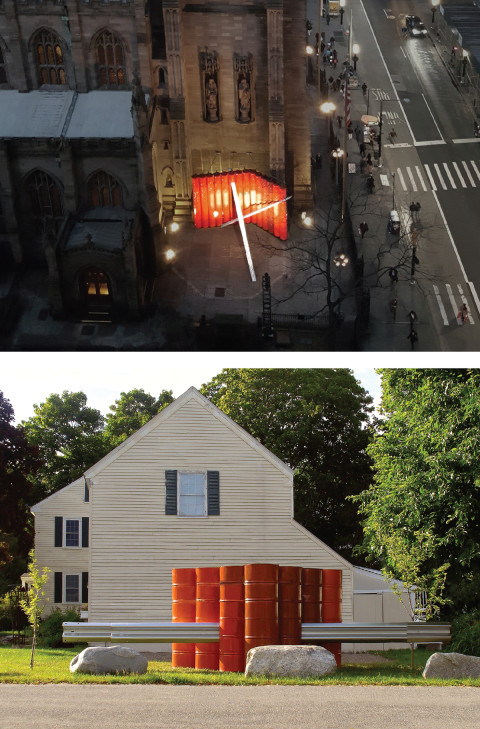
Roland Biermann’s Stations series began as a response to the Stations of the Cross. Inspired by this tradition’s unique grammar of suffering, the German-British artist set out to find a fresh iconography that could connect it to contemporary life.
He soon settled on the industrial aesthetic that would define the series, with columns of oil barrels pierced by metal guardrails. The original work, Stations 1, was installed at the Barbican in London, an iconic, brutalist experiment in postwar community-building, located on the site of devastating destruction during the Blitz. The second iteration brought the sculpture to Trinity Church Wall Street in New York City, situating the stations at the nexus of worldly commerce and spiritual praxis. As the series developed in Amsterdam and other sites around the world, Biermann began to break the work into pieces, both physically and symbolically, experimenting with how its elements might signify disparate traumas and respond to different cultural landscapes.
In the latest additions to the series, Stations 4 and Stations 5, both set in Searsport, Maine, Biermann continues these site and time-specific investigations. According to his artist’s statement, their bright red and orange oil barrels evoke “blood being spilt in the pursuit of fossil fuels past and present.” Constructed this summer, the sculptures evoke the US war with Iran, which left oil tankers coagulating in the Strait of Hormuz, wreaking havoc on the world economy and especially in developing nations. The placement of Biermann’s barrels along Penobscot Bay also drives home local connections. Massive fuel depots loom along the shore nearby, and spills at a nearby terminal have disturbed the local ecosystem in recent decades. Meanwhile, fierce debates about Maine’s energy future have focused on whether to build wind turbine assembly sites in the area, potentially on or around environmentally protected lands.
Biermann’s materials were sourced in Maine from used objects, evident in the subtle indentations and scrapes in the recycled barrels and salvaged guardrails, which have been hand-painted. The crash-impacted barriers sharpen a connection, present throughout the series, between Jesus’ suffering and the everyday tragedy of a car crash. The overall impact of the installation, however, remains vivifying, its shades of brightening red suggesting blood that quickens with resurrected life. Even the reference to oil might be read hopefully, signaling not only fossil fuel but olive oil for anointing the sick. Like the traditional stations, Biermann’s shimmering series engages death but gestures toward life.