Voices

Lessons from the group chat

What makes these friendships so special—and the distance so hard—is the deep sense that we are called to be witnesses to each other’s lives.

For over six years now, I have had a group chat with two friends pinned to the top of my iMessages app.

I met Missy and Haley in 2018 when I pitched an essay to their nature-themed zine. I freelance a fair bit—usually you send in an idea, work with an editor, and that’s it, you’re done. You might pop back into their inbox or they into yours when there’s a good idea. But at the time, all three of us lived in Boston, and someone suggested a get-­together. That turned into another, and another, until I left Boston a year later for Chicago.

They stayed in my phone, a group chat pinging back and forth every few days, memes and photos and jokes, but I still worried about coming off as cool or smart or the right level of sociable. I liked them, a lot, but I wasn’t sure that they liked me, and I wanted to be sure that they did, so I held back a little. Later, I would find out that they were doing the same with me.

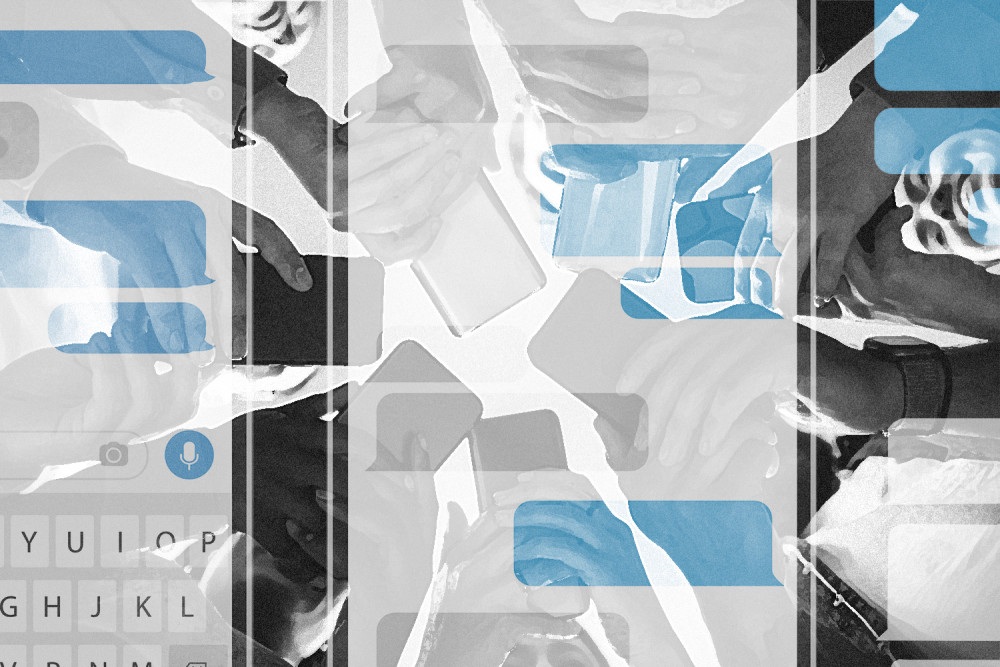
Then the pandemic hit, and each of us, in our own way, was alone. Haley and I were both working remotely in apartments with partners and dogs, in towns where we didn’t know many people. Missy spent a good portion of the pandemic alone in a 96-square-foot apartment, working night shifts at a COVID testing facility. And in that weird pressure cooker, our friendship bloomed. Texts really began flying back and forth, hundreds a day.

We talked about the funny things and the stupid things still, yes, but we also texted each other from our anxious insomnia-ridden late nights, sent each other news articles and book recommendations, talked about our childhoods, the weird and the messy parts of ourselves, planned trips for when all this was over.

And eventually it more or less was, and one of the first trips we all took was to Haley’s wedding. There’s a picture from that day—all three of us are crying a little bit, in her parents’ backyard, Haley looking radiant and bridal, Missy and I on either side, heads leaning in on our beautiful friend. That was maybe the tenth time we had seen each other in person, but I already felt strange and unmoored if I didn’t hear from them every day.

In the nearly five years since Haley’s wedding, we have only gotten closer. Through all the things that make adult life serious—illness and death and the sort of general ambient sadnesses along with the triumphs—Haley and Missy have been there, more often than not stashed away in my pocket. We try to meet up once a year in someone’s city, to hang out, as Haley’s husband put it, as if we were never going to see each other again. I have lost my voice at these hangouts from talking too much. I know these people better than almost anyone else.

We joke all the time about the universe keeping us apart because we would be too powerful if we lived in the same city, joke about wanting to bring each other along on stupid errands and side quests, a sitcom of friends tumbling in and out of each other’s houses. I miss them so often, and I also find our compromises toward togetherness livable.

I think the thing that makes the distance feel the hardest, and that makes the friendship feel so special, is the sense that in some deep way, we are called to be witnesses to each other’s lives. I have watched these friends claw their way out of depression, find better jobs, make choices that are hard but have left them happier and healthier and more themselves—and they have watched me do the same. And it’s not just watching, it’s the encouragement and the reminders of how far we have come. There are the big moments that corroborate this—weddings and book publications and new jobs and moves—but it’s mostly small things, daily ways of showing up.

I know from being inside my own life—from dealing with the problems that feel intractable, that feel like they don’t move over the months and the years I spend picking at them—that day by day, things often feel the same. The difficult boss remains difficult, the book project remains stubbornly unfinished, the dog’s chronic health conditions improve and relapse and improve again. It is, however, through my relationship with my friends, through this long-distance upkeep with each other’s lives, that my life takes on forward momentum. Their witnessing of my life and our conversations about it remind me not just of my professional wins or the progress I’ve made on the book but also of the ways that I have changed and grown as a person in order to accommodate this newer, evolving version of my life.

I know this because I see it in them, constantly. Both the frustration at the lack of motion and the reminder that no, wait, look how far you’ve come. Our role in each other’s lives is to remind each other: Look at how different your material and spiritual conditions are from when we were just tentatively sending each other Instagram memes; look at how rich your life is; look at how far you’ve come. The thing we say less, but mean just as much, is this: Look at how different my life is for knowing you, for watching you do the hard work of keeping at it, day after day, for the joy I get every time I see your name light up my phone. 


This is Alejandra Oliva’s final piece as a regular columnist in the Voices section. We’re grateful for her contributions. —Eds.

Alejandra Oliva

Alejandra Oliva is an immigration advocate and author of Rivermouth: A Chronicle of Language, Faith and Migration.

All articles »