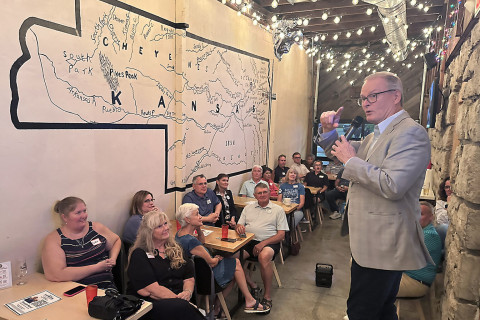
The first time I spoke publicly about being raped, I was at a conservative Christian college, a campus I’d never visited before, a place where I didn’t know anyone in the audience.
The rape wasn’t a secret. My close friends had known for decades. I’d mentioned it in academic articles, and it was the focus of a book I published on theology and sexual violations.
But this felt different, more vulnerable. I knew my friends well enough to trust them. These were strangers. And while I wrote for strangers, I’d always felt protected by the distance between writer and reader—it allowed me to carefully choose my words. I never had to look into the readers' eyes. Speaking eviscerated that distance.