

When Christians gather for Holy Week services, we already know how the story ends. Maundy Thursday and Good Friday liturgies don’t ask us to forget the resurrection; we are Easter people 365 days a year. The disciples, however, did not know. Whatever hope they maintained in Jesus’ promises, his crucifixion left them traumatized, uncertain, and afraid.
Americans are living through a time when hope is elusive and fear is the norm. The news is a fire hose of the Trump administration’s bigotry, graft, and gleeful nihilism.
Immigration enforcement has hardened into lawless, indiscriminate violence against people with brown skin, cultural signifiers from other countries, or accents. The administration is contemptuous of the First Amendment rights of protesters, journalists, and houses of worship. We’ve seen both the end of much of the good the United States does around the world and the escalation of much of the bad. The federal government, always wobbly about any commitment to climate action, is now all in on preventing it. And much of that government is functioning as essentially a crime syndicate, enriching the president and his cronies while persecuting his enemies.
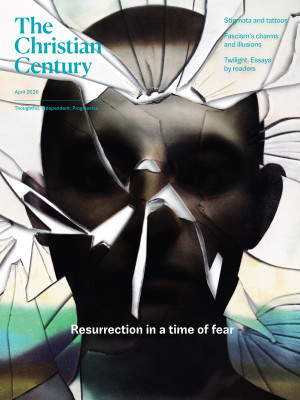
Read our latest issue or browse back issues.
How does this story end? Perhaps only with electoral change—that’s if the administration’s efforts to undermine the integrity of elections can be held off long enough. In such grim times, how is it even feasible for us to proclaim or embody any sort of hope?
We aren’t the first Christians to wrestle with this question. Many of our ancestors in faith struggled to identify the shape of hope amid collective trauma. Martin Luther, who lived in a time of plague and war, connected hope with trust and insisted that they come from outside us—through God’s initiative alone—and transform us beyond our own abilities. And yet, paradoxically, hope is stubbornly this-worldly, rooted in earthly things: bread and wine, water, the feet of people standing up for their neighbors, a hot meal delivered to a family in hiding.
Womanist theologian A. Elaine Brown Crawford models hope on a particular embodied experience: the holler, a primal scream of pain and lament that’s at once a prayer and a refusal to be silenced. For Miroslav Volf, hope “stretches a person into the unknown, the hidden, the darkness of unknown possibility.” Jürgen Moltmann, who spent years as a POW, found hope not in the future so much as in the past—in the resurrection of Jesus.
For the resurrection’s first witnesses, hope was complicated. This issue includes two articles about an Easter narrative in which hope is muted and fear is louder: Mark’s. Biblical scholar B. G. White explores the apocalyptic quality of Mark’s story, the way it unsettles us and compels us to do something about the world’s suffering. Practical theologian Danielle Tumminio Hansen challenges us to inhabit the trauma of Mark’s original ending—and argues that the book’s later, longer ending blunts that trauma.
It’s hard to celebrate Easter in a time like this. But a starting point might be to lean into the story’s more ambiguous emotional notes: the shock and bewilderment that precede excitement and wonder, the deep, frightening uncertainty that overshadows hope. “Hope dawns,” writes White, but it does so “in a brutal world, especially for those who have languished in places of great shame and indignity.”
Those of us who follow the common lectionary know that it’s Matthew’s turn this year. But this might be a good Easter to hear from Mark.