To wake up each morning during this time in our nation’s life is to feel disoriented. Each day seems to bring new challenges to our democratic aspirations—attacks on immigrants, the erosion of voting rights, renewed questions about citizenship, and undeclared wars of choice. Faced with these challenges, I find myself turning more and more toward history, searching the past for guidance—knowing that we have faced similar moments before. And no month speaks more powerfully to the repeated struggles of this nation than June.
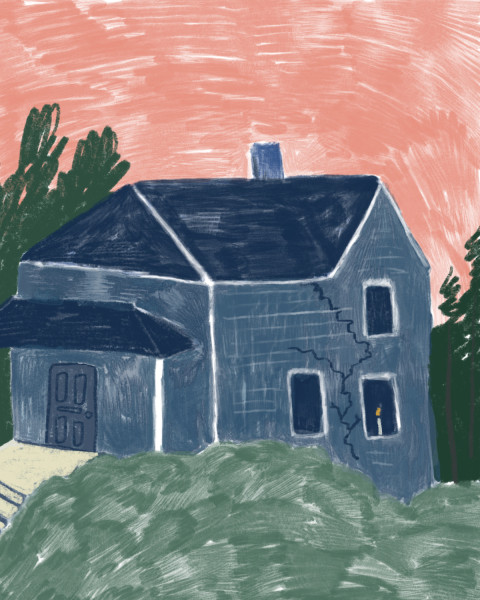
It was on June 16, 1858, that Abraham Lincoln delivered his famous “House Divided” speech, during his Senate campaign against Stephen Douglas. Speaking in the shadow of the 1857 Dred Scott decision—which denied Black Americans citizenship and threatened to extend slavery’s reach deep into the North—Lincoln issued a dire warning: The nation could not endure permanently half slave and half free. “A house divided against itself cannot stand,” he declared.

Read our latest issue or browse back issues.
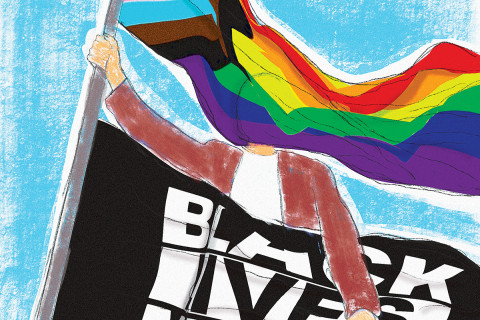
June has continued to mark pivotal moments, if not inflection points, in this nation’s history. Juneteenth commemorates the emancipation of enslaved people in Texas, delayed until June 19, 1865. Medgar Evers was assassinated in June 1963 for his civil rights activism. The Stonewall uprising in June 1969 ignited the modern LGBTQ rights movement.
June is the time of year when the US Supreme Court announces a lot of its decisions. It struck down bans on interracial marriage in Loving v. Virginia in June 1967, and it affirmed marriage equality in Obergefell v. Hodges in June 2015. Other June anniversaries remind of retrenchment. In Shelby County v. Holder (June 2013), for instance, the court eviscerated key provisions of the Voting Rights Act, exposing minoritized communities to renewed voter suppression. And this June will no doubt bring new inflection points, as the court once again considers questions that go to the heart of citizenship itself.
If nothing else, June reveals a nation repeatedly forced to confront its divisions. The “house divided” is not an aberration; it is a persistent condition of our national story. But what disorients me most is not simply our political, cultural, and ideological division. It is something deeper and more troubling: a crisis of human decency. The urgent question is no longer just whether we can resolve our differences. It is whether we still recognize the basic humanity in ourselves and in one another.
We may disagree about the causes or justifications for war—but how can we accept the bombing of schools filled with children? We may debate immigration policy—but how can we tolerate conditions in which children are held in detention? These are not questions of partisanship or policy. They are questions of human decency. And it is here that I return—not to the stories of history, but to my father’s house.
At my father’s funeral, among the many tributes to his decades of service in the city’s probation department—where he eventually became chief probation officer—and his extensive civic, community, and church leadership, one description stood out above all the rest. A judge remembered him simply as “a decent man.” Of all the tributes paid to my father that day, that was the one that has stayed with me: that he was decent.
In my father’s house, decency was not abstract. It was a way of being in the world. It meant treating every person with dignity and respect. It meant recognizing that everyone is struggling to find a way to live, that everyone carries a dream for themselves—often in the face of hardship and despite mistakes made along the way. It meant understanding that some paths are far more difficult than others—and that our responsibility is not to make those paths harder but, wherever possible, to make them easier.
This is the measure I carry with me, and it is the measure by which I now find myself judging our moment. So the disorientation I feel each morning is not only about the state of our democracy. It is about the state of our humanity. Do we still aspire to be a democracy? Maybe. But more urgently: Do we still aspire to be decent?
Perhaps I am preaching to the choir. But the purpose of a choir is not simply to gather—it is to sing. And this is a moment that demands our voices. Those of us who aspire to decency must sing out—as communities, as churches, as institutions—consistently, clearly, and collectively, insisting that we do not accept the prospect of becoming an indecent people. When indecency rears its head in our homes, communities, and institutions, we must demand better. We must refuse to let it stand.
That leaves us with a defining question: What is the measure of our decency? Where is the line we refuse to cross—the line beyond which we will not allow ourselves, or our nation, to fall? How we answer that question will determine whether this house, long divided, can yet become something better—or whether we will simply grow accustomed to its indecent fractures and call them normal. More importantly, it will determine who we are as people.
And so I will return again and again to what I learned in my father’s house—to write about it, to wrestle with it, and to hold myself accountable to it: that standard to be decent.