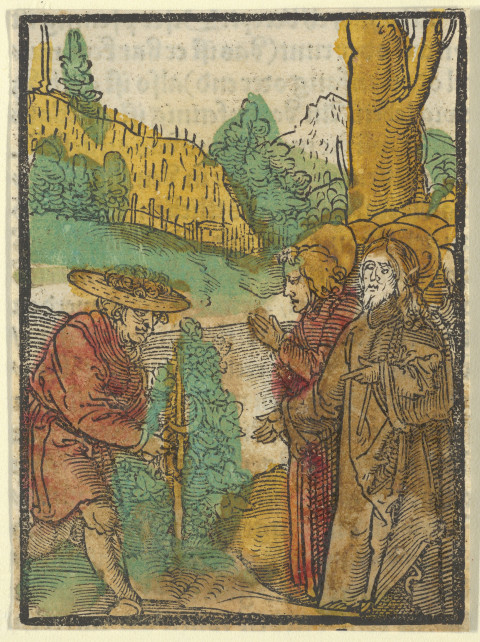
As we find ourselves in another election season, heading to the polls with decisions to make, I find myself returning again and again to one of Jesus’ parables: the workers in the vineyard (Matt. 20:1–16). It is a telling story for our political moment.
A landowner hires workers throughout the day—some early in the morning, some later, and some at the very end. When evening comes, he pays them all the same wage. Those who worked all day are angry. But why? They have not been cheated. They have received exactly what they were promised. What angers them is that those who came last have received the same. Their complaint is revealing: “You have made them equal to us.”
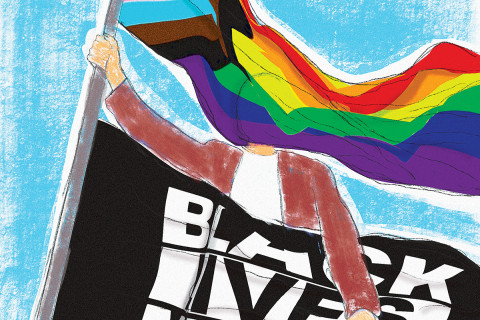
We are living through a moment in which competing visions of democracy and Christianity are increasingly visible in our public square. One is driven by grievance—the sense that something once possessed is being taken away. It is a politics that fundamentally operates according to zero-sum logic: equality and justice for those historically excluded are seen as inequitable and unwarranted losses of privilege, whether racial, gendered, or economic. It is a politics that experiences movement toward a just and equitable society as displacement. It turns the question from, “How can we create a society in which everyone belongs?” to, “Who is taking what belongs to us?”

And that question is not unrelated to the history of American democracy. It is entirely consistent with a nation whose Declaration of Independence proclaimed that “all men are created equal” even as the political and social order of the time excluded women, enslaved people, and Indigenous people from the full meaning of that promise. The history of American democracy is, in part, the history of a struggle over who is included in the promise of “we the people.”
The language may change, but the underlying question remains: Who belongs, and who does not? And so, our debates over immigration, race, voting, history, gender, religious identity, and citizenship are not only arguments about policy and politics. They are also arguments about belonging—about whose history matters, whose voice counts, whose identity is valued, and what kind of equality we are willing to accept.
And then there is another vision: the one put forth in the parable of the vineyard. This is a vision fueled not by a politics of grievance but by divine justice.
The first workers have a grievance. They are angry that they no longer enjoy a privileged status. But the landowner rejects their claim that they have been wronged. They have received what they were promised. Their grievance is not that they have been cheated; it is that they no longer possess the distinction they believed they were entitled to have. They have lost nothing, except the assurance that they will be treated as superior to those who arrived later.
And perhaps this is where the parable speaks most directly to the politics of our own moment: a politics of grievance that is defined by the loss of privilege. The parable challenges precisely that way of seeing the world. It challenges our political and theological imagination. It challenges us to see that expanding the circle of belonging makes the country larger rather than making our place within it smaller. It challenges us to understand justice not as the reversal of privilege from one group to another, but as the creation of a community in which everyone’s dignity is recognized.
Jesus’ declaration that “the last will be first, and the first will be last” is not a prediction about who will occupy the top and who will occupy the bottom. It is a challenge to the entire logic of social and cultural hierarchy and domination. The future Jesus proclaims does not merely rearrange the people at the top and bottom. It calls into question the idea that human worth should be organized according to who is first and who is last in the first place.
The gospel, therefore, offers something very different from a politics of grievance. It asks something more demanding of us. It asks whether we can see the person who has been standing outside the vineyard all day. It asks whether we can hear them say, “No one hired us.” And it asks whether their being brought into the vineyard diminishes us—or whether it reveals something about the abundance of God’s creation and the justice of God.
So perhaps one of the most important questions we can carry into an election season is this: What kind of country and world am I helping to create? It is a question we should ask of every religious movement, every political movement, every candidate, every policy, and—perhaps most importantly—ourselves.
Do we want a country and world organized around protecting the privilege of those who have historically stood at the center, or one in which the circle of belonging continues to widen? Do we measure justice by asking whether we are getting what we think is ours, or by asking whether our neighbors are being treated with the dignity that belongs to them as children of God? And perhaps the most difficult question of all: If those who have been last are finally made equal to us, will we experience that as an injustice—or as the gospel good news?
In this election season, the parable of the vineyard leaves us with a challenge that is more profound than simply deciding who or what to vote for. It asks us to imagine a different kind of world altogether: the world Jesus is asking us to imagine when he tells us that the last will be first and the first will be last.