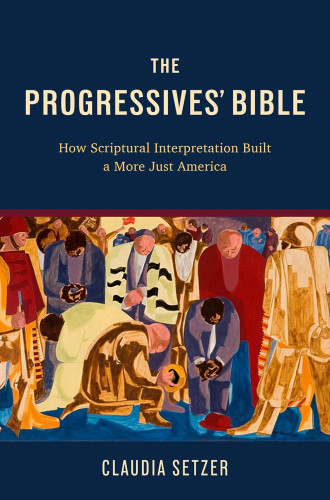
The Progressives’ Bible
How Scriptural Interpretation Built a More Just America
“Perhaps things have gotten so bad in this country that even some of us who don’t have faith ourselves find comfort in listening to those who do,” wrote New York Times columnist Michelle Goldberg about the political success of James Talarico. He’s both a seminarian and a Democrat running for the US Senate in Texas, and his political approach does not shy away from fronting his faith. Time will tell, but I am struck by Goldberg’s hypothesis that some people who don’t have faith might find comfort in listening to those who do. Could this be true?
Of course, some recent uses of faith-based language in politics have caused many Americans, believing or otherwise, far more discomfort than comfort. During Trump’s second administration, federal agencies and officials have used scripture and other religious language to recruit ICE agents, defend an unjust war in Iran, and intensify social divisions. Christians often employ scripture to rubber-stamp immoral, dangerous political actions and positions as self-evidently “biblical.”
Read our latest issue or browse back issues.
Progressive Christians in the United States, however, have a long history of contesting harmful misuses of scripture. In addition to arguing against misuses of scripture, progressives of earlier generations “fashioned [the Bible] into a force for improving society,” as Claudia Setzer shows in The Progressives’ Bible. Setzer profiles numerous figures who argued from scripture to support social justice causes, including abolition, women’s rights, temperance, and civil rights. Along the way, Setzer explores the shape and substance of these figures’ biblical interpretation. She asks what methods they used and how they disseminated their interpretations.
In 1839, Sarah Grimké published a work that employed historical-critical methods, including historical comparison and philology, to expose differences between slavery in the United States and the slavery practiced within ancient Judaism and Christianity. Other interpreters borrowed methods from ancient interpreters, like midrash and parables. In 1888, Frances Willard argued from logic against inconsistent interpretations of the creation story: “If clergy insist on taking the half verse of Genesis 3:16, ‘he shall rule over you’ literally and permanently, they need to do so for others, such as the command to Adam to actually ‘eat his bread in the sweat of his face.’” Interpreters like Fannie Lou Hamer often intertwined their experience of suffering and liberation with biblical stories and motifs, including God’s apocalyptic reckoning with sinners. As Hamer was beaten at the instigation of a police officer, she cried out, “It’s going to be miserable for you when you have to face God, because ‘God had made of one blood all nations’” (quoting from Acts 17:26).
Setzer describes her book as “a set of observations on the biblical resources available to reformers and the clever and myriad ways they interpreted the text.” They drew from ancient and contemporary methods, engaging alternative interpretations directly and indirectly. They challenged readings that were often more conventional, popular, or politically correct. Cleverness is a theme that marks many of these figures’ interpretive work.
An equally notable feature of the interpreters Setzer describes is their courage. These interpreters were hardly content to keep their interpretations in the (relatively) safer contexts of home or study. They contested unjust interpretations in public and their interpretations sometimes led to violent responses. For example, in 1838, Angelina Grimké—Sarah’s sister—gave a keynote address at the Anti-Slavery Convention of American Women. In her speech, she challenged conventional proslavery interpretations. She carried on her exegesis as an angry mob threw stones and a brick broke through a window of the lecture hall. For Grimké and so many other interpreters, theirs was risky exegesis.
Setzer shows how courageous and clever leaders read the Bible for the good of others. She does not, however, overlook the mistakes these reformers made along the way. For instance, Setzer recognizes the anti-Jewish rhetoric used by some interpreters. Some feminists sought to portray early Christianity as progressing beyond Judaism’s antiquated, unenlightened view of women. Setzer specifically points to a two-volume commentary from 1895, suggesting “the commentary is highly flawed, episodic, marred by antisemitism, and a platform for a variety of esoteric, positivist, and other views.” These interpreters made mistakes, some of which were very harmful to other people. These are mistakes to learn from as we attempt to read the Bible for the good of others.
Setzer’s book is more than just a set of observations on interpretive methods. It is an invitation and an encouragement. She invites us to listen to scripture again—as preached by a great cloud of witnesses who caught God’s vision for a more just, peaceable world. Many figures profiled in this book found in scripture the voice of a God determined to “bring good news to the oppressed, to bind up the brokenhearted, to proclaim liberty to the captives, and release to the prisoners” (Isa. 61:1). They heard that voice and allowed it to ring out through their clever and courageous interpretations.
The stories Setzer tells should encourage those of us who have heard the same voice speaking in scripture. Some of Setzer’s characters had large, wide-reaching platforms. Others did not, at least not at first. They simply read scripture in communities that knew keenly the discomforts caused when the Bible is used to uphold unjust political or social structures. They challenged such misreadings through conversation, companionship, and community organizing.
Will those who do not believe find comfort in listening to those who do? When it comes to the Bible, I suspect few will find comfort if they only hear scripture used by politicians to promote terrorizing communities or to glorify war. But Setzer reminds us of the long, progressive tradition of reading scripture for the love of God and neighbor. No doubt, such readings could bring comfort to many.