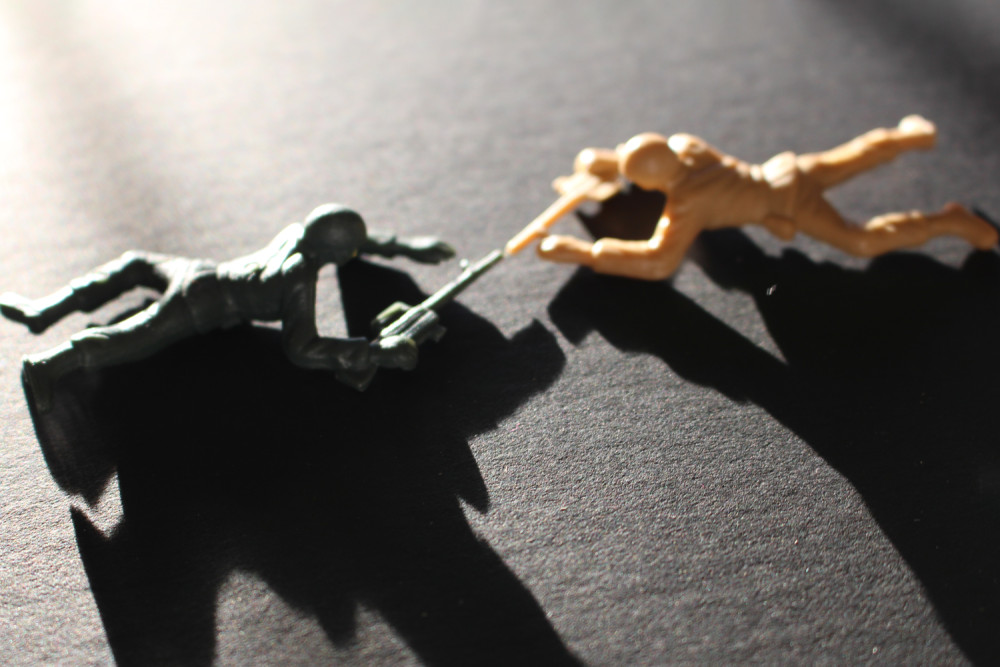
“Every war is ironic because every war is worse than expected.” Paul Fussell’s line has been living rent-free in my subconscious for decades. It rises to the surface whenever the United States, Britain, or one of their allies gets into a hot war. Fussell knew what he was talking about. A World War II frontline vet and a literature professor, he also said that “every war constitutes an irony of situation because its means are so melodramatically disproportionate to its presumed ends.” He had many examples. The one I have never forgotten is this claim: “In the Great War eight million people were destroyed because two persons, the Archduke Francis Ferdinand and his Consort, had been shot.”
Jesus said to his disciples, “The poor you will always have with you.” He might also have said the same about war. What is there to be said about its cruelties, other than well-rehearsed lines on pacifism or just war theory? “War is simply one of the side effects of human error, a sign that humans’ separation from their true nature has not been overcome,” said Sue Mansfield, writing about early Christianity. The psychologist and historian went on: “Once God is understood as love, war ceases to have any mythological meaning or transcendent imperative, since it imitates no divine gesture.”
This is powerful stuff. However, as Mansfield would also acknowledge, Christianity has long been tangled up with state power. I am a priest in the state church of England. Even in the US, with its long-established separation between state and religion, politicians of every stripe have sent Jesus into battle on the nation’s behalf. The ignominious death of Christ may be a condemnation of state-sanctioned violence, including war. Indeed, progressive theology typically says that God is not on the side of imperial violence and power. Nonetheless, Jesus repeatedly finds himself on the front line.