As we mark Black History Month—100 years after Carter G. Woodson inaugurated Black History Week in 1926, and as the organization he founded reflects on a century of commemorating Black life—I find myself thinking about Black joy.
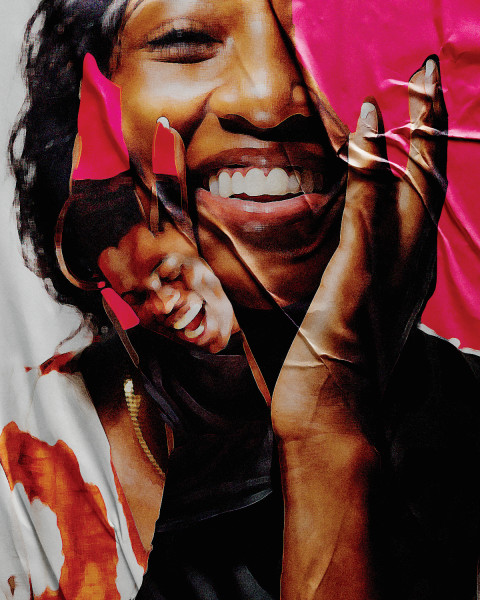
Black history, in all its pain and triumph, is also a testament to joy. Across generations of violence, injustice, and systemic dehumanization, Black people have insisted on their humanity. One of the most powerful expressions of that insistence has been joy. Black joy is real—both a lived experience and a historical legacy of Black resistance. Black joy is a fugitive act.

Read our latest issue or browse back issues.
Fugitivity refers to the radical refusal to accept the limits imposed by oppressive systems. It describes acts of resistance that emerge within conditions designed to foreclose possibility—conditions in which, as Ashon Crawley says, “otherwise possibilities” seem out of reach, where agency appears impossible. Yet it is precisely there that subversion, refusal, and liberation erupt. These acts are fugitive because they create freedom inside captivity.
As one of my students recently observed, “a fugitive act is anything that releases what has been held captive, even in the midst of captivity.” Black joy is such an act. It refuses to be constrained by narratives of inferiority or by the dehumanizing logic of White supremacy. It echoes the hush harbors where enslaved Africans carved out spaces of spiritual refuge, insisting that God’s future was still possible. Joy in this respect is a holy act—a sacred defiance—declaring that Black people are God’s children, created for freedom and for joy in the life God gives.
Sociologist Peter Berger describes certain gestures as “signals of transcendence”—moments that gesture beyond “the normal, everyday world,” moments that reveal a world beyond what we see. Black joy is such a signal. Joy is that which signals there is a future beyond the devaluing and dehumanizing present that besieges Black life. It erupts precisely where the world insists it cannot exist. It affirms that Black life—like all life—is meant to be abundant and deeply enjoyed.
Black joy proclaims that Black people are more than what they have survived. For centuries, as White supremacist ideology sought to reduce Black people to chattel, to laboring bodies, or to beastly threats requiring control, Black communities responded not only with protest but with joy. Joy reverberated through spirituals, ring shouts, worship, music, poetry, communal practices of love, and more, all of which sustained Black people through bondage and beyond. Even in the harshest conditions, Black people have made room for joy. That is no small thing. Joy has always been a declaration of humanity and a commitment to freedom—to the fullness of life promised to all God’s creation.
Black joy says: We are alive. We are sacred. We are created good. It is a legacy that endures.
To speak of Black joy is not to deny pain. It does not offer an alternate narrative that obscures the brutalities of slavery or the ongoing structural, cultural, and social violence of the present. Rather, Black joy holds pain and possibility together. It rejects the lie that White supremacy is inevitable or that anti-Black violence reflects God’s intentions. In this way, Black joy is a form of wisdom—a way of navigating oppression without allowing it to determine one’s identity and possibilities. Joy becomes a tool for imagining and building a world free from such forces. It is also a sacred testimony to the God in whose image Black people are created.
In the resurrection story of Jesus—what I sometimes think of as God’s “now you see me, now you don’t” game of hide-and-seek—we witness divine joy confounding oppressive power, reminding us that God always gets the last laugh over those who mistake themselves as being stronger than the joy that springs from God’s own goodness.
Joy declares: Even here, even now—God is present. When we cultivate joy, we bear witness to God’s goodness, love, and grace. Joy tells us that suffering and injustice are not ultimate. They will not have the final word. As the psalmist reminds us, “weeping may endure for a night, but joy comes in the morning.”
And so, during this Black History Month, as we commemorate the struggles and triumphs of the Black community, faith communities are called to be sanctuaries and stewards of joy. At a time when Black people and other communities of color remain under siege by White supremacist realities, we are called to create spaces of joy for those whom society has relegated to joyless conditions. As forces of power cultivate dehumanization, we must cultivate flourishing—affirming the sacred humanity of those whose worth is under attack. Black joy invites us to build a world where every person can experience the goodness of life as God intends.
In the end, Black joy is resistance. Black joy is protest. And Black joy reminds us that even in a world hostile to Black life, Black life still laughs, still loves, still creates, still flourishes. Black joy is sacred.