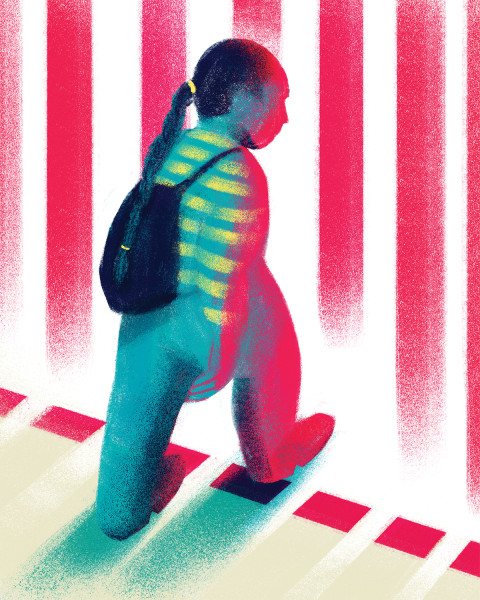
He dedicated his life in the United States to giving his family the American dream. . . . He worked hard to protect and provide for our family, to put me and my siblings through college. . . . She taught us that good things come to those who work hard. . . . I brought my son from Guatemala so that he could have a better life here in the United States. . . . I long for peace and the chance for my family to live and work in the United States without the constant fear of deportation.
Behind each of these statements is the same refrain: the longing for something else. Each of us, undoubtedly, have at some time longed for something else. Perhaps it was for dignity and respect, peace and security, freedom from fear and violence, or simply the opportunity for a better life. Longing is one of the deepest aspects of being human. It is what moves people to leave behind what is familiar in pursuit of what religion scholar Ashon Crawley calls an “otherwise possibility.” It is what inspires people to hope for a different future for themselves and their loved ones.
Read our latest issue or browse back issues.
This nation’s founding began with people who longed for something else: religious liberty, political freedom, opportunity, the possibility of building lives unlike the ones they had left behind across the ocean. That longing helped to bring this nation into being. From its beginning, the United States has been animated by people convinced—for better and for worse—that another future was possible.

Yet we know that this is not the whole story. Alongside those who crossed the ocean in search of freedom were millions of African men, women, and children who were brought to these shores against their will, stripped of the very freedom others sought. Likewise, the longing that inspired European settlers to seek a new beginning came at the expense of the Indigenous peoples who already called this land home, whose freedom, lands, ways of life, and lives were violently stolen from them.
The hope born of human longing is part of this country’s DNA, and so is the injustice of dishonoring the longing of others. To be accountable to this nation’s story is to hold these two realities together.
And we should not be surprised to find that same longing in those who come to the country’s shores today. The father who spent 35 years building homes and never got in trouble with the law, the mother who came from Guatemala with her son, the family that longs simply to live and work without the daily threat of deportation. These stories of longing are not exceptions to this nation’s story. They are a part of its continuing legacy.
It is when we lose sight of that truth that the dehumanizing side of the nation’s story repeats itself. Immigrants become deportation quotas and statistics rather than friends and neighbors. They become problems to solve rather than people to know and care about. We begin to speak of legality without humanity, of enforcement without empathy, of borders without the human beings who stand at them. When that happens, we betray not only something essential about ourselves but also the God in whom we claim to have faith.
Scripture affirms this human longing, because it reveals a God who has it first. When the Israelites cry out under the weight of slavery in Egypt, God says to Moses, “I have observed the misery of my people . . . I have heard their cry.
. . . I know their sufferings.” The exodus is not simply the story of an oppressed people longing for freedom. It is the story of God’s longing for something else for humanity. God longs for freedom instead of bondage, justice instead of oppression, life instead of death.
The gospels continue this story. They, too, reveal God’s answer to humanity’s longing for something else. It is God’s refusal to accept the world as it is, God’s own longing for death to give way to life. God invites us into that same sacred longing. Faith is the willingness to respond to that invitation—to believe and to live as though the world can become what God intends it to be. The longing of immigrants for safety, dignity, peace, and a future for their children is a profound human longing but also a divine one. In their hope for another future, they echo the deepest longings of God.
The greatest danger, then, is not that borders are crossed or that people are undocumented. It is that we become so accustomed to stories of detention, deportation, and family separation that they no longer trouble us. It is forgetting that every headline about an “illegal” immigrant points to a human being who longs for something else. One woman, speaking to the Vera Institute of Justice, put it plainly: “We are human beings. Even though we are in another country, we are human beings.” If our concerns about laws and borders cause us to lose sight of the humanity of those who stand before us, then something sacred about who we are—as a people and as a nation—has been lost.
For the measure of a nation is not simply how well it protects its borders, but whether it recognizes the humanity of those who arrive at them. Likewise, the measure of our faith is not simply how loudly we proclaim a belief in God, but whether we recognize God’s image in those who long for the very things God longs for: justice, peace, safety, dignity, and life. To ignore that longing is to reject the best of this nation’s story. To become immune to it is to betray the God who hears the cries of the oppressed and longs for a world of justice and peace for all of God’s people. And in the end, it is also to betray something fundamental about ourselves, for we are never more fully human than when we recognize the humanity, and thus the longing, of another.