On January 1, we froze together in our scarves and gloves amid the packed inauguration crowd to watch Zohran Mamdani swear his oath of public service on Qur’ans belonging to his grandparents at New York City Hall. Witnessing a Muslim leader being installed as mayor of the largest US metropolis felt like a victory over the anti-Muslim bias that has long colored our experiences as American Muslims. Now, with another consequential election in progress—including a US Senate race featuring a candidate of Muslim background—this season invites us to take stock of the rise of the American Muslim public servant against the ongoing backdrop of politically manufactured Islamophobia.
There have never been more Muslims in American public office: the Council on American-Islamic Relations counts 255 elected officials across 26 states. Last November, Ghazala Hashmi became the first Muslim woman elected to statewide office. In August, Abdul El-Sayed, an epidemiologist who ran Detroit’s health department, won Michigan’s Democratic Senate primary. If El-Sayed wins tomorrow he will become the first Muslim elected to serve in the US Senate. And it’s not just El-Sayed at the national level: a record number of Muslim Americans in federal and state elections have the prospect of achieving more firsts.
It’s tempting to describe the rise of Muslims in public office as the triumph of reason and goodwill over decades of fear-mongering animus, or to explain it in terms of a more diverse generation now in the electorate. However, there’s more to the picture. Mamdani’s historic victory and the momentum El-Sayed has amassed build upon two decades of Muslim American grassroots organizing—born precisely out of the trials of anti-Muslim bias.
The civic infrastructure that is helping Muslim leaders run competitively for public office has been built against a backdrop of ongoing political discrimination. The early 2000s incentivized American Muslims to establish their patriotism by becoming more civically involved. This led to a dynamic that political scientist Mahmood Mamdani—the mayor’s father—described as the “good Muslim, bad Muslim” framework, exemplified by Bush-era oppressive programs such as the 2001 USA Patriot Act and the 2002 National Security Entry-Exit Registration System tracking program. Embedded in governmental collaboration with Muslim communities over these years was a tacit condition: those who wished to be trusted as public leaders must distance themselves from the Islamic identities that implicitly connected them to bad actors. Some organizations and individuals accepted that bargain in exchange for federal partnerships, often through the Countering Violent Extremism initiatives. But not all Muslims were willing to accept the faulty premises of this deal.
CAIR, founded in 1994 as a small media-monitoring group, expanded after 9/11 into a national Muslim advocacy network to address anti-Muslim bias. Catalyzed by growing needs in the early post-9/11 period, it provided legal resources for Muslims who had been placed on no-fly lists or discriminated against in schools, neighborhoods, or places of work. It joined the coalition of civil rights groups that pressed the NYPD to abandon its failed surveillance of Muslims, a campaign that contributed to the disbandment of the initiative in 2014. CAIR’s refusal to trade political agency for access to funding earned the organization credibility among Muslims. It remains the country’s largest Muslim civil rights network. Many Muslim civic engagement groups emerging in CAIR’s wake operated on a similar premise of not being intimidated or cajoled into silence on issues of justice.
Ahead of Michigan’s August primary, CAIR ran nonpartisan get-out-the-vote robocalls to thousands of likely and newly registered voters. El-Sayed won by about one percentage point despite millions spent by AIPAC’s super PAC to boost his opponent’s far-fetched attacks. As Tazeen Ali recently observed, El-Sayed easily defies the Islamophobic stereotypes leveled against him by cultivating a political “Macho Man” persona that is legible to an American electorate and that lets him go head-to-head with his opponents with the requisite degree of political bravado, while also emphasizing his democratic, family, and community values.
Alongside his rhetorical quick-footedness and gym bro appeal, El-Sayed is benefiting from a grassroots strategy to increase election-day turnout that has been two decades in the making. For instance, Emgage: Empowering Muslim Americans through Civic Engagement, founded in 2006, built voter-mobilization networks in swing states, and its Million Muslim Votes campaign estimates that more than a million Muslim registered voters cast ballots across its 12 target states in 2020.
Mamdani’s charismatic rise also leaned into these grassroots civic engagement networks. CAIR estimates that more than 350,000 Muslim New Yorkers are now registered to vote, and the Muslim Democratic Club of New York, formed in 2013 to help foster this voting bloc, reports that turnout among its constituents in the 2025 Democratic mayoral primary rose 60 percent over 2021 levels. Desis Rising Up and Moving, the South Asian working-class organization founded in Queens in 2000, led New York’s grassroots campaign against discriminatory NSEERS policies and built the multilingual, class-based organizing model that Mamdani’s 2020 Astoria Assembly campaign drew on. In short, Muslim candidates are breaking through in places where grassroots organizing and relationship-building have been sustained over the longer term.
Beyond voter turnout, concerted efforts to increase American Muslim civic participation aim to broaden political participation more generally. The Muslim Public Affairs Council and Poligon are among the Muslim organizations building consequential civic infrastructure nationally, with effects felt locally too. It turns out that organized Islamophobia has given American Muslims the incentive to organize as well.
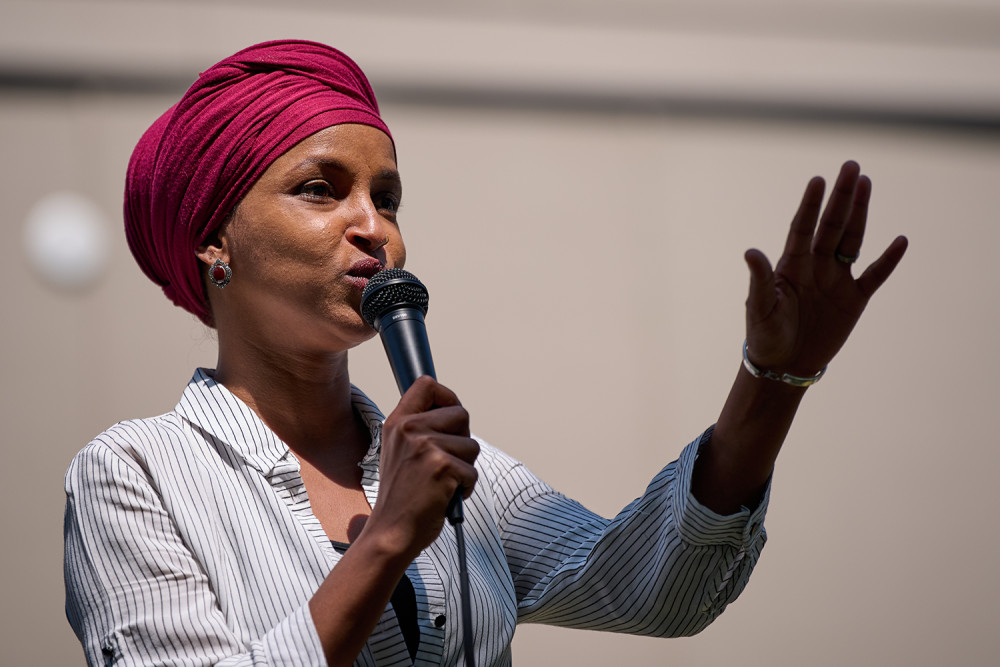
In more recent years, the MAGA movement’s Islamophobic rhetoric has institutionalized discriminatory policies in a way that the Bush and Obama administrations took pains to avoid, even as their programs relied on racial and religious profiling. The explicit bigotry of the Trump-era discourse and policies, including the latest round of attacks against Rep. Ilhan Omar, has prompted solidarity among progressive leaders, her Minnesotan constituents, and fans of the rule of law more broadly.
In both El-Sayed’s and Omar’s cases, open, over-the-top hostility has triggered waves of goodwill and communal solidarity, as people in the electorate see through the Islamophobic antics. Still, the Pew Research Center finds that 70 percent of American Muslims say discrimination against Muslims has gone up since the start of the war between Israel and Hamas. A sitting member of Congress, Rep. Andy Ogles, even campaigned (unsuccessfully) for reelection, citing as evidence of a job well done his role in leading the charge to have Mayor Mamdani—whom he called “little muhammad”—denaturalized and deported. The American electorate should not, and will not, tolerate this blatant bigotry.
Mamdani’s victory and the historic successes of other Muslim officeholders do not signal a miraculous shift in the levels of anti-Muslim bias, and Islamophobic discourse has not truly abated. But the two-and-a-half-decade-long, gritty struggle to build civic infrastructure to represent sincere religious and ethnic minorities is working. These efforts are making democracy more representative, but we must also ensure that newly elected representatives can undertake their demanding jobs without the additional burdens of anti-Muslim bias and racism. When Muslim electoral candidates are no longer harangued about their Americanness or their alleged support of a covert Muslim agenda, Americans will have taken a collective step forward. Newly commissioned public servants deserve a chance to advance the public good without the distraction politicized bigotry imposes.
A quarter century has not lessened the intensity of anti-Muslim bias in electoral politics, but these years did teach a generation of American Muslims that they do not need to win the hearts of hardened xenophobes to have their votes counted. And another thing is for sure: the xenophobic rhetoric will not push Muslims out of politics; it will compel them to rise to the challenges of representing their constituents well. According to a well-known prophetic teaching, the best of people are those who most benefit others. This is the standard toward which a new generation of American Muslim public servants is striving.