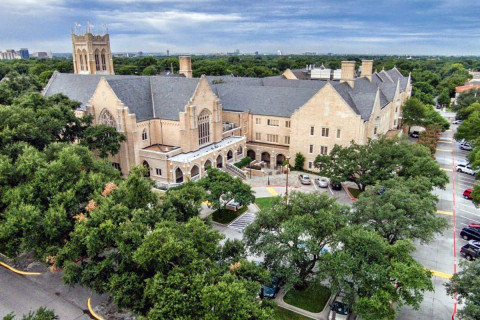
On January 18, protesters burst into Cities Church in St. Paul, Minnesota, in the middle of the Sunday service. The scene was chaotic, with protesters and church members screaming at each other over the pews. The service was shut down, and the congregants went home without finishing it. Cities Church was protested because one of the pastors, David Easterwood, appears to be an ICE field director. (I say “appears to be” because despite Easterwood speaking at a press conference under that title in October, DHS has not confirmed his position and has framed any claim that he’s a member of ICE as “doxxing”—the latest in the agency’s growing culture of secrecy.) Just days before, ICE agent Jonathan Ross shot and killed Renee Good, a deadly escalation in the brutal occupation of Minnesota, and the protesters chanted her name in the sanctuary.
The videos of the protest are disturbing. It’s distressing to watch a church service descend into neighbors screaming at each other. It is distressing, too, that a church could be led by someone who also leads ICE patrols.
ICE has always been an instrument of racist state violence, but it is nearly impossible to exaggerate how much more dangerous it has become over the last year. Trump’s failure to seize control of the state after his 2020 election loss was due in large part to his not having the military’s leadership on his side. But since taking office last January, Trump has turned ICE into his own private army. ICE’s new annual budget of $37.5 billion is greater than every other federal law enforcement agency put together. If ICE were its own military, it would be the 15th best-funded in the world. Over the remainder of Trump’s term, $45 billion is budgeted for new detention facilities, giving ICE almost as much detention capacity as the entire federal prison system. Over 12,000 new agents were hired over the last year, drawn in by DHS’s white nationalist memes and a $50,000 signing bonus.