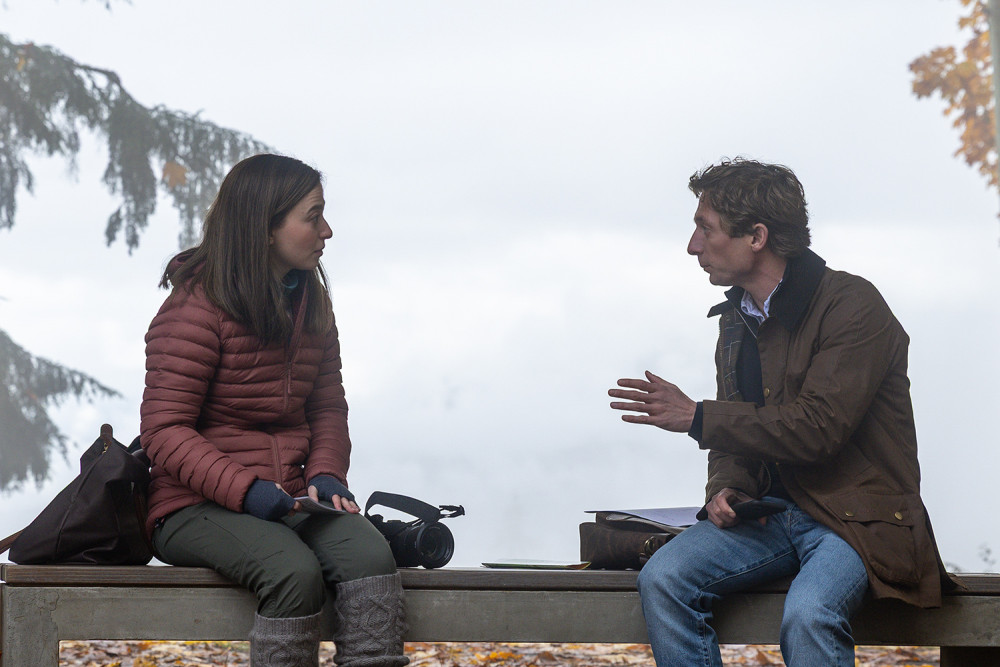
It is a perilous undertaking to tell the history of the present while it is still unfolding. Harder still to make a gripping narrative out of a story whose ending is unknown. The Social Reckoning (written and directed by Aaron Sorkin) tries to give the diffuse reality of social media the structure of a traditional movie plot, with a beginning and end, good guys and bad guys.
This worked well enough in 2010 with The Social Network (directed by David Fincher but written by Sorkin), an origin story of Facebook and a biopic of its then very young CEO Mark Zuckerberg (Jesse Eisenberg). The movie reveled in the irony that the so-called social network was the brainchild of a socially awkward college nerd, a brilliant boy-man who destroyed his only friendships in an effort to make the whole world friends online. It closed with a prophetic vision of the loneliness that might await us all as we retreat into the private, sanitized bubbles of our screens.
What an innocent worry that seems now—as though loneliness were the worst that might befall us. From its perch a mere 16 years later, The Social Reckoning is way past debates about social isolation. It sets its sights on more explicit evils: criminals openly using Facebook to traffic drugs and humans, the exponential rise of teenage mental health crises and suicide due to social media, political radicalization that threatens fair elections and trust in democracy, and the spread of misinformation and outright lies, even from the highest branches of government. These aren’t just the result of bad actors exploiting a neutral technology. Facebook’s leaders knowingly rely on algorithms that drive people to extremist groups; they refuse to monitor disinformation; they are aware of the effects on teenage girls but have done little to mitigate them.