

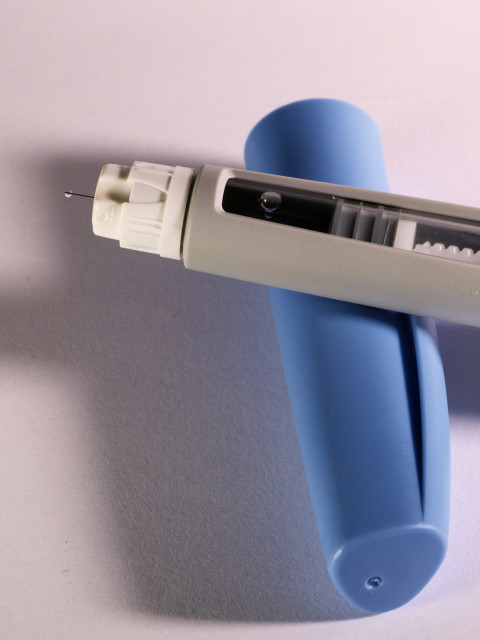
Hundreds of Episcopalians have signed on to a letter asking the Church Pension Group to reconsider its decision to drop insurance coverage of GLP-1 prescriptions in 2027 for all but some of the church employees enrolled in the church’s plans. Organizers of the “One Body” campaign say they intend to deliver the letter by the end of November in time for the CPG board of trustees’s December meeting.
Limiting GLP-1 coverage to treatment of Type 2 diabetes could prove expensive for other enrollees who rely on the costly drugs, which are best known for aiding in weight loss but also have proven useful in a range of other treatment plans. They are asking CPG at least to phase in the change, rather than restrict coverage as soon as the new plan year starts.
Meghan Ryan, an Episcopal priest in the Diocese of Missouri, is a lead organizer of the One Body campaign, which takes its name from Paul’s first letter to the Corinthians: “If one member suffers, all suffer together with it.” Ryan was prescribed the GLP-1 drug Wegovy under the Food and Drug Administration’s authorized uses and found it also had off-label benefits alleviating her severe inflammation from the autoimmune disease lupus. She was shocked to learn in late October that her insurance would no longer cover the prescription, potentially forcing her to pay about $350 a month out of pocket.
“It was short notice. A lot of people have to make a doctor’s appointment and make a plan trying to figure out what kind of alternatives they have to GLP-1s,” she said. “Cutting off this coverage so abruptly negatively impacts a lot of people and their health.”
GLP-1 is shorthand for “glucagon-like peptide,” a class of medications that mimic natural hormones and help the body regulate glucose levels and control appetite. CPG has indicated at least since August that it intended to end GLP-1 coverage except for treatment of Type 2 diabetes, though some church employees enrolled in the Denominational Health Plan first learned of the change during the annual enrollment period starting in October.
The GLP-1 change was one of several cost-control measures implemented by the Episcopal Church Medical Trust, a CPG affiliate that manages the Denominational Health Plan, in response to what it said was strong inflationary pressure on the insurance industry. Because of those costs and other health and insurance trends, CPG estimated it would face a churchwide rate increase of 22.5 percent in 2027 if no changes were made to the plans.
Instead, by adjusting deductibles, copays, out-of-pocket maximums, and coverage, the Medical Trust now projects an overall cost increase of 12.6 percent for the year, with the specific impact varying at the diocesan and congregational levels.
“Prescription drugs, particularly specialty medications and GLP-1 therapies, are among the fastest-growing cost drivers in employer-sponsored plans,” the Medical Trust said in the Denominational Health Plan’s 2025 annual report.
The increasing use of GLP-1s for weight loss is “becoming unaffordable for the plan,” John Servais, CPG’s senior vice president of benefits policy and design, said in an August webinar about the changes. “It wasn’t an easy decision to make,” he said, but ending that coverage allowed CPG to reduce the overall rate increase by 3.6 percent, saving $8.9 million.
Even so, the change leaves enrollees like Ryan in a tight spot. Although her Wegovy prescription is for an off-label use, “a small dose of GLP-1 greatly improves my inflammation markers,” said Ryan, who serves as rector of St. Timothy’s Episcopal Church in Creve Coeur. Others take GLP-1s to treat heart conditions, sleep apnea, and liver conditions, as well as the more common weight loss uses.
GLP-1s are generally approved by the FDA to treat Type 2 diabetes, obesity or both. Doctors also have discretion to prescribe FDA-approved drugs for additional “off-label” uses that have shown promising results in patients. Doctors and patients are encouraged to weigh the benefits of GLP-1s against common side effects and the potential for more severe risks, which in rare cases may include cancer and vision loss.
Across the United States, use of this category of drug for weight loss has nearly quadrupled in just two years, to 11 percent of adults in 2026, according to Gallup. National obesity rates have been on the decline over the same period.
With the church’s coverage of Ryan’s prescription on track to end on January 1, she has talked with her doctor about options, including potentially reducing her dosage to save money. After struggling to treat her inflammation, she was relieved to find Wegovy “sort of works like magic,” and she is now “pretty resigned to paying out of pocket” if insurance will no longer cover it.
She helped launch the One Body campaign at the website onebody.care, where supporters are encouraged to add their names digitally. In less than a week, more than 600 people signed on, including more than 360 active and retired clergy members and more than 100 lay employees and family members, according to the website. And although the campaign offers to protect the identities of those who sign, at least 375 have volunteered to add their names publicly in support of the effort.
One of them is Columba Salamony, rector of Trinity Episcopal Church in Geneva, New York. Salamony started taking the GLP-1 drug Zepbound about three months ago for treatment of obesity, corresponding spinal pain and sleep apnea, which is an FDA-approved use for Zepbound. Salamony only recently learned that the prescription would no longer be covered in 2027. Without coverage, they estimated the prescription could cost $800 a month.
“I’m sort of one of these people who has multiple reasons for needing one,” Salamony said, including years of struggle against weight gain. In the eight years since finishing seminary, Salamony added about 80 pounds. “I was at my heaviest weight when I began the GLP-1,” they said.
Zepbound was recommended by three different doctors, and in the three months since beginning the drug, Salamony has lost about 30 pounds, while starting to alleviate their severe sleep apnea and spinal pain.
Salamony understands there are cost pressures that motivated CPG’s decision to end broad coverage of GLP-1s, but “I thought it was misguided. . . . It really felt short-sighted, that it would just be this blanket refusal, when it’s been recommended by three of my doctors.”
Learning about the One Body campaign and adding their name to the letter gave Salamony a feeling of solidarity with the hundreds of others raising concerns about the sudden end to coverage—“knowing that it’s not just me who’s a little freaked out about this and what the cost will be in January when I’m due for my next refill.”
CPG’s decision follows a growing trend in the insurance industry toward ending GLP-1 coverage except for treatment of Type 2 diabetes. For example, California, New Hampshire, Pennsylvania, and South Carolina ended their states’ Medicaid coverage for GLP-1s in 2026, and the 13 state Medicaid programs that offered coverage typically did so with “utilization controls” that somewhat limited access to the drugs, according to KFF.
Analyses of private sector employers’ practices also show a decline in coverage of the drugs, from 57 percent in 2025 to 53 percent in 2026, according to one survey conducted WTW, and more of those employers are considering dropping the coverage in the future. Another study, by Peterson-KFF, found that fewer than one in five large firms covered GLP-1s in 2025 when primarily used for weight loss.
Some employers stand by their decisions to maintain the coverage. “Our view is that [because of] the long-term health benefits, plus there may be more short-term health benefits . . . it’s a good investment,” Bank of America CEO Brian Moynihan told CNBC.
Some Episcopal Church employees who have seen benefit from the drugs describe them as a “medical marvel,” Ryan said, and those employees “are really hurt and disappointed by the decision” to end coverage in 2027. “We’ve heard from a lot of priests who have had a lot of health issues, people whose lives have been greatly improved” while taking GLP-1s.
That said, the One Body campaign isn’t blaming CPG for adjusting to insurance industry trends. Ryan said she understands that denominations and churches face difficult financial decisions regarding health coverage. That is why the campaign has called for a transition period of six months to a year, so GLP-1 coverage can continue while enrollees determine how best to respond to CPG’s coming change.
“We’re asking [CPG] to try to figure out some middle way,” Ryan said. —Episcopal News Service