
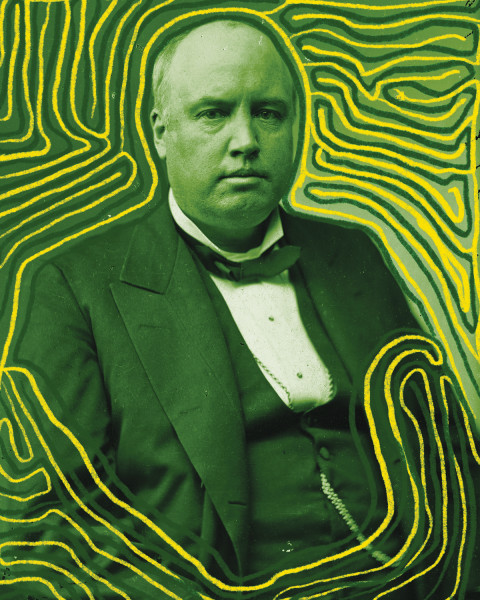
In one of John Updike’s novels, a minister finishes the last page of The Collected Works of Robert Ingersoll and, in less than the time it takes Updike to complete the sentence, loses his faith. This is absurd, of course—a person who quits believing in God that fast didn’t believe to begin with—but the scene gives some idea of the renown and infamy that once attached to the name of the 19th-century orator, lawyer, and agnostic. This was a man so famous a Texas town named itself after him, and so unpopular among most of the faithful that that same town renamed itself after one particularly fervid Christian revival.
The son of a liberal, abolitionist Presbyterian minister—by all accounts the sort of godly, midwestern left-wing radical that you read about in Marilynne Robinson novels and in the recent reports out of Minneapolis—Ingersoll was first embittered against Christianity by witnessing the way his father was treated by his congregations. (I’ve met many pastors’ kids with similar tales to tell.) He served in the Civil War on the Union side and was active in postwar Republican politics, back when Republicans were trying to abolish the Confederate style of government rather than enshrine it forever. The party tried to recruit him to run for governor of Illinois, on condition that he keep his unbelief a secret. Ingersoll refused—because he thought keeping secrets from the public was immoral. The gesture is unimaginable now.
I happened into reading Ingersoll about a decade ago as I dug around in the obscure corner of the library where they keep the essayists—my people. I knew of his reputation as a critic of Christianity, and since I am an adherent of that religion, I expected not to like him. Then I read this passage, in which he reacts to the 1883 decision in which the thoroughly corrupt and racist Supreme Court struck down the Civil Rights Act of 1866: