Voices

Practicing patience in difficult times

I want to be able to take my days and transform them into beauty. This fall in Chicago, it has felt like time is running out.

I am not a very patient person, but I try to practice all the time. I’m a writer, impatient either with how slowly the arguments and images come to me or at slow fingers that can’t type fast enough to catch them all. I’m a knitter and textile artist, stacking diminutive stitches one atop the other until a mitten or an embroidered leaf takes shape between my hands.

These are practices that let me play with time—sift it through my fingers, give it shape and dimension. This is the sweater I made my last semester of grad school, these my thoughts at a particular moment of my life, frozen in the shape of an essay. I can track my history in these ways. It’s both a little comforting and a little strange to have these bits of my history scattered around. Every time I wear a sweater I’m brought back to its creation. As a writer who publishes, I’m sometimes called to account for whatever inaccessible version of myself wrote an essay or a line however many months or years ago. At the same time, I have a published archive of myself, can chart my changing interests and ambitions through scattered ephemera.

This fall in Chicago, it has felt like time is running out, like the horizon of history is catching up to all of us. Federal agents have roamed the streets, pepper spraying protesters, kidnapping people based on their appearance. Families and neighborhoods have been terrorized. Every part of the city has felt like it might be the next to host some kind of violence; the daily news has been full of people being thrown and tackled and punched by heavily armed government officials. Meanwhile, time goes on, escapes, drains down my phone screen.
In the middle of all of this, I went to New York for a friend’s wedding. On a spare morning, I went to the Museum of Modern Art to see the Ruth Asawa retrospective. I didn’t learn about Asawa’s work until a few years ago, a little before her sculptures graced USPS stamps, but the moment I turned a corner in a gallery and saw one of her pieces I just thought, yes.

Asawa began learning art in a more formalized way while imprisoned in Japanese internment camps as a teenager, and she kept making art her whole life. Not just the sinuous, overlapping hanging wire sculptures she was best known for, but art with salt dough at a kitchen table with her six children, folded paper installations, intaglio prints, clay masks of her loved ones, drawings with fat, chisel-tipped markers, endless pen-and-ink sketches of flowers.

I have loved Asawa’s wire sculptures since I first saw one hanging from a gallery ceiling. They are at once accessible and remote, airy and hermetic, the soft loops I know to associate with knitting rendered in a tough wire. But as I walked through MOMA, there was a sense of a full life, all of these moments sifted through and made visible by the shape of her hands. And not just the big moments. Scattered among the public art works and the gallery-ready sculptures, there were more quotidian pieces made for Asawa’s home: a wallpaper pattern featuring her baby’s footprint. The doodles she exchanged with friends via mail. Collaborations with neighbors and children. And, somewhere between the monumental and the daily, a set of enormous carved redwood panels, which served as her front doors.

Amid all of this artistic bounty, however, there were signs that it was not all easygoing. In a display case, there’s a mimeographed copy of a failed application for a Guggenheim Fellowship: “Now when I work, I discover a string of related possibilities which are slow in being followed up since sometimes money and time do not permit.”

The patience of an artist and mother, slowly exploring a string of related possibilities, playing with materials, making her home and her life beautiful—this is all I want for myself, for my neighbors. I want to be able to take my days and transform them into beauty, to measure my time by the things I have made. My impatient heart races ahead, and I want to live already in the future of all my beautiful things—the yarn in the crates transformed into the sweater I have planned for them, my house draped in coziness, books with my name on them ranged up on the shelf, my city calm and quiet, full of strolling people. I want big redwood front doors, and I want to swing them open to my artist neighbors, want a big kitchen table full of collaborative art projects.

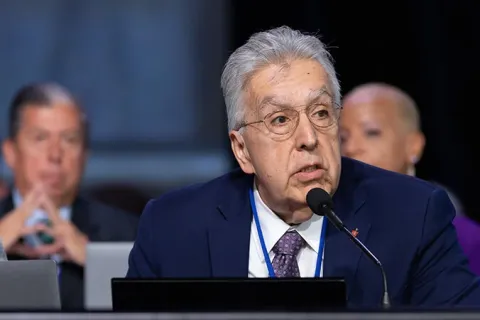
I just attended a talk by Marcelo Hernandez Castillo in which the poet addressed the violence and despair that the federal government has brought to Chicago. In his talk, he linked the process of his poetry to the process of activism, putting practice over product, art as accomplice to the struggle. I like to think Ruth Asawa would have been nodding along in the audience.

For her Japanese American Internment Memorial in San Jose, Asawa spent years interviewing survivors and gathering stories, all of which were eventually compiled and condensed into massive bronze plaques, illustrating the horrors and the small joys of camp life. Families with their allotted two pieces of luggage, sleeping in overcrowded stables, armed guards watching their every move—but also art classes, Fred Korematsu’s eventual victory in the Supreme Court. All of it made permanent in bronze. This was a product, yes, but arguably the process that led to it was all the more important—the bringing together of a community’s stories, listening to people’s experiences. This, too, is a way to capture time, to make the world a more beautiful place.

Hernandez Castillo, in his talk, said that the role of the artist was to help us imagine new ways to resist oppression, new ways to imagine a world that is healed and plentiful. Asawa’s experimentation with material and time gives us the patience—and the scrappiness—to keep imagining it, even amid the darkness.

Alejandra Oliva

Alejandra Oliva is an immigration advocate and author of Rivermouth: A Chronicle of Language, Faith and Migration.

All articles »