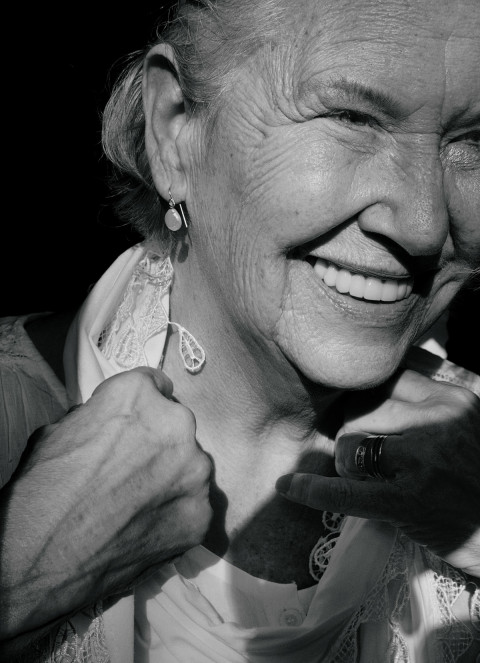
Annie Dillard died on September 15 at the all-too-young age of 81. We weren’t ready. Her poetry, her fiction, and especially her essays reinvented and extended American literature for a new era in a voice so refreshing, it doesn’t matter that some of her most influential work was published more than 50 years ago. The human predicament and the fundamental puzzle of the natural world remained her subjects, and she was always seeing with new eyes. She won the Pulitzer Prize for Pilgrim at Tinker Creek in 1975 and was awarded a National Humanities Medal in 2015. But none of this says what she meant to us. She was visionary, prophet, and mystic, and there are no national prizes in those arenas.
I read the first Dillard essay that seared me almost 35 years ago. I was living in Estonia, in the first true solitude of my life, and I picked up Pilgrim at Tinker Creek from the American Library in Tallinn. I read “Seeing,” and I never saw the same afterward. Visible to me for the first time was the old woman selling three wrinkly apples at a table next to the train station. Why did she have only three? Should I buy all three and let her go home on that bitter January day? (When I did, three more apples appeared on the table.) All kinds of everyday objects and people suddenly had new meaning. Life took on a dimension it hadn’t before.
That essay announced, in essence, my vocation: paying attention. I don’t think I am alone in having Dillard call me to attention, demand that I align my love properly in the world, and never give up that pursuit. In “Seeing,” she writes, “If you cultivate a healthy poverty and simplicity, so that finding a penny will literally make your day, then, since the world is in fact planted in pennies, you have with your poverty bought a lifetime of days.”