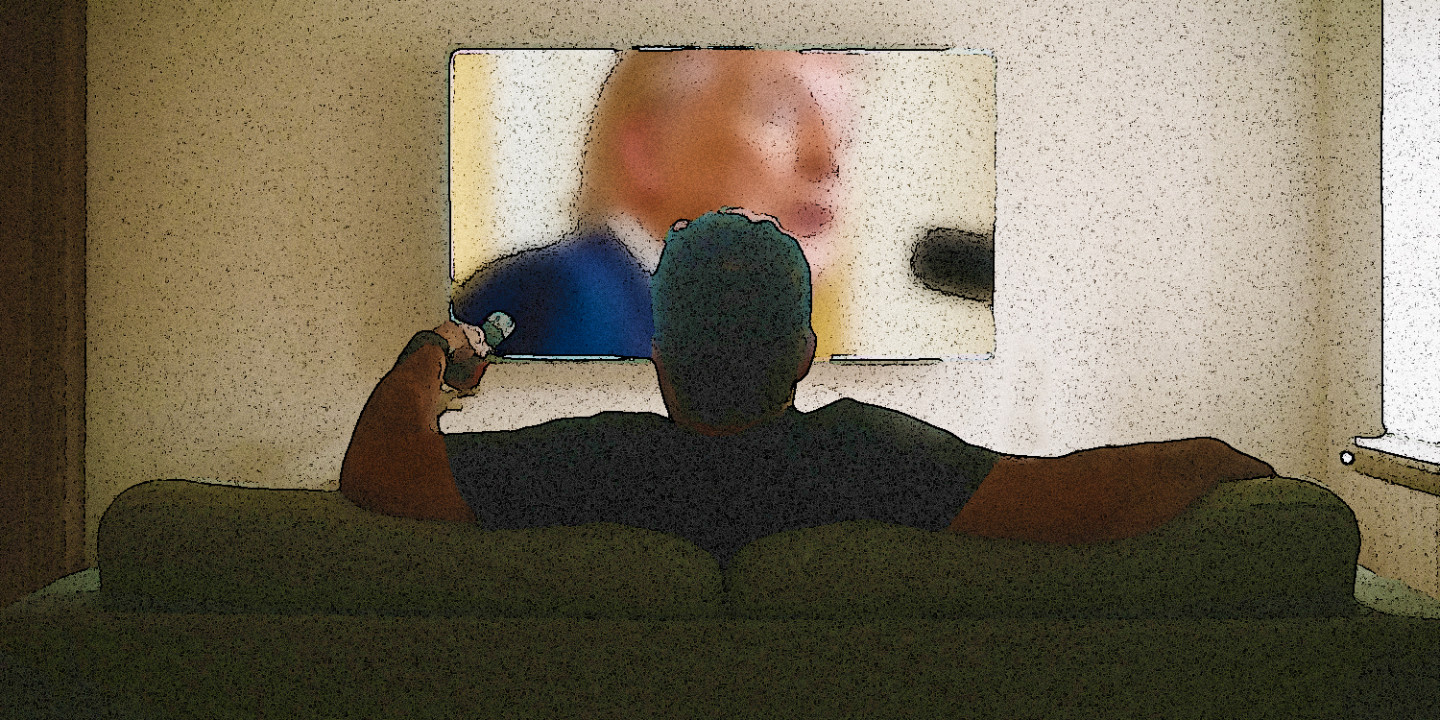
I don’t remember what the advertisement was for. It could have been cologne or a clothing line or (God help us) crypto. It was, in any case, one of those plotless, atmosphere-heavy TV spots that conclude with the breathy announcement of a single name or word, the sort of commercial that used to tell you that you’re already supposed to know the name of the brand and that now just as often tells you, Here’s a new brand name to memorize. Pay attention, there’ll be a quiz.
Nevertheless, the fifth or fifteenth time I sat through it, I became conscious of a distinct and bad spiritual odor emanating from the TV, something that made this otherwise undistinguished commercial offensive in a special way. The source of that odor was the identity of the actor at the center of the camera. I barely recognized him at first—in my head he’s still Nancy’s boyfriend in the first A Nightmare on Elm Street or poor, beleaguered Edward Scissorhands, whereas for decades now he’s looked like Garfield the cat after a multiweek bender. Earlier in the decade, this actor had been “canceled” over accusations of domestic abuse by his ex-wife, also an actor (and also, in the movies, an ex-wife: Aquaman’s). Embarrassingly gruesome text messages authored by the actor, regarding what he’d like to do to said ex, were reported in the media. He made counteraccusations. The internet got involved.

Read our latest issue or browse back issues.
Insofar as I gave the whole thing any thought—and this was exactly the sort of controversy that I try to stay aloof from, as an act of resistance against the great god Media—I suspected that most, or at least more, of the truth lay on the ex-wife’s side. I also found the whole thing sordid. As a person who has been in a relationship with an emotionally and verbally abusive woman myself, I resented the blithe way that some commentators dismissed the possibility that she had thrown the first punch. (My abusive ex would certainly not have scrupled to beat me if she’d seen any percentage in it.) I resented, too, the way that his PR campaign tried to weaponize the feelings of male abuse victims to keep us from weighing her claims seriously. Mostly I thought it very weird that millions of people should have passionate opinions about two strangers’ marriage.
And that was the last thought I had about either of them—until Donald Trump got reelected. Many of the bastions of elite cultural liberalism that adopted an anti-Trump branding strategy in 2016 now announced that the “vibe” had “shifted” and that there was nothing to do but lick the dictator’s smelly boots. Grown men spoke to reporters about the wonderful new climate of freedom that Trump had ushered in—this freedom being best exemplified, in these men’s own words, by the ability to call people “retard” at work. Prominent people called for Harvey Weinstein, of all people—one of the most prolific rapists this side of Gilles de Rais—to be released from prison. Movie directors of less-than-middling talent and predatory habits found work again; disgraced writers were re-graced.
And now the possible domestic abuser was back on my television, despite not having done much of anything in the meantime. It would have been less startling to see that notorious comedian with the self-exposure problem hosting the Oscars—at least that guy has been funny this century. Was the actor’s reappearance anything more than a declaration that abuse is back? That misogyny is cool again?
Now, look. I am not one of those leftists who will tell you that there was no such thing, circa 2017–2021, as cancel culture. Nor am I the sort of person who will baptize any public-shaming campaign, however extreme, for any transgression, however vaporous, with the word consequences. My most left-wing, least privileged Zoomer students will tell you that being online during the prime years of “consequence culture” was pure hell, no matter your identity or your actions. Nor do I believe that people who’ve done evil should never be allowed to do cultural work again. (I used to run a literary magazine for people in prison, for heaven’s sake.) Some people need power stripped from them, and some need punishment or even imprisonment, but art is a human right.
What made me ill about this commercial was the sense that the man was starring in it because we all—supporters and critics alike—are pretty sure he beat up his ex-wife, who I am not, by the way, seeing in any commercials, even though she always did a perfectly serviceable job playing Aquaman’s ex-wife. It’s one thing to let a bad person try to make their comeback in peace. It’s another to celebrate their badness.
A culture in which certain forms of speech—I felt unsafe, this is abuse, that is White feminism, this isn’t decolonial enough—are allowed to serve as final verbal trump cards is one kind of problem. But at least that culture is, at worst, pretending to pay tribute to decency and righteousness. The culture of the last year or so refuses to pay any such tribute. It says, instead, We’ve missed you, wife-beaters. Welcome back, racists. Oh, you also corresponded with Jeffrey Epstein? That’s cool.
In its prime years, I always knew it was possible that I’d miss wokeness when it was gone. I didn’t expect it to happen this fast.