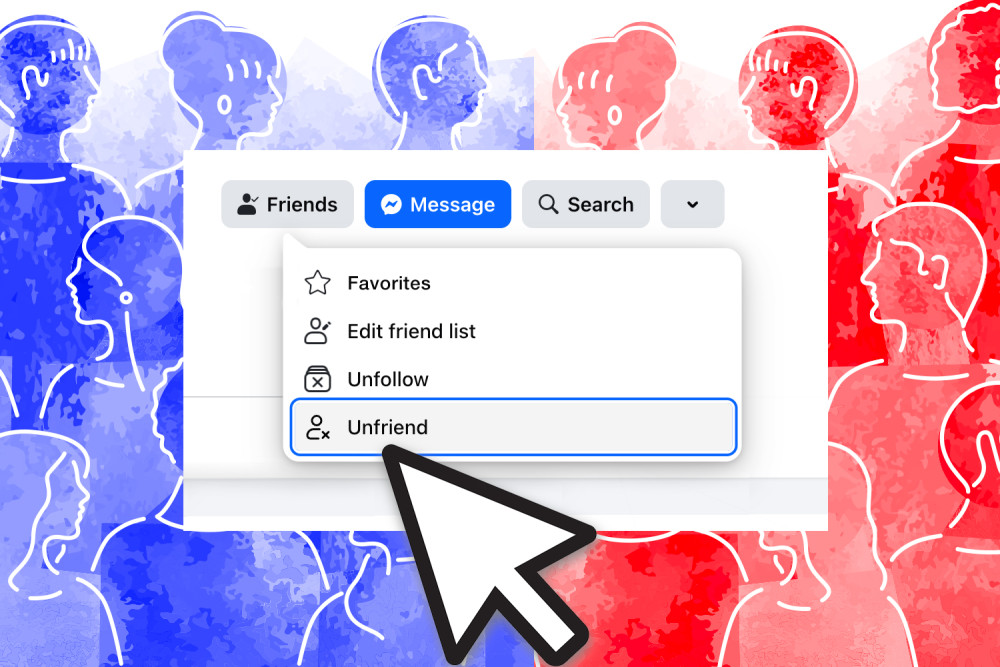
Are we cutting each other off over politics more often than we used to? Data on such a question would be hard to gather, because each term in the question bears wildly different meanings for different people—who is we, what is cutting off, what is politics, when is used to? But social scientists have never met a philosophical quagmire they can’t ignore, so they have skipped such questions and gone and gathered that data. It sounds dramatic.
One team at the University of California–Irvine claims that “37% of Americans reported having had a political breakup,” and that for 96% of these people, the “most impactful breakup” came after 2016. (Personally, I’ll cut you off if you use the word impactful in print.) The Irvine researchers used an opt-in pollster, which might not attract the most motivated responders. But older, more established polling firms, such as Reuters/Ipsos and Harris, have reached similar conclusions, and the same studies suggest that it’s left-leaning people who initiate more of the breakups. So for the sake of argument, let’s treat this as true: We’re dumping our friends and family over politics, especially if we’re liberal or left-leaning, more often than we used to.
At this point in the discussion, commentators generally pause to shake their heads, deplore the trend, and exhort readers to show a little courage and tolerance. Much of the advice they give is condescending or absurd. Eventually, a few columns from now, I will get around to advising and exhorting too, and I will likely fall into this trap, despite my best efforts. But before I go there, I want to ask two questions: Is it weird that breakups are happening over politics? And is there something inherent about liberalism or leftism that makes such breakups seem more likely or more desirable? I think the answer to both questions is no.