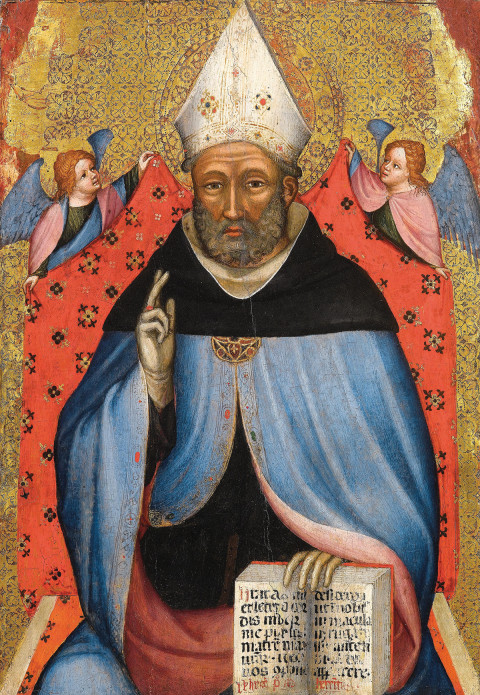
Christians often see doubt as a threat to Christian belief. However, St. Augustine described a positive, even essential role for doubt within the practice of belief: It is the recognition and acknowledgment that belief does not constitute knowledge. We might summarize his view as I do not know; therefore I believe. In order to understand the role of doubt in Augustine’s theology, we must reconstruct his theological commitments as he spoke with his beloved congregation in the North African town of Hippo.
Augustine left a large corpus of theological treatises, letters of advice and compassion, and sermons. His sermons, his largest written legacy, are accessible, thoughtful, and empathetic reflections addressed to his beloved siblings in the body of Christ. Possidius, the longtime friend who wrote Augustine’s biography and catalogued his writings, commented, “I think that those who gained most from him were those who were actually able to see and hear him as he spoke in church.”
Yet it is Augustine’s midlife autobiography, Confessions, that attracts most of the current attention. College students, journalists, and scholars alike are fascinated by his vivid theatrical description of his conversion to celibacy, which is often referred to simply as “Augustine’s conversion.” He described this experience as an internal drama in which he felt himself to be the helpless victim of seductive women friends (amicae mea) who clutched at him, caressing him and whispering teasingly in his ear, “From this moment will you never again be able to do this . . . or do that?” As the scene unfolded on his mind’s stage, Continence (Continentia) appeared, smiling gently and saying, “Why do you try to stand by yourself, and so do not stand at all? Let him support you; do not be afraid that he will let you fall.” As she spoke, Augustine realized that the anxious grasping was his own—his struggle was not against external adversaries, but “about self, and self against self.” Reflecting on the experience, he recalled, “I relaxed a little from myself.”