A federal appeals court panel has ruled in favor of 27 ecumenical and interfaith partners in a lawsuit contesting the Trump administration’s removal of “sensitive locations” protections for houses of worship in immigration enforcement.
The three-judge panel of the Court of Appeals for the DC Circuit ruled, 2-1, that a lower court judge erred in finding that the faith-based plaintiffs lacked standing to file their lawsuit. The plaintiffs have argued that the Trump administration’s intensified immigration enforcement actions have driven some worshippers to stay home.
The lower court judge ruled in April 2025 that the plaintiffs had not sufficiently demonstrated an imminent threat. The Court of Appeals reversed that decision, sending the case back to the US District Court to rule on the merits of the plaintiff’s arguments.
“Plaintiffs’ members likely face imminent harm from increased enforcement at their houses of worship,” the Court of Appeals opinion says. “That harm is traceable to the new enforcement policy.”
The interfaith group of religious denominations and organizations sued the Department of Homeland Security in February 2025 after the Trump administration rescinded a policy that had protected houses of worship, schools, and hospitals.
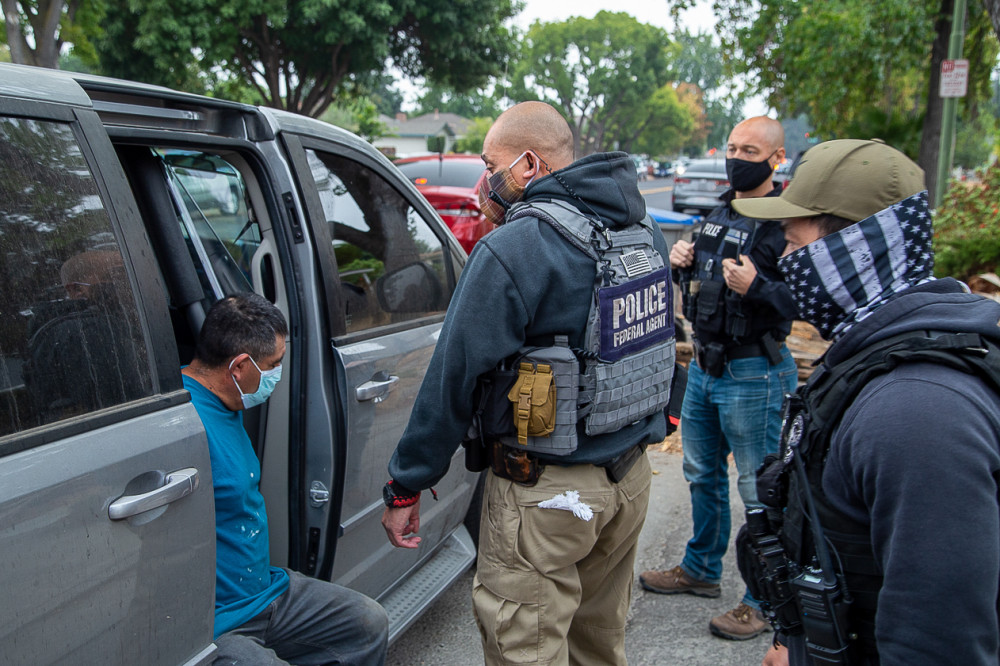
Since then, the Trump administration has escalated its campaign of immigrant detentions and deportations to include aggressive enforcement operations in targeted cities across the country. The deployment of Immigrations and Custom Enforcement officers, as well as Customs and Border Protection agents, has rattled communities, sparked protests and sometimes resulted in violent and deadly confrontations with both immigrants and US citizens.
There have not been widespread reports of raids inside houses of worship, though in cities with a large federal presence, some churches have been joining efforts to assist immigrant families who are afraid to leave their homes to go to work or school or even to get groceries. One Episcopal church in Minnesota also was on a list of houses of worship where Homeland Security was reported to have spied on activists holding meetings there.
Sean Rowe, presiding bishop of the Episcopal Church, and Julia Ayala Harris, president of the Episcopal Church’s House of Deputies, issued a joint statement October 20 after the appellate court ruling was handed down.
“As faith leaders who have borne witness to the harm of ICE enforcement on our congregations—and the impact of immigration in one of our families—we give thanks to God for today’s milestone in our multifaith effort to protect religious freedom,” they said. “In The Episcopal Church, we cannot truly be ourselves when some cannot freely worship with us. Civic engagement is an important way Christians can demonstrate love for our neighbors, and with this litigation, we are challenging unjust policies that fall short of respecting the dignity of all people.”
The plaintiffs, represented by the nonpartisan Georgetown University Law Center, have argued the Trump administration is violating religious freedom protections in the First Amendment of the US Constitution and the Religious Freedom Restoration Act of 1993. —Episcopal News Service