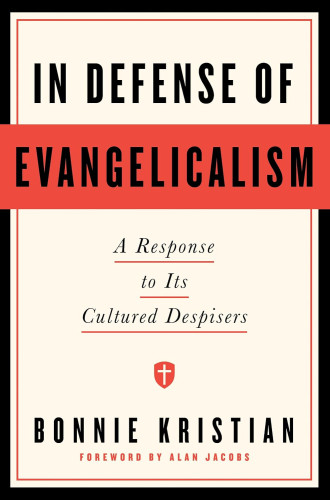
In Defense of Evangelicalism
A Response to Its Cultured Despisers
Evangelicals are in the midst of a PR crisis—which is ironic, considering the term evangelical first caught on in the United States a response to another PR crisis. When the fundamentalists lost out at the Scopes trial in 1925, becoming the laughingstock of the American public, embattled conservatives rebranded. From the harsh intolerance of “fundamentalism” was born the milder “evangelicalism.” The scowls of William Bell Riley were traded for the sunny smiles of Billy Graham.
But now the label designed to facelift a moribund traditionalism has itself been tarnished. The fact that the vast majority of White evangelicals voted for Donald Trump in 2016 (and again in 2020 and 2024) led to a cottage industry of criticisms of evangelicalism, crystallized in 2020 by Kristin Kobe Du Mez’s bestselling Jesus and John Wayne: How White Evangelicals Corrupted a Faith and Fractured a Nation. As the heat turned up, a number of evangelical churches dropped the term. More and more evangelicals now simply call themselves “Christians.”
Not everyone, however, is willing to give up on the word. In her new book, Bonnie Kristian, deputy editor of the evangelical stronghold Christianity Today, seeks to rehabilitate the label. Her premise is that evangelicals have recently been subject to a “widespread monstering” across American life. Evangelicals are portrayed as “tacky, ignorant, backwards, stupid—an embarrassing American subculture always good for a laugh from our betters.” Kristian is admirably clear that mockery and contempt do not equate to persecution. Still, the attacks clearly sting, and her book aims to deflect them.
Her argument is that evangelicals, though much maligned, are just like you and me: imperfect, sinful, but basically normal people trying to navigate their faith in the modern world. “Evangelical faith is just normal. Evangelical people are just folks,” she writes. “We aren’t extraordinary and militant,” she pleads, “we’re ordinary and a bit phone addled.”
Kristian addresses five charges against evangelicalism that she believes have stood in the way of a fair assessment of the movement: insincerity, evil, hypocrisy, imposition, and control. On some of these charges, like hypocrisy, she admits a grain of truth; on race, above all, Kristian holds her own camp to account. But many of the charges, she believes, are simply inaccurate, either misguided or actively malicious. Her defense relies on a strict division between the center and the “freaks and fringes” of evangelicalism. Doug Wilson, the New Apostolic Reformation, and charismatic sex abusers are the fringe. Decent, earnest, Jesus-loving evangelicals are the center.
At times, Kristian distorts the evidence to prove that most evangelicals are like her: anti-racist, egalitarian, anti-war. For example, she claims that “most American evangelicals today are egalitarians” and that most “aren’t on board with complementarianism at all.” Her evidence is a 2020 study by demographer Ryan Burge that shows high evangelical support for female preaching and teaching. As of 2024, however, the majority of evangelicals polled, 61 percent, agreed with the statement “in a truly Christian family the husband is the head of the household and his wife submits to his leadership”—tied with Black Protestants, but significantly higher than any other group.
Kristian’s defense also relies upon an insistence that most evangelicals are basically apolitical. Evangelicalism is not, she insists, a front for political or cultural conservatism; rather, it can be defined by the four core marks of the well-known Bebbington quadrilateral: “conversionism, the belief that lives need to be changed; activism, the expression of the gospel in effort; biblicism, a particular regard for the Bible; and what may be called crucicentrism, a stress on the sacrifice of Christ on the cross.” From these theological and practical bases flow all the rest of evangelicals’ commitments.
It is ironic, then, that In Defense of Evangelicalism hardly ever touches a doctrine or dogma, that it deals not at all with the specifics of conversion, or biblical interpretation, or atonement theology, or sin or justification or grace. What it does discuss at great length are contemporary debates about sexuality, and especially about transgender rights.
Throughout the book, Kristian interviews “ordinary” evangelicals whose love for Jesus, she wishes to demonstrate, is far more important to them than their political position. And yet, most of these individuals voted for Trump, and most of them did so for one reason: LGBTQ issues. One of her interviewees puts it like this: “Do I want peace at the cost of LGBTQ insanity, or do I want economic health at the cost of peace?” This calculus led to a vote for Trump. In other words: the acknowledged likelihood of war in the Middle East, with all its inevitable civilian casualties, was worth it as long as transgender advocates could be stopped. Perhaps this is indeed a theological claim rather than a political one, but few readers outside conservative Christianity will be persuaded by such a theology.
By and large, Kristian tries to stay above the fray of politics. But she clearly shares her subjects’ aversion to America’s “deranged” sexual mores. Whatever one thinks of this, it undercuts Kristian’s central contention that evangelicalism is just about Jesus. Conservative evangelicals’ views on sexual ethics may well flow from their convictions about Jesus. But that does not render them apolitical; religion and politics are not so easily quarantined.
As the book concludes, Kristian returns to her mantra of evangelical normality. Evangelicalism is just like Walmart, she says, open to all people, even the crazy ones. It’s like America, flawed but noble. Of course, this is the same line of defense Graham and his colleagues took as they tried to cordon themselves off from the fundamentalists: we’re safe, well-meaning, good citizens.
There are reasons to doubt whether Kristian successfully establishes evangelical normality. But the more interesting question, it seems to me, is what it would gain her to prove it.
The New Testament is clear, from one end to the other, that Jesus’ true disciples will be persecuted, or at least misjudged and shamed, for their faith. That’s because faith in God in Christ is strange, disruptive, and even scandalous. In Defense of Evangelicalism, by insisting on normality on mainstream America’s terms, fails ultimately to make the case that its version of this age-old faith is true and good no matter what its detractors say.