No one ever made me aware of Dolly Parton; she’s simply always been. When I was born in December 1977, she was part of the American atmosphere. Her duet with Kenny Rogers, “Islands in the Stream,” came out when I was five years old, and their album Once Upon a Christmas followed the next year. My parents played that record on repeat until, somewhere along the way, their voices became intertwined with the spirit of Christmas.
So, when word came out of Nashville yesterday that Dolly had died, I felt, like so many others, that we’d lost much more than an American music icon. Within hours, tributes poured in from country singers and rock musicians, actors and politicians, writers and others whose attachment to Dolly has very little to do with country music. Today, much of the nation is grieving someone they’ve never met. What was it about Dolly that made it possible for people who usually aren’t capable of sharing politics, theology, or even a common vocabulary to share her?
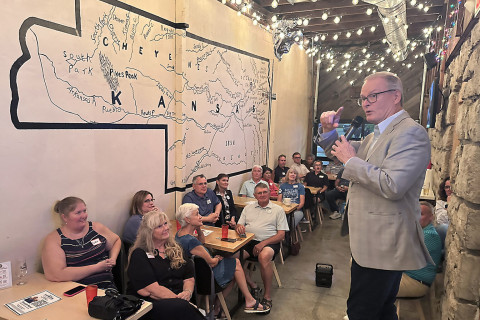
Ten years ago, Jad Abumrad, the creator of Radiolab, became fascinated by the breadth of that affection. He’d never given Dolly much attention until he saw her perform in Queens in 2016. The presidential campaign had American public life feeling especially raw, and he noticed the crowd: drag queens, evangelical Christians, hipsters, and people whose lives otherwise seemed unlikely to overlap, all waiting to see the same woman. The scene reminded him of a papal visit, he later said. It felt as though people had “elected her in their hearts,” and his curiosity about that eventually became the nine-part podcast Dolly Parton’s America.
Abumrad’s papal comparison feels more apt today than ever. Baptists don’t canonize saints—probably for the best—but this week I’m pretty sure we Baptists could figure out how to spin Dolly’s sainthood into a committee assignment before lunch, with a congregational vote to follow. I know a fair number of Baptists friends who are now ready to nominate Dolly by acclamation, but rock guitarist Jack White has beat us to the punch: Just hours after Dolly died, he stood on a London stage, called for “instant sainthood,” and then played “Jolene.”
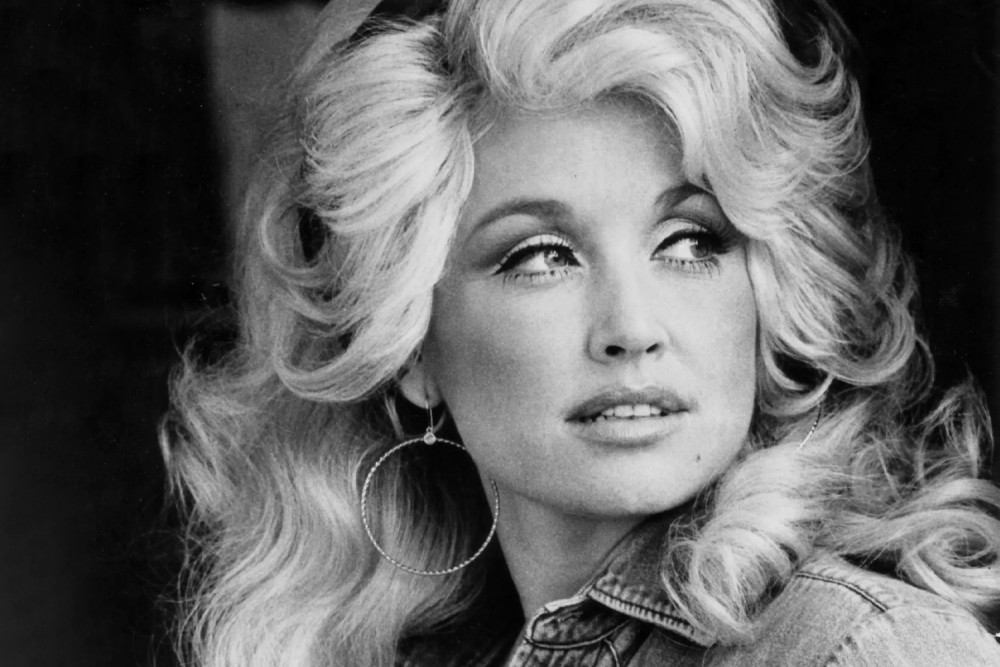
For the record, Dolly wasn’t Baptist. She grew up Pentecostal with a preacher grandfather, surrounded by scripture, gospel music, altar calls, and speaking in tongues. To young Dolly, heaven and hell felt as real as biscuits and gravy, a backdrop that stayed with her even as she spent the next several decades crafting her public persona: peroxide-blonde hair piled sky high, red lipstick, long fingernails, high heels, and tight clothes. For years after she adopted this image, her preacher grandfather needed some convincing. “I looked like Jezebel,” Dolly joked, “but he got over that.”
The woman with the big hair became one of the most successful songwriters in American music history. In addition to a relentless work ethic, she possessed an impressive understanding of publishing, ownership, and the long value of creative work at a time when women in Nashville weren’t routinely granted much control of anything. Whitney Houston’s 1992 cover of “I Will Always Love You” for The Bodyguard movie soundtrack launched Dolly into a global musical universe—and earned her millions in songwriting royalties. Years later, Andy Cohen asked her about the best thing she’d purchased with that money. She told him about an office complex she’d bought in a predominately Black Nashville neighborhood. The location seemed right to her because of where the money had come from. She wanted to be among Whitney’s people, she said, “who are my people as well.” She called it “The house that Whitney built.”
The fruits of her songwriting soon exploded far past royalties for one woman. Dollywood brought new jobs and tourists into the East Tennessee mountains of her childhood. When wildfires tore through Sevier County in 2016, she created the My People Fund to put money directly into the hands of families whose homes had been destroyed. During the COVID-19 pandemic, she gave Vanderbilt University Medical Center $1 million for research. Over the years there were scholarships, children’s hospitals, disaster relief and so many other gifts. Her Imagination Library has sent out hundreds of millions of books worldwide, mailing tens of millions a year to kids who need them. (One in six children in the US currently receive books from the Imagination Library).
For all her public visibility, she guarded her private life fiercely—so much that her husband, Carl Dean, was able to spend nearly 60 years married to a global superstar while remaining almost completely anonymous. Yet she talked about her faith freely. After Carl died last year, Dolly spoke about the loss with the language that she’d had since childhood. “I am a person of faith,” she said, “and I truly believe that I’m going to see him again someday.”
Dolly’s faith never fit neatly into any standard denominational framework, but she talked often about God, Jesus, scripture, and prayer. Some of what she said would’ve been difficult to reconcile with the theology of churches she knew, but that didn’t seem to trouble her too much. When once asked how she practiced her faith, she resisted the verb: “I don’t practice it. I live it.”
The religion of her childhood gave her the Bible, music, and an expectation that God shows up in ordinary life, but it also frightened her. In the final episode of Dolly Parton’s America, she told Abumrad about being a girl of around 12 who worried that she didn’t know God in the way adults around her said they knew God. Why hadn’t she felt what everyone else testified about?
Seeking assurance, Dolly started visiting an abandoned church with broken windows on a hill near her home. Graffiti covered the walls. A damaged piano remained inside. People used it for drinking and other activities that would have scandalized the congregation that once worshiped there. Dolly liked to go there anyway.
One day she began praying Psalm 23. “The Lord is my shepherd…” She recited the psalm as a prayer, and then something happened that she would remember for the rest of her life. Dolly described sensing God’s presence with a force that finally settled the question for her. Telling the story decades later, she said she’d found God there . . . and she’d also found Dolly Parton.
In 2016, Vogue asked her what she thought people saw in her. “I really like to think it’s God spark,” Dolly said. She then explained that every day she asked God to let her do or say something that mattered to somebody, to let some love pass through her. Then she turned her attention toward Christians who seemed especially interested in everyone else’s sins. “Where’s your religion?!?” Her own response was pretty simple: “I want to be loved, and so I try to love everybody.”
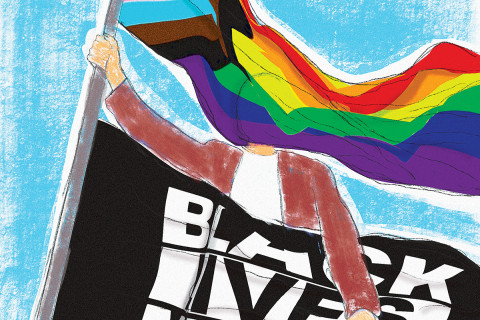
Dolly was careful when it came to partisan politics, knowing what political fights did to people she loved and what choosing a side could cost her business. On some occasions, though, she spoke more directly. Asked in 2020 about protests over racial injustice, Dolly made clear that the lives of Black Americans matter. Two years earlier, her company had removed “Dixie” from the name of its dinner attraction after she came to understand what the word and the show’s Civil War imagery carried for other people. Once you see a problem, she said, you fix it.
Now, a decade after Abumrad stood among that unlikely assortment of people in Queens, his question feels more pressing than ever. The hostility he noticed in American life has not subsided. It’s moved deeper into families, churches, and friendships. Social media has become extraordinarily efficient at helping us sort people into camps. Contempt is profitable. Amid all of that, Dolly has somehow remained someone people can share. I wonder if we’ve grown to love her even more in this time when sharing almost anything else feels nearly impossible.
There’s another Dolly-and-church story I heard several years ago. I’m almost certainly getting some of the details wrong, so I offer it simply as a story I remember hearing. It’s too good not to tell.
Dolly called a Nashville church and told the senior pastor she wanted him to come to her house for a baby dedication, so he and a younger pastor went.
When they arrived, however, Dolly had something more than a dedication in mind. She wanted them to baptize her goddaughter. She’d even had water shipped in from Israel, from the Jordan River, for the occasion. Dolly left the living room to get her goddaughter.
The younger pastor looked at the senior pastor. “What are we going to do?” The problem was theological. They came from a tradition that didn’t baptize babies.
The senior pastor responded: “Brother, we are in Dolly Parton’s house. Dolly Parton just went into another room to get her goddaughter and water she had shipped in from Israel—from the Jordan River—to baptize her with. So I tell you what we’re going to do. When Dolly Parton comes back into this living room, we’re going to baptize that baby!”
There was a generosity about Dolly, and a kind of extravagant welcome. She had convictions, but she didn’t seem to need an enemy to prove them. She had the ability to laugh at herself without making someone else the punchline. Some element of her faith seems to have opened her toward all kinds of people—and them toward her.
What was that? What might we call it?
I think she already told us. It’s God spark.