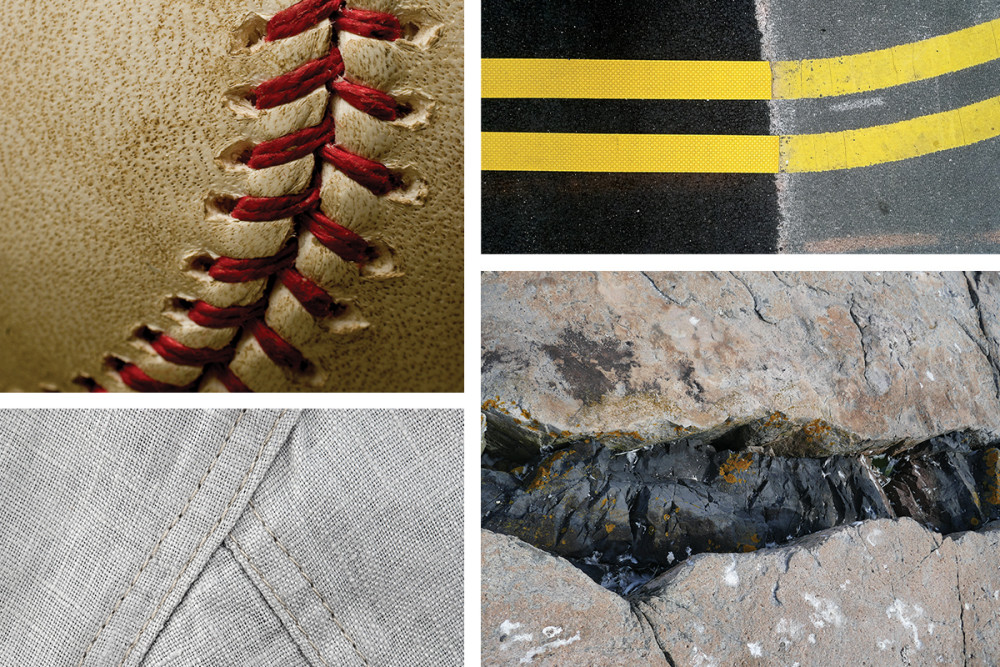
Up and down the whole length of the aisle [James Muilenburg] would stride as he chanted the war songs, the taunt songs, the dirges of ancient Israel. With his body stiff, his knees bent, his arms scarecrowed far to either side, he never merely taught the Old Testament but was the Old Testament. . . . I described him in a novel later, and when I showed him the typescript for his approval, he was appalled because it seemed to confirm his terrible fear that he was making a fool of himself. And, of course, if it hadn’t been for his genius, for the staggering sincerity of his performance, he might almost have been right. It was a measure of folly as well as of strength and courage, I suppose, to let himself come so perilously close to disaster.
“Every morning when you wake up,” he used to say, “before you reaffirm your faith in the majesty of a loving God, before you say I believe for another day, read the Daily News with its record of the latest crimes and tragedies of mankind and then see if you can honestly say it again.” He was a fool in the sense that he didn’t or couldn’t or wouldn’t resolve, intellectualize, evade, the tensions of his faith but lived those tensions out, torn almost in two by them at times. His faith was not a seamless garment but a ragged garment with the seams showing, the tears showing, a garment that he clutched about him like a man in a storm. —Frederick Buechner, Now and Then
Read our latest issue or browse back issues.

My brother Jim sailed a little boat with its name written on the bow: One Lone Guy. And so he was. Early in Jim’s life, a severe illness caused damage to his brain, preventing him from ever learning how to read and write or develop typical physical coordination. Most of all, it left him with a serious speech impairment. He knew what he was saying, but those around him would have to either lean in to understand him or brush him off with a shrug because he was different. All too often, that shrug came with a mocking laugh. It was not a seam of connection but a gap or chasm that developed between Jim and others.
But Jim, building on his mother’s unfailing love, had within him a tough spirit. Through a special school he learned a skill and met a plumber who gave him a job, a little trailer to live in, and the start to a career in what he called “plumbingwork.” It was good for a while, until some younger workers began making fun of the way he talked, mocking him instead of working with him. One day, Jim could take it no longer, and he quit the plumbingwork. He managed to get his driver’s license, and he bought a little pickup truck and a lawn mower and went to work for himself, by himself. He was a very good worker, but he was not nearly as good at thinking things through. Jim never expressed it, but there was an anger within him from all the rejection and scorn he’d faced; it just lay there unresolved and waiting to get out. And out it came.
Jim started setting fires. Old buildings and sheds were his targets. Never any places where people lived, but structures that would burst into flame so he could watch them burn. He set fires, a lot of them, until he showed up at too many of them and got caught. He went to jail, went to court, was found “not criminally responsible,” and wound up at the Perkins State Hospital in Jessup, Maryland. That was when he was 45 years old, and he was never outside of an institution again for the rest of his nearly 80 years.
Thankfully, there is something in life that wants seams to be sewn. The judicial system had put this one lone guy in a situation with lots of other people around him or supervising him. What good could come of this? Amazingly, something wonderful began to happen. Jim discovered a world of people in the institution who, unlike those outside, never made fun of him. This lack of mocking and derision opened space for something better to happen.
From somewhere deep within Jim there arose a wonderfully clever sense of humor. We had seen a little of this in him before, but back then we chalked it up as part of his oddity. Now it was different. When we would call him and ask him what he was doing, he would say in a sing-song voice, “Talking with you.” And if we waited too long to come and see him, he would invariably greet us with, “Where you been, you bum?” The staff loved it and got to love him, and we learned to love it and to love him more. Jim was now a part of something, and it was getting bigger.
—David Carter-Rimbach
Columbia, MD
Thinking about shirt seams takes me back to growing up on the high plains of northwest Kansas. In our family of seven boys, new clothing was a luxury. My mother addressed the issue, in part, by purchasing 50-pound bags of flour in patterned sacks, available from the local grocery co-op. She would empty the flour bags, launder and iron them, and turn them into shirts for her sons to wear.
I still remember seeing her stitch the seams into those shirts. The first time she presented me with one to wear to school, I worried my classmates would recognize the pattern—their mothers bought flour from the same store—and ridicule me. None ever did. If they had, my mother would have had words of advice for me: Don’t listen to what other people say about how you look. Be concerned about what they see in your character.
That guidance became one of the seams that taught me integrity. There were others as well. If you can’t be proud of what you’re doing, then don’t do it. Stand for things that matter. Tell the truth. Dare to be different—don’t follow the crowd. If someone else is being ridiculed or treated badly, be part of the solution. Kindness matters.
Those seams stitched my character securely together. I still depend on them.
—Michael Sherer
Waverly, IA
I glance down and see the bracelet on my wrist. Surprised, I smile. I don’t usually wear bracelets or a watch; the feel of them annoys me. But this bracelet was a Christmas gift from one of my daughters, so of course I started wearing it right away. The piece is imprinted with the words, “I am strong, I am worthy, I am loved, I am enough.”
I’ve struggled with low self-esteem since high school. I had wonderful parents and friends, and I did well in school, but it seemed like everyone but me was dating. I felt excluded, like there was something wrong with me. I didn’t date until I was 19 and didn’t marry until age 36. When that marriage ended 13 years later, I didn’t even know who I was anymore. I had given my all to the relationship, and it still failed.
During the last years of my marriage, I read every relationship and self-help book I could get my hands on. It didn’t save my marriage, but it did have a positive impact on my dating after the divorce. To be honest, it probably wasn’t a great idea for me to date right away, but I had such a need to feel worthy of love that I didn’t wait long.
By the grace of God, I met a widower named Steve and we hit it off right away. After we married, I adopted his twin girls, who are just three months older than my daughter. We have been a family now for over 12 years. Steve’s love remains constant and wholehearted. But sometimes I still struggle with feelings of low self-esteem. Our three girls are teenagers now, and there are occasional conflicts. My mind knows that’s normal, but my heart never seems to get the memo.
It used to take a couple days for my self-esteem to gradually climb out of the gutter after any such conflict, probably because I took on more than my fair share of the responsibility for our issues. But now I put my bracelet on first thing each morning, and the positive affirmations help me stay calm and focused. As I read the bracelet’s words over and over throughout each day, I remember the love and wisdom of the daughter who gave it to me, along with my own strengths, and I know that the seams of my self-worth are finally being stitched back into place.
The bracelet isn’t magic. I still revert to old thought patterns at times. But I’m grateful for this physical reminder that I’m enough. I am loved.
—Margaret Lea
Katy, TX
“If we see any Taliban today, let me know,” I often joked to Yusuf, my driver and dear friend.
“Sir, they all around—you know that,” he would say with a soft smile and a gentle chuckle. I would return his chuckle while my stomach capsized.
I worked in Pakistan while American troops waged a war against the Taliban in neighboring Afghanistan. Osama bin Laden had a $25 million bounty on his head. Members of the Taliban were often in Islamabad and were easy to spot with their dark head wraps and thick beards. Most other men wore a pakol cap, characterized by its classic wool roll and flat top. I sometimes sported one myself in a feeble attempt to blend in.
I was not directly in the war zone but was a close haul away. It was too dangerous for my family, so I rotated back and forth alone, a month in Pakistan followed by a month at home. Friends joked that I must be an undercover CIA agent. I could not claim anything so glamorous, nor that skill set.
“We hurry,” Yusuf subtly but firmly suggested one morning.
“What is happening?” I asked.
“I think they explain . . . in office.”
Off we darted. Yusuf always varied our routes to work. That morning he took the quickest one. Opening my door, he said, “Don’t walk on other side of building, sir.”
Once outside, I heard pops of scattered gunfire. A battle had broken out between Pakistani security forces and militants from the Lal Masjid, the Red Mosque. The fighting raged on for a week until government troops finally stormed the complex, killing many of the militants. From my office, I could look down at the mosque. Before the shooting was over, a stray bullet landed inside one of our offices.
Soon afterward, militants bombed the Marriott hotel where I sometimes enjoyed pad thai. They drove a dump truck loaded with explosives to the checkpoint entrance. The subsequent explosion killed 100 Pakistanis and three American marines, and it destroyed the hotel, leaving a crater 60 feet wide and 20 feet deep.
On a wall in the Louvre in Paris hangs the oldest known Coptic icon. In 1900, French archaeologist Jean Clédat discovered the eighth-century painting on wood while excavating the remains of an ancient monastery in Middle Egypt. It pictures Christ and Father Mena, abbot of the monastery during the latter part of the third century. Clédat named his treasure Christ and His Friend. Unlike most icons, this one presents a Jesus who is not dressed in stately, regal robes with angels flying above. The iconographer depicts Christ as a humble monk in a dark tunic and scarf. Jesus and his friend look forward, straight to the beholder, with raised eyebrows that communicate loving affection. Yet they also maintain an ever so subtle gaze toward each other, as if finding it hard to look away. In an almost scandalous gesture, Jesus has his right arm around his friend. This approving, warm hug reminds us that Jesus calls us friends.
In Pakistan I straddled a scary unknown while often yearning for my own warm hug. I felt the Divine pull me along, mainly through unlikely friendships. Yusuf was as gentle as he was tall; his kindness ran as deep as the Atlantic. Yusuf helped trim my sails, like a sailor does to keep the boat in the seam just next to the direction of the wind. Each month when he dropped me off at the airport to cross that vast blue ocean, he would look at me with his gentle brown eyes, take my hand from our handshake position, pull it up to his heart, hold it there a good while, and say, “Sir, you not boss . . . you friend.” His eyes sparkled.
When I turned away from my friend and those rusty airport automatic doors squeaked open, I cried a little—especially the last time, knowing I would never gaze at my dear friend again.
—Samuel C. Hughes
Pagosa Springs, CO