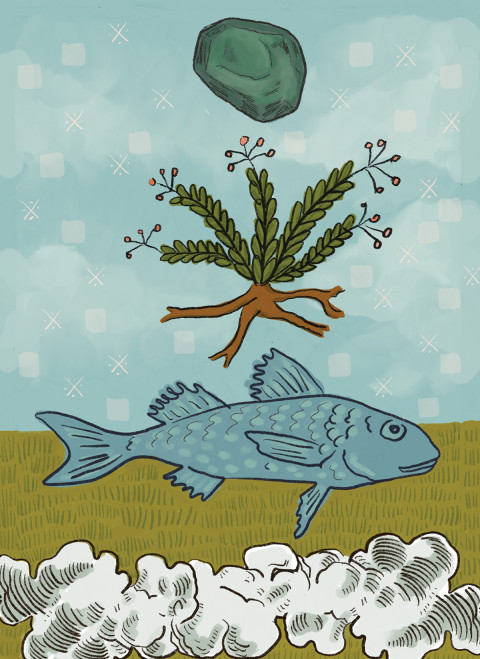
Some things are alive, and others are not. It’s a dichotomy basic enough that every grade schooler has it mastered. Many facts are like that: so seemingly natural, so thoroughly embedded in how we understand the world, that it seems impossible anyone could think otherwise. And yet, the clean divide between living and nonliving we know today is only a few centuries old. Our categories might have been just as strange to a denizen of the medieval world as they are natural to us.
Of course, we are accustomed to thinking of the medieval past as superstitious, unenlightened, unscientific—the myth of the “dark ages” persists despite the era’s impressive intellectual, artistic, and scientific achievements. In the medieval West, extensive encyclopedias investigating health and the natural world were bestsellers, but they receive almost no attention from scholars and readers today. The renowned 12th-century theologian and polymath Hildegard of Bingen wrote one, the Physica, which did not even appear in English translation until 1998. Medieval science simply registers as too weird for our tastes, too religious, too full of falsehood.
Hildegard, after all, devoted a whole book of her encyclopedia to the nature and medical properties of stones, gems, and minerals. She presented a vision in which stones, along with most of the cosmos, are brimming with life, a view modern readers will readily recognize as false. Her claim that “the devil hates and shrinks from stones” or that the vital powers of stones can cure diseases would strike most people today as false in the most bizarre way. Yet perhaps medieval science, once so beloved by readers, deserves another chance. Perhaps the very claims that are strangest to us can best help us see our own cultural blind spots.