When I was in high school, my civics class put Odysseus on trial for the death of his men. In partnership with our world literature class, we were divided into defense and prosecution teams and tasked with scouring The Odyssey for evidence we could use in a courtroom simulation. I ended up playing the role of Zeus as a witness for the defense, arguing that the gods were ultimately responsible for the various misfortunes that resulted in all the men dying. Ergo, Odysseus could not be held responsible. We won the case.
Looking back, it was a rather simplistic argument, the kind teenagers make when they are fixated on deflecting blame and looking for loopholes in adult judgments. But we weren’t wrong. The epic poem is driven at least as much by the action of the gods intervening to punish or aid mortals as it is by the choices of Odysseus or any other human.
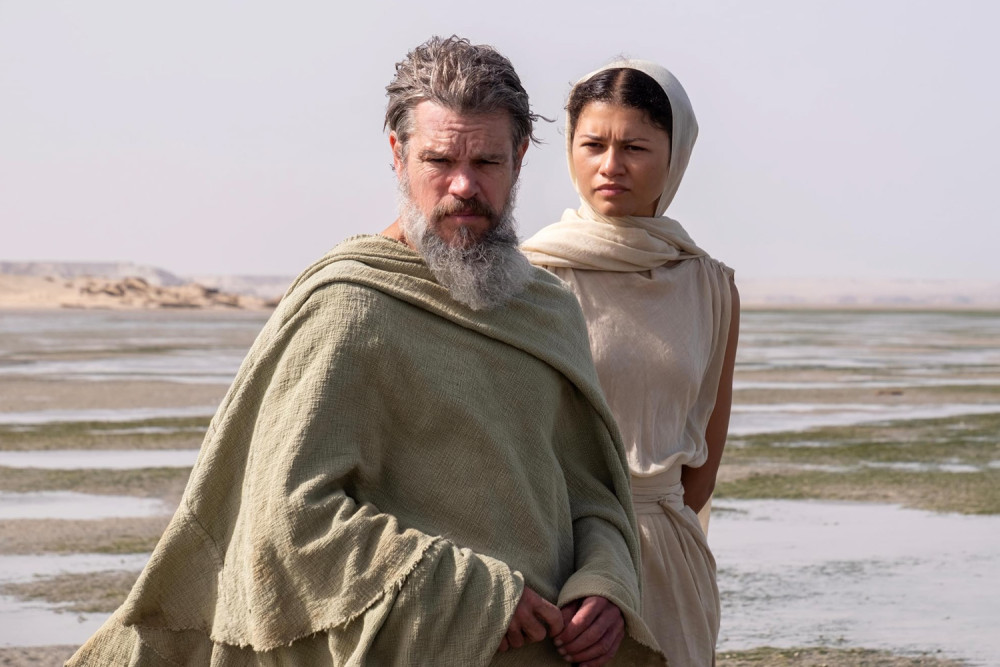
If we erred too far in deflecting human agency, director Christopher Nolan, in his epic, visually stunning film adaptation, errs in the other direction. Other than a mournful Athena (Zendaya), who is less the goddess of cunning who manipulates the physical world on Odysseus’s behalf and more a manifestation of his conscience, the gods are entirely absent.