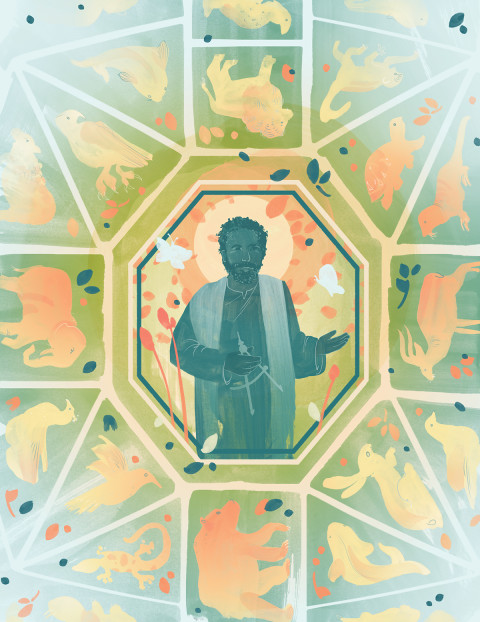
This spring, the Consultation on Common Texts published an update to the Revised Common Lectionary: It added the Feast of Creation in Christ on September 1, offering biblical texts and other materials for use starting with the current church year. It’s a milestone in a decades-long ecumenical process. In 1989, the ecumenical patriarch of Constantinople issued an invitation to “the whole Christian world” to join the Orthodox in observing September 1—known in the Eastern church as the Feast of the Indiction—as a day of prayer for creation. Over time, this day of prayer was adopted by various churches and ecumenical groups as Creation Day, along with a companion Season of Creation spanning September and early October.
In 2024, a group of church leaders and scholars began a series of meetings in Assisi, Italy, about the prospect of the whole Christian world joining the Orthodox in elevating September 1 to the status of an official feast day. Along with CCT, the project’s steering committee included the World Council of Churches, the Middle East Council of Churches, and several world communions. The fruit of their efforts—a proposal for the Feast of Creation in Christ—would be the first time the Western church adopted an Eastern feast in more than 500 years.
Read our latest issue or browse back issues.
Liturgical theologian Kimberly Belcher participated in the Feast of Creation meetings in Assisi. She teaches at the University of Notre Dame, represents the US Conference of Catholic Bishops in ecumenical dialogues, and is coauthor of One Baptism—One Church? She spoke to the century in June.
The Feast of Creation is a recent development in the Western church, but in the East it’s quite old. Tell us a little about that history.
The Eastern Orthodox feast on September 1 has origins in the civic calendar of ancient Rome. This was a harvest festival, considered the beginning of the agricultural and imperial year, and the Orthodox feast commemorates the beginning of God’s creation and of Christ’s ministry as well. The feast also has a historical connection to Rosh Hashanah and to the Jewish understanding of the harvest season as the beginning of the created order.
Its official name was and remains the Feast of the Indiction. But creation is one of the themes of that historic celebration, and most of the Eastern Orthodox churches now consider it the Feast of Creation.
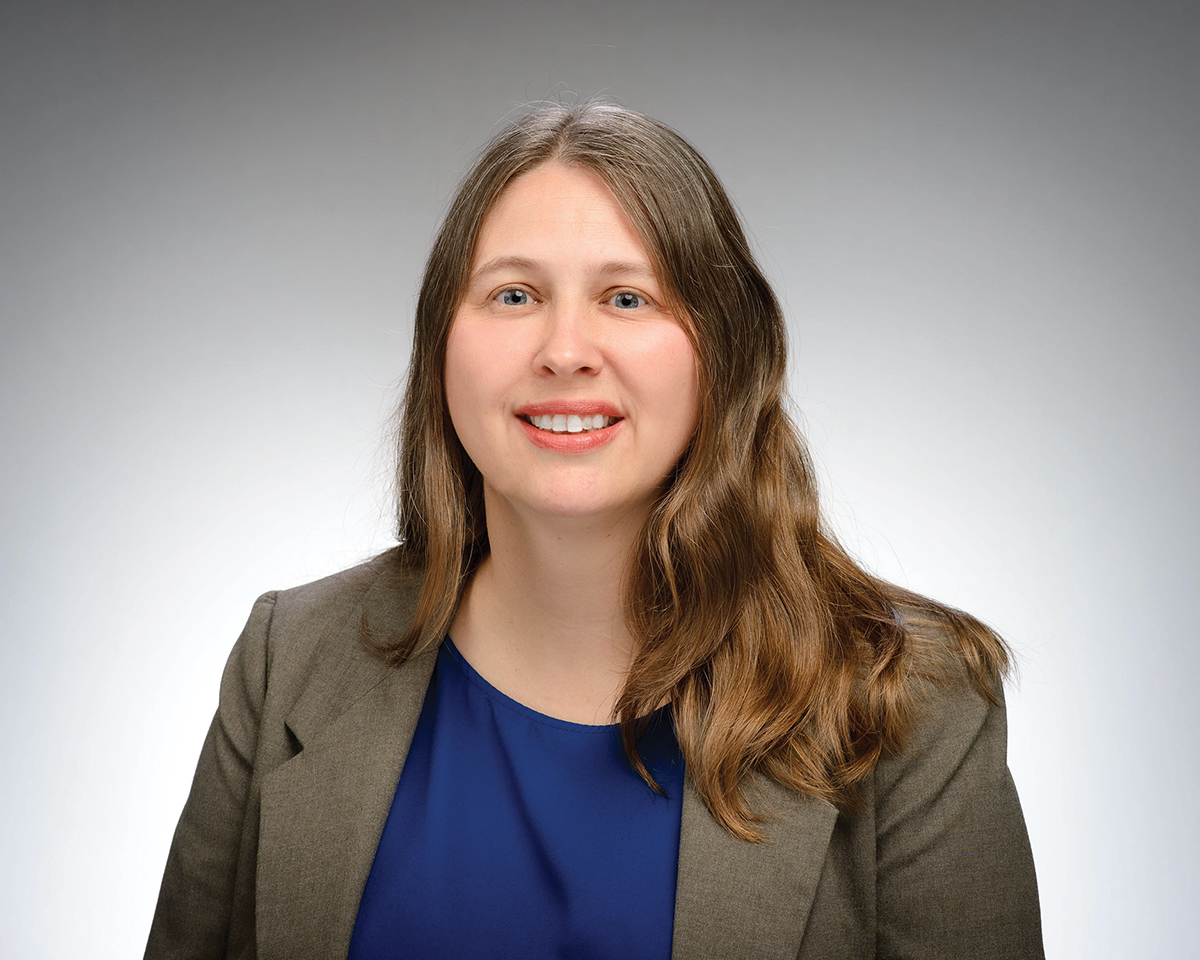
Kimberly Belcher (Photo: Matt Cashore / Notre Dame University)
Many Western churches have been observing Creation Day on September 1 for years. Now there’s an effort to make it not just a world day of prayer but a liturgical feast. Why is that distinction important?
Creation Day is voluntary, a sort of add-on to the regular things Christians might be doing that day. It doesn’t necessarily change the celebration of the Eucharist or the liturgy of the hours. It might just add something to existing elements that have a different theological focus. In adopting a feast day, churches make this part of their stable liturgical calendar. It’s part of the regular celebration of the liturgy; the assigned readings and prayers are all connected to it.
As they are in the common lectionary’s new entry for the Feast of Creation.
And this encourages a whole church to celebrate the day, not just groups of people who happen to be interested in it. Using similar prayers and readings also helps establish relationships among churches. It allows for more cooperation.
It’s also important theologically—because Creation Day has a wide range of possible interpretations. One could treat it like Grandparents Day, where we’re just paying special attention to something as a kind of celebration. We might have Creation Day the same way we have world days of prayer for particular types of needs, such as the needs of earthquake victims. To call it a feast day, on the other hand, suggests a strong connection specifically with God’s work of salvation.
What was the process like for developing this proposal?
The consultation has been going on for years, and it culminated in three big meetings in Assisi. The first one, which I participated in only online, was in March 2024. The second one was a Catholic consultation, because we have all these nitty-gritty types of questions that other churches don’t have to answer, in December 2024. And then the last one was in May 2025. For each meeting there were dozens of scholars doing preparatory work on biblical foundations, liturgical foundations, theological meaning, and more.
How were the meetings organized? What was it like to be there?
At the May 2025 meeting, everything was structured around common prayer. We weren’t just scholars flipping through the pages of our scholarly Bibles; we were praying morning and evening prayer together. We were experiencing the beauties of one another’s traditions and then reflecting on commonalities. Lutherans do a beautiful morning prayer. I’m a monastic oblate, and it was really lovely for me to do Lutheran morning prayer with Lutherans.
We also had common meals, and we took walks together. We prayed a litany of creation outside the Basilica of St. Francis. We reflected on decades of material that had been developed since the adoption of Creation Day as a worldwide day of prayer.
“This is the first time in history that Christians have tried to adopt a liturgical feast ecumenically.”
It was a pretty broadly ecumenical group that was represented there, everyone from the Copts to the Pentecostals. What were the challenges and gifts of this diversity?
We’ve never really tried to do this before, to discern together what makes a feast worth celebrating. Every time you try to do something new together as a community, you’re trying to build off of a shared experience. In a situation where there’s a gap of recognized shared experience, you have to make up for that with an openness of heart. To me, this was the real gift of the meeting. The more diversity there is, the more there’s a call for this Christian openness toward the neighbor.
Major Heather Poxon was there, representing the Salvation Army. At one point she said something like, I’m a member of a nonliturgical church, and I don’t know what it means for us to adopt a feast day. But I’m happy to be here, and I’m excited to see what this means for our community.
The full title the group settled on is the Feast of the Creation in Christ. Why is this christological focus important?
In the second half of the 20th century, as the Western church was evaluating and reforming the Christian calendar we inherited, a distinction was made between the feasts about the lives and witness of individual saints and the feasts about Christ’s work to save us. The latter group, the feasts of Christ, sometimes are thought to have a universal character, whereas a lot of times the work of an individual saint is something that speaks especially to people who are like that saint in some way.
So one thing that this feast title does is to identify Christ in the act of creation as already the Word, the Logos—the principle or archetype of creation—and the one in whom all of creation has its meaning and existence. And as a feast of Christ, it reminds us that the creation marks the beginning of God’s work to save us. Before the Fall, our salvation was already real in the mind of God.
To be clear, there are many churches in which the title we chose is not especially helpful or meaningfully grounded in practice—churches in which keeping the title Creation Day makes more sense than, say, trying to explain what a liturgical feast is. As somebody who does a lot of work in ecumenism, one critique I often hear is that ecumenism isn’t real—because while we may use the same words, we mean different things. But the conversation in Assisi about the name of the feast neatly inverted this concern: We found that we had a lot of agreement about the content of the feast—about creation as the initiation of God’s will to save us, even as the thing that reveals to us that God wants to save us. The theological consensus was deep and thick. At the same time, different communities are formed by different types of language, and in those communities there are different types of misunderstandings available. So we need different words.
The title Feast of the Creation in Christ is a kind of suggestion of a core set of terms for the feast. It comes with explicit permission to be flexible in different contexts, using the kind of language that’s going to help your community understand what the day is about.
I imagine that there was also some interest in leading with the Trinity rather than with Christology.
Yeah, and there’s some tension between the two. But to me, that’s the way it should be. Julian of Norwich describes a moment when she is looking up to heaven, but she sets her eyes instead on the cross, on the crucified Christ. She says that in Christ she finds the whole Trinity. If you’re a Christian, that’s the way it should work.
The materials I’ve seen from Assisi also stress the mystery of creation. Why that particular emphasis?
That’s one way we experimented with shifting away from just celebration and thanksgiving for creation—or, on the other hand, just lament and intercession—to seeing creation itself as a kind of revelation, as already showing us something about the nature of God.
One thing that grounded our work was the way creation is built into the structure of the Nicene Creed: the Father identified as creator, the Word as the one through whom all things were made, the Holy Spirit who gives life to all creatures. The mystery of the Trinity is already revealed to us in creation, as it’s illuminated by the Holy Spirit and the Christian tradition.
The meeting last May took place as the church marked 1,700 years since Nicaea. How else was the conversation shaped by this commemoration?
It was a huge impetus for it. The invitation from the Orthodox came decades ago, and, well, everybody needs a deadline. We recognized that this would be the first ecumenical celebration of Nicaea in the modern period. One way to honor that would be to have all these Christian churches adopt a feast together—to adopt it at various levels, I grant you. But keep in mind that 100 years earlier, in 1925, the churches were really not even in communication at all. The Feast of Christ the King—the closest liturgical analog to the Feast of Creation—was added to the Catholic calendar that year, but that didn’t involve any ecumenical partners. We weren’t talking to each other then.
So we wanted to mark this ecumenical occasion by fomenting the adoption of an Orthodox feast day, one that is so important for the plight of the planet and its human creatures today.
What was the process for determining which lectionary readings to assign for the feast?
The Consultation on Common Texts chose them, but they are scriptures that came up over and over again in our work together. The year A readings in particular are central texts for reflecting on the most important aspects of creation theology: Genesis 1 and 2; Psalm 148, which has been underutilized in the eucharistic traditions, though it’s very important in morning prayer; Acts 17, “In him we live and move and have our being”; and John 1, the Word—the christological thesis.
There was a large-scale consensus about these readings in Assisi. Over time, I think we’ll see that they cast light on other days of the liturgical year, days that are also important for seeing creation in this mysterious, salvific light, and that those other days’ readings cast a special light on these ones as well.
With the Feast of Creation now included in the common lectionary, a lot of Protestants will encounter it for the first time this year. Where else is the feast gaining momentum?
While the Catholic Church has not yet adopted it as a universal feast day, we do have a new liturgical text—Mass for the Care of Creation—that can be used by priests on days that aren’t already a big liturgical feast. I think many of the Catholic communities in the Global South will be implementing this text at a regional level on September 1. There’s a lot of interest in Creation Day in the Southern Hemisphere, and the bishops’ conferences there have by and large been strongly in favor of making it an official feast. The World Council of Churches has adopted the feast as well.
What exactly does it mean for a conciliar group like the World Council to adopt a feast?
Great question. I don’t know if anyone knows—history shall tell us.
It represents something significant, though, because the Consultation on Common Texts is an English-language group, and the churches participating include some more liturgical churches—like the Lutherans, Methodists, and Anglicans—that are multilingual world communions, along with the smaller free churches. The Anglican Communion in particular was an early promoter of the feast, even before the World Council of Churches got involved—so the Anglicans were more lever than levered, if you will, in this move.
When a world communion adopts a feast, it goes into their official calendar. So we see something like a global implementation, with the whole church adapting the feast to fit into their regular weekly cycles. For the free churches that are part of the World Council of Churches, it looks pretty different: The central body has little authority, and the liturgical year might not even exist in their context. So adoption will remain local for free churches, and it’ll look more like giving increased attention to Creation Day as it already exists.
And obviously there are churches that fall somewhere in between a global communion with a universal practice and free churches that are entirely local in their regulation.
At least among North American Protestants, I think that middle group is quite large. It’s common for local churches, even in some of the more liturgical traditions, to feel little obligation to follow the denomination’s guidance on worship. So the existence of a global communion, with a liturgical calendar to add a feast to, doesn’t resolve the question of what difference such efforts make locally.
This is one of my favorite topics: the reception of authority. These are broader cultural considerations, and it’s harder to shift a culture than it is to change a book.
It’s an equally interesting question in the context of the Catholic Church, even if it’s somewhat camouflaged. There I think some of the reluctance to change the book in the first place comes because the book really does get implemented. There’s not going to be as much resistance to that in these middle-of-the-road churches you’re describing; if people really, really hate something, they just won’t do it.
But there’s a difference between authority that imposes a practice and authorization that permits it, emphasizes it, and gives it credibility. I think what we’re working on is to create permission and maybe a little bit of an opening to seeing the Feast of Creation as part of Christian practice.
And in churches where the difference between Creation Day and the Feast of Creation might not amount to much, this process could still spark new energy and new resources.
Yeah, I think so. Some of the members of the Revised Common Lectionary team are free church members, and so those traditions are very involved in this process. There are free churches where the Season of Creation is tremendously important to the local community’s identity.
The Season of Creation was established by the World Council more than 20 years ago, and it might be more familiar to some Western Christians than the September 1 tradition is. But there are plenty of churches that don’t observe either one. Do you think the development of an ecumenical feast will help to promote the longer season in the churches as well?
It’s a good question. The Season of Creation serves as a bridge between Creation Day on September 1 and the feast day of St. Francis of Assisi on October 4. And yes, I do think that when we come to see the Feast of Creation as an anchor, a wider adoption of the season will follow. I know from my work with the Calvin Institute of Christian Worship that a lot of communities are coming up with whole lectionaries for the Season of Creation. That’s the kind of thing that can be adapted and adopted in a free church setting—something that I can’t do at my local Catholic parish. This is an ecumenical process, and different churches, with their different structures, have different gifts to offer.
And St. Francis and his feast day are ecumenically very popular! I’ve always found it delightful, if also slightly puzzling, that there’s this Italian religious founder who everybody loves.
I’m not sure popular interest very often goes much deeper than, “He loved animals? I love animals!” Not exactly a full picture of Francis, though it is something.
Everything is a doorway. A pet blessing is a doorway into our relationship with the rest of creation. It’s certainly accessible, and in a lot of ways it calls your attention in a way that reading the creation story does not.
True. Genesis 1 is beautiful and profound, but at the end of the day a lot of us are just more interested in our dogs.
We can read something every day, but that one day that we take dogs to church—even my children, who I don’t think have ever actually been to a pet blessing, are aware that there is one day a year when you take dogs to church. It’s wild.
What do you say to people who see a new feast day as an irrelevant gesture in the face of climate catastrophe? Why spend so much time and energy on this?
Creation is a revelation of God’s saving will for the cosmos, of union with God and peace among ourselves. So the Feast of Creation is more than an aid for activism. That said, it’s true that some of the momentum for this feast comes from our concern about creation and our desire to do something for it. Is this the most useful thing that we could do? Hard to say. No one seems to be able to agree what the most useful thing would be, and the things we do know are useful are things we’re not even doing.
“A common ritual tradition can support a movement for change. But creation is bigger than our efforts to take care of it.”
The way that human beings facilitate a movement for things we care about is by doing ritual together. It helps us develop shared values and a shared imagination for how we might implement them. One thing we’re seeing in conjunction with these Feast of Creation meetings is people reflecting on how to develop particular ways of implementing creation care in their local contexts. I think a liturgical feast allows a kind of perspective on our commitments to creation that we don’t often make room for.
So I don’t think it’s a waste of time to develop a common ritual tradition that supports this movement. But we also need to recognize that creation is bigger than our efforts to take care of it. Its value, as the thing loved into being by God, is beyond our sustainability commitments and climate agreements.
It’s amazing how widespread the assumption is that Genesis 1 is all about people.
Isn’t it? It’s barely about people at all!
We don’t even get a whole day of creation to ourselves; we share it with a bunch of animals.
And I think it takes a ritual to get us out of that anthropocentrism. Focusing on our own activism for creation, on the other hand, is always going to put us in an anthropocentric mode.
What do you hope this new feast day accomplishes in congregations? What is its primary work at the local level?
I think it would be lovely if communities recognized and really reflected on the fact that their neighbors from other confessions are also celebrating this feast. This is the first time in history that Christians have tried to adopt a feast ecumenically. And when we change things that we do ritually, it prompts us to talk about those things. I think of rural communities where, perhaps counterintuitively, the approaches to creation reflected in this work could have some serious purchase. They could do some unifying work in communities that are struggling in a lot of ways right now.
So I would love it if local communities experienced the Feast of Creation as a prompt for conversation—about what we see in creation and about how we understand the relationship between God, humans, and other creatures. It’s a new moment in liturgical ecumenism. We are naming our need not just to celebrate God’s saving work in creation but to do so together. If we are going to embrace a cosmic vision, it matters to do this on the same day, under the same sun.