The dog days of summer are, for me, a spiritual trial. Every spring, I plan to use the slack in the parish and school calendars to work ahead, to fix processes, or even to read up for the demands of the program year as if I haven’t fumbled away all the preceding summers. I get restless whenever the pressure of daily tasks diminishes even a little, and my judgment has so far never been equal to harnessing the restlessness.
But while I may be a hopeless case where summer is concerned, I’ve paid attention. As a member of the committee that interviews, supervises, and approves candidates for ordained ministry, I feel obligated to learn from my own characteristic pitfalls and those of colleagues I’ve seen up close.
Read our latest issue or browse back issues.
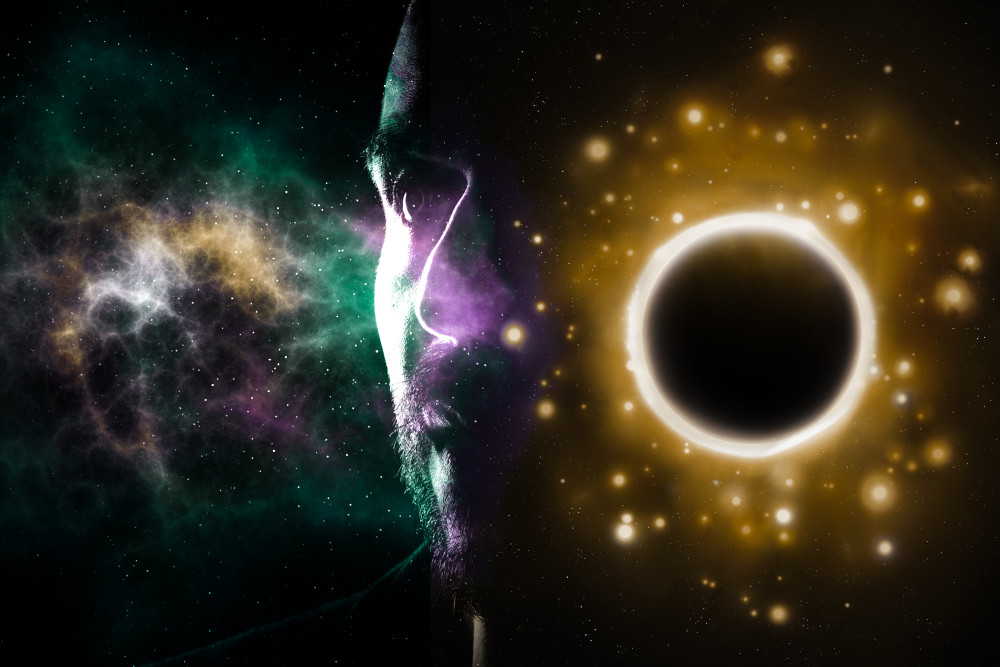
I’ve come to group those pitfalls into two categories: the black hole and the supernova. I suspect that many of us pastors are at least inclined toward one of these two failure modes.
The black hole pastor pulls too much into herself. She may be too reluctant to delegate, but she may also just be too focused on the slice of church life where she feels at home and in control. She may or may not feel herself to be a scholar or a priestly figure, keeping and tending the flames of the church’s intellectual and liturgical life in a forgetful world. She may not even be an introvert in the colloquial sense. But the pastor who becomes a black hole always feels obligated to validate the church in her own work. “I suffered, impaled upon those impossible texts,” recounts the charming, lecherous narrator of John Updike’s A Month of Sundays, refusing to look away from the agonizing conclusions of the gospels. Even so, he says, I was “happy in my work, pale in my pantomime of holy agitation, self-pleasing in my sleepless sweat, a fevered scapegoat taking upon myself the sins of the prosperous” (emphasis added).
But we can make ourselves scapegoats for more than preaching. For those inclined to crash inward, even energy and enthusiasm in others can prompt the fear that somehow it will all come back to us—that our failure to arrive first and leave last, to allow a meeting to happen untended, to throw ourselves into the graphic design, God help us, if it comes to that—will be seen as God’s failure. The danger of burnout in these cases is obvious. But it can become worse than that. The pastor’s gravity becomes too great even for good ideas and competent leaders to work independently from. The black-hole pastor can become imperious and judgmental with others, even over small things, because she has honed her imperiousness and judgment first, foremost, and always on herself.
The supernova pastor is, by contrast, all about the expansion of energy. To him, every good idea should be seized on, ideally as soon as possible. Every new or freshly activated member can be deployed, if not in an existing project, then in a new one of their own devising. He is a visionary, an organizer, a “bundle of energy,” a “fountain of ideas.” He’s more like Sinclair Lewis’s Elmer Gantry, always ready for the coming thing, always eager for the church’s relevance to human need and cultural concern. Unlike the black hole, the supernova pastor knows that others will need to do all the things that make up a church. And while he’s good at persuading them to do those things, he may also take it hard when they don’t. While the pastoral black hole is stuck in her study sweating over a sermon, a council agenda, or a bulletin, the pastoral supernova is at the community meetings, as often as not signing up for things he won’t actually do. He expands beyond the boundaries of any church building or clerical role.
People tend to love the pastoral supernova when they’re riding the edge of that beautiful expansiveness, marveling at the creativity, enthralled by the energy. But the crash can be severe. While the black hole may not be able to see beyond her center, the supernova forgets where his center was. Where the black hole meets failure by redoubling effort in an established direction, the supernova drops things easily and hungers for something new. He wears other people out before he wears himself out, but even he can’t expand forever.
In my early years of ministry, I observed these patterns in others before seeing them in myself. “I miss her often,” I’ve said of a late black-hole mentor, “but I didn’t expect to see her in the mirror every day.” Pulling the church and the faith inward or projecting ourselves outward can always be justified. Either can have the appearance, and indeed the substance, of holiness and dedication. There’s always a figure from scripture or history to justify the case, and it’s hard to know whether the inner compulsion is angelic or demonic—at least not until we’re looking back from the burnout and the strange passivity that follows an uncontested self-immolation.
The challenge is to know yourself well enough to push against whatever force predominates. This is why I’ve started asking candidates for ministry about what failure looks like for them. What tendency, left unchecked, will drive you to the brink? Maybe I should ask: What, for you, is August’s demon? The days are long, but the weeks are short before the calendar turns over. The classes and meetings and initiatives await you. Somehow or other, you’ll have to meet them. And I will, too, as soon as I get myself out of this office.
******************
The Century's community engagement editor Jon Mathieu chats with Ben Dueholm about two modes of leadership failure—which he calls black holes and supernovas—that are common among clergy.