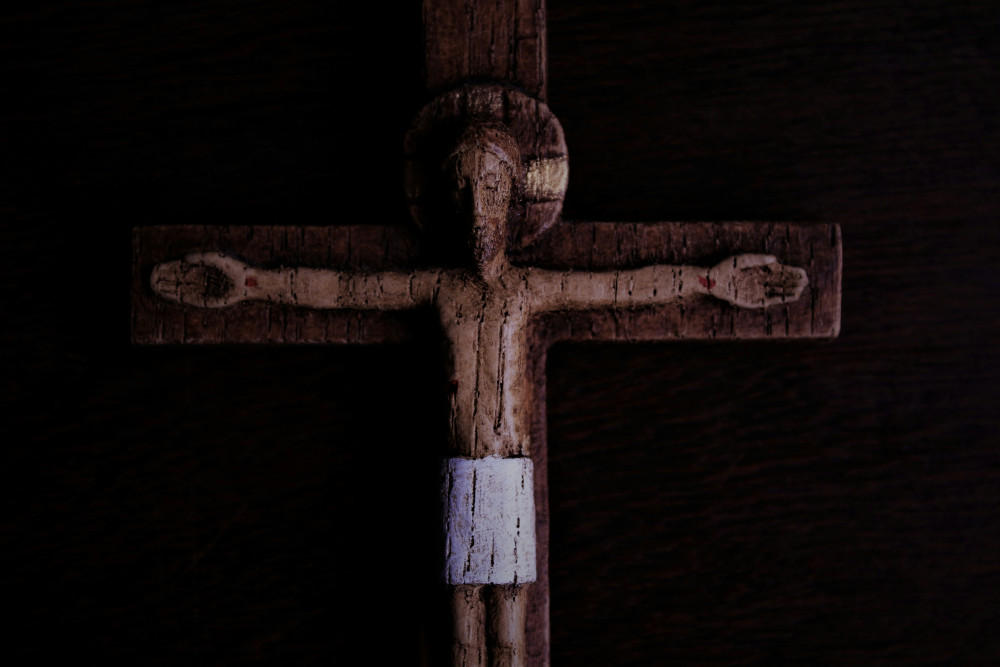
When they attended Good Friday this year, many Protestants heard Christ’s crucifixion recounted in a different way. Instead of the traditional reading from John 19:1-42, some churches used Mark 14:1-15:47. The change is part of revisions to the lectionary, recommended by the ecumenical Consultation of Common Texts, that aims to stop the use of scripture to justify discrimination and violence against Jewish people.
John’s account of Christ’s trial before Pontius Pilate, the Roman governor, and death on the cross—blames Jewish people collectively for the Crucifixion. In contrast, Mark offers a more straightforward account that limits its negative depictions specifically to the betraying Judas, the denying Peter, and the Jewish chief priests who push for Jesus’ execution.
Mark’s Gospel also makes clear that these priests both work with Pontius Pilate and lead far more privileged lives than most Jewish people in Roman-occupied Judea. After all, Peter denies he knows Jesus to one of the high priest’s servant-girls.
The CCT’s revisions, while more than a decade in the making, come as the Anti-Defamation League reports a surge in antisemitic incidents in the US since the start of the Israel-Hamas War in October 2023. The FBI documented 1,938 hate crimes against Jewish people in the US during 2024—the highest number since the federal law enforcement agency began collecting data on hate crimes in 1991. According to the Southern Poverty Law Center, 2024—the most recent year with FBI data available—saw 11,679 hate crimes overall, the second highest number on record.
The consultation, made up of scholars and denominational representatives from the US and Canada who curate the Revised Common Lectionary, now also recommends readings from the Hebrew Bible as the first readings during the 50-day Easter season instead of Acts. This use of the Hebrew scriptures places Jesus and his disciples in their Jewish context during this holy season.
The CCT has moved the Acts readings to the long season after Pentecost.
The group points out that Jesus did not die because of the behavior of non-Christian Jewish people but because of decisions made by Roman officials and the sinfulness of all humanity. The consultation also calls for Christians to repent of actions the church has taken against Jewish people.
“We must acknowledge how we and members of the church before us have discriminated against and mistreated Jews,” the consultation writes. “We need to seek ways to amend our personal and communal understanding of Scripture that shapes our attitudes and behavior toward the Jewish people.”
The CCT began considering the changes after Susan Auchincloss, a priest in the Episcopal Church, submitted a petition in 2012 through Change.org.
“In a time when interfaith relations matter more than ever,” she wrote, “this petition asks those responsible for the cycle of readings to eliminate defamatory passages from the lectionary.”
In an interview, she said that she first started thinking about anti-Judaism in the lectionary after reading Constantine’s Sword: The Church and the Jews by Catholic writer James Carroll. But the life-changing moment came, she said, when she was leading a Good Friday service and a Jewish friend was in attendance.
“I couldn’t help but hear the readings through his ears,” she recalled. “I sat there squirming with shame and guilt up there by the altar.”
Auchincloss’s petition first came to Taylor W Burton Edwards, who was secretary of the consultation at the time. Burton Edwards, who now works for United Methodist Communications, has written an overview of the alternative readings.
Auchincloss credits Burton Edwards, who was CCT chair by the time they met, with graciously welcoming her to the group’s meetings and listening to her concerns. The consultation also received counsel from Jewish scholars in its review of the lectionary.
“I applauded how seriously they took the concern I had raised,” Auchincloss said. “I can only say that what the CCT has done far surpasses anything I could imagine.”
The differences between the John and Mark’s Gospel accounts likely reflect the times and circumstances in which they were written. Mark, the oldest Gospel in the Bible, was written around AD 70, while John was written decades later.
As the consultation notes in its report, Jesus’ early disciples were just one of “multiple competing groups within the larger family of Judaism.”
These included the Pharisees, who focused on applying Jewish law in daily life; Sadducees, who made up most of the priestly class; the followers of John the Baptist, who emphasized the Kingdom of God; and the Zealots, who hoped to incite rebellion against the Roman Empire.
The consultation notes that the Gospels of Matthew, Mark, and Luke, “preserve some of the complexity of Judaism in the time of Jesus.”
John’s Gospel came about at least a half century after Jesus’ earthly ministry at a time when the Christian church was beginning to part ways with the Jewish synagogue. John’s account generally ignores the close connections of Christians to other Jewish groups. It also refers to Jewish people who opposed Jesus’ teachings as “Jews” in a disparaging way.
That being said, passages from John continue to be part of the lectionary. In fact, John 20:1-18, in which the risen Christ appears to Mary Magdalene, remains a suggested reading for Easter Sunday.
Lisa Hancock, the current United Methodist representative to the CCT, said she hopes Christian leaders keep that context in mind, whether they use the new recommended lectionary or offer a non-lectionary service around the seven last sayings of Jesus, meditating on Christ’s last words on the cross offered in all four Gospels. Such a Tenebrae service typically includes multiple verses from John.
“It all depends on our intentionality, about how we are presenting the text in multiple ways,” she said. “I think anytime we can contextualize that—not in just what was happening then, but how we intend to respond to that now is incredibly important for our congregants, even if they’ve heard it many times.” —United Methodist News