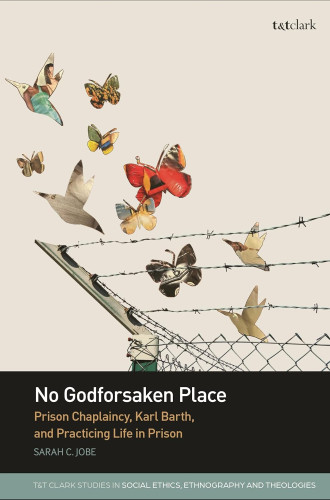
No Godforsaken Place
Prison Chaplaincy, Karl Barth, and Practicing Life in Prisons
The most difficult aspect of being a full-time chaplain in any modern institution is the role’s liminality. In theory, chaplains’ most essential contribution is their procedural separation: the ability to stand both within and apart from a care environment and, at their best, to speak on behalf of care recipients whose inherent value or voice is being stifled or disregarded. Yet employed as they are, chaplains remain answerable to the institutional cogs that grant them access to spaces most will never enter, with limited say over what transpires in them.
No Godforsaken Place takes seriously the sickening reality of modern-day prisons and presents prison chaplains as both needed and called to move within prisons so as to be with human beings the state has marked for punishment and often as worthless and irredeemable. Cognizant of the vile history and daily harms set in motion by such designations, Sarah Jobe—a career prison chaplain herself—opens with the claim that prison chaplaincy is death work. Based on her interviews with prison chaplains across the nation, she asserts that the role is also “life-in-death work” as well as “life-in-the-face-of-death work, life-after-death work, or wake work.”
Theologically, for Jobe, such work fits within what the Christian tradition has long called salvation or atonement, which she defines as the ongoing “revelation and enactment” of the principle that there is no God-forsaken place or person. In their brutality and constraints, prisons test any moral claim about life and death. Jobe begins by asking whether Christ’s death at the hands of the Roman state can speak at all to the regularity of cruelty and death in prisons, and what it would mean to insist on life after it.