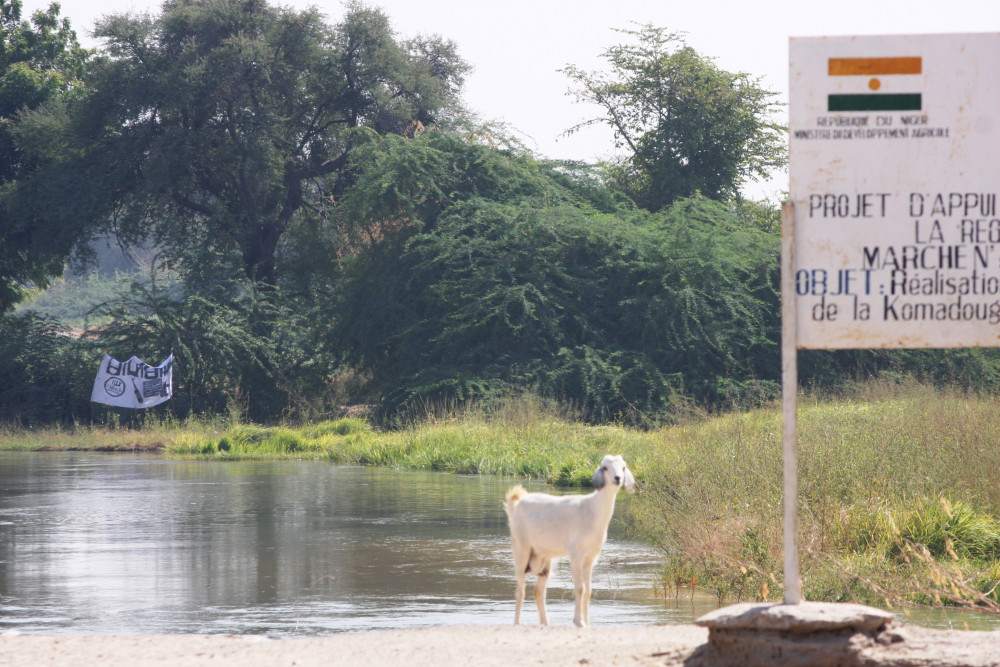
On Christmas Day, the United States launched airstrikes against Lakurawa, an Islamist vigilante group operating in a largely Muslim area of northwest Nigeria. Then, in February, the Pentagon announced it would be sending about 200 US troops to help train Nigerian soldiers to fight insurgents.
For months, President Donald Trump has accused the Nigerian government of failing to protect Christians from Islamist terrorist attacks, threatening to end all aid to the African nation if the “Christian genocide” didn’t end.
In a post on the Trump-owned social media platform, Truth Social, the president stated that the December airstrikes were directed at “ISIS terrorist scum” who he said have been “targeting and viciously killing, primarily, innocent Christians.”
The Nigerian government has refuted Trump’s claims, posting on X that Islamist terrorists “attack all who reject their murderous ideology—Muslims, Christians and those of no faith alike.”
The airstrikes triggered debate among Nigerians, especially on social media. While some see US military intervention as a solution to the escalating security challenges, others argue that a military response will only stoke fear and further create instability in an already fragile nation.
Emmanuel Ojeifo, a Nigerian Catholic priest and political theology doctoral student at the University of Notre Dame, told the CENTURY he doesn’t think Trump wants to invade Nigeria. “He simply wants the Nigerian State to wake up to its constitutional responsibility of protecting and guaranteeing religious freedom for its citizens,” he said.
“If the Nigerian government had taken its primary responsibility of protecting the lives and property of its citizens,” Ojeifo added, “no foreign government would be interested in interfering in our national affairs.”
Nigeria is divided along religious lines, with a Christian-dominated south and Muslim-dominated north. Boko Haram, an Islamist extremist movement founded in 2002, seeks to establish a theocratic state free from Western influence. Since 2009, Boko Haram, alongside its splinter group, Islamic State West Africa Province, has waged an armed insurgency in Nigeria’s northeast region.
And while the Armed Conflict Location and Event Data Project, an independent global conflict monitor, backs up the Nigerian government’s claims that Christians are not particular targets—attacks against Christians because of their religious identity make up only five percent of reported civilian events—thousands of people have been killed and millions more have been displaced.
“The attacks are real, and many people are living in fear because no one knows when the next attack will happen,” said Donatus Ajibo, a Catholic priest in Nsukka, Nigeria. “Christians have fled their communities, and churches are becoming empty.”
Meanwhile, terrorist attacks have only escalated since the US airstrikes. In January, for example, gunmen attacked three churches in Kaduna state and abducted 177 worshippers.
Ojeifo said both Christian and Muslim leaders have critical roles to play in fostering peaceful coexistence in Nigeria. It’s interreligious dialogue, he added, that will provide the most sustainable approach for unity and peace.
“Stories are everything,” he said, “and the kinds of stories we tell about ourselves and about people of other faiths reveal what kind of world we want to live in: a world of freedom or a world of fear.”