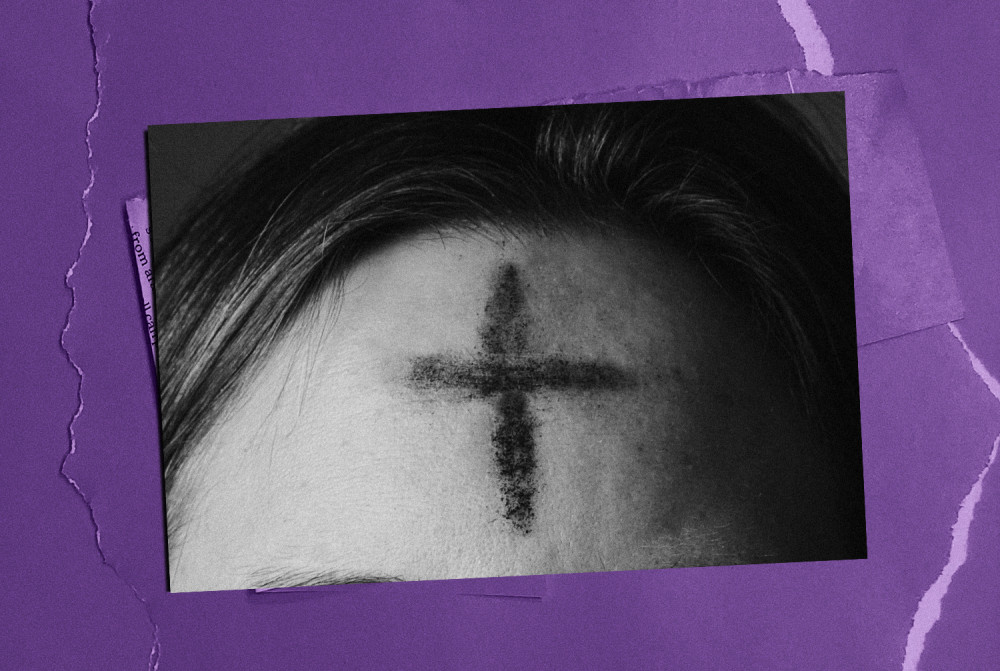
To my mind, Ash Wednesday is spiritually the most uncomfortable day of the church year. For a lot of believers, it takes guts even to enter a church on this day. For one thing, the message is hard. Unlike most other days, the fact that we’re all going to die is spoken out loud, quite unapologetically, and it has nothing to do with illness. For another, the liturgy demands a deep self-examination that can easily intimidate worshipers. We’re asked to quit acting as imposters in our own lives, to level with God about all that is not right within us. Vulnerabilities are laid in the lap of God. Sins get stared straight in the face. It’s all rather uncomfortable, providing ample reason for wary souls to avoid church that day.
The service is typically anchored by the singing or reciting of Psalm 51. Worshipers quickly find themselves pulled inside the conscience of an individual who takes his own sin very seriously and has little to offer God except his own broken spirit and a bunch of earnest pleas for a fresh start. “Have mercy on me, O God, according to your steadfast love; according to your abundant mercy, blot out my transgressions” (v. 1). Wouldn’t it be nice if we could buy a product to blot out our transgressions? Land on something to paint over our offenses and disguise our iniquities? If we could permanently hide our self-deceptions from God, we’d have every reason to ignore Ash Wednesday without giving it a second thought.

Read our latest issue or browse back issues.
I thought about our efforts to hide our iniquities recently while reading the story of Bette Nesmith Graham. Graham was a painter and a single mother in Texas in the mid-1950s, and she was struggling to make ends meet. Desperate for a steady paycheck, she got a job as a bank secretary for $300 a month. It wasn’t a dream job, especially given her limited skills as a typist. In fact, her mistakes began to pile up. Every time she put an eraser to her latest typing error, the ink from the carbon ribbon further smeared the page, creating a worse mess.
It dawned on Graham that painters don’t erase their mistakes; they paint over them. So one day she sneaked a watercolor brush and a tiny jar of fast-drying white tempera paint into work. When others in the secretarial pool discovered her new trick for covering over errors, they wanted in on it. She spent nights in her kitchen pouring different concoctions of naphtha, resin, starch, and fragrance into her kitchen blender and filling nail polish jars with her latest fast-drying formula. In her first attempt to create a business around her correction fluid, she called it the Mistake Out Company. Unfortunately, one day at the bank she made a mistake that went uncorrected: she accidentally used her own business’s name on a piece of bank correspondence. Reprisal was swift. She was summarily fired.
Unemployment provided her time to improve her operation and move it from her kitchen to her garage; she hired her teenage son and his friends to fill orders. In 1958, Graham patented her product and formed the Liquid Paper Company, spawning a multimillion-dollar enterprise. By 1975, Liquid Paper was producing 25 million bottles a year.
It would be exciting if Graham’s heartwarming story of ingenuity—brushing over typos with a homemade recipe of white liquid—could somehow translate into a similar invention for fixing our moral and spiritual lives. But covering up mistakes and painting over offenses isn’t the point of the Christian life. In fact, Ash Wednesday offers a counterpoint to every tendency that aims to hide facets of our life from God.
The heartwarming news of this day is instead this: We get to freely confess our sin without fear of reprisal. Let’s remember, we don’t confess in order to be forgiven. We confess because we’re already forgiven, already assured that the love of God for us in Christ Jesus is no mistake.