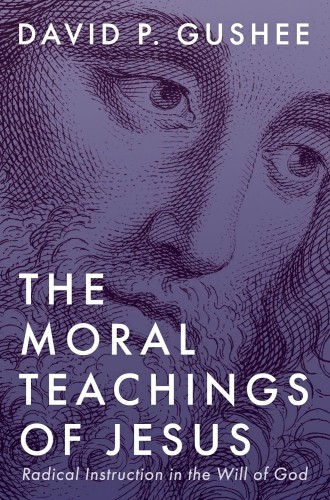
The Moral Teachings of Jesus
Radical Instruction in the Will of God
The Pew Research Center announced last year that nones—those who claim no religious affiliation—now constitute the largest single faith cohort in the United States. Around the same time, Russell Moore, editor in chief of Christianity Today, wrote about several evangelical pastors who, after quoting directly from Jesus’ Sermon on the Mount, were told by members of their congregations that “liberal talking points,” such as loving one’s enemies and turning the other cheek, are weak and don’t work anymore. These trends may well prove related. Throughout history, whenever Christians edit the good news according to their politics, it’s usually to the harm of some marginalized group and always to the discredit of the gospel message.
In his short but profound new book, ethicist David Gushee, a self-identified post-evangelical, writes especially for those who are exiting traditions in which they were raised, noting that “their churches no longer seem to have much to do with the Jesus whom they are supposed to be about.” In response, he returns to the gospel texts, interpreting for modern Christians what Jesus taught his followers about right action in the world. Though this text will serve quite well in an introductory course on Christian ethics, it is written in an accessible, nonacademic style—an admirable result, given the scholarship reflected in the content.
Readers familiar with Kingdom Ethics, the widely used textbook Gushee cowrote with the late Glen Stassen, will recognize a similarly robust, critically informed, and nuanced approach to scriptural exegesis here. Gushee supplements insights and conclusions found in Kingdom Ethics with a diverse selection of sources, including The Jewish Annotated New Testament, the Women’s Bible Commentary, recent works from Black and Latinx scholars, and two mid-20th-century classics, Dietrich Bonhoeffer’s Discipleship and Howard Thurman’s Jesus and the Disinherited. The result is a compelling vision of Christian community that rejects cultural accommodation and political power for a radical, Jesus-centered commitment to justice, peaceable witness, and humble service.