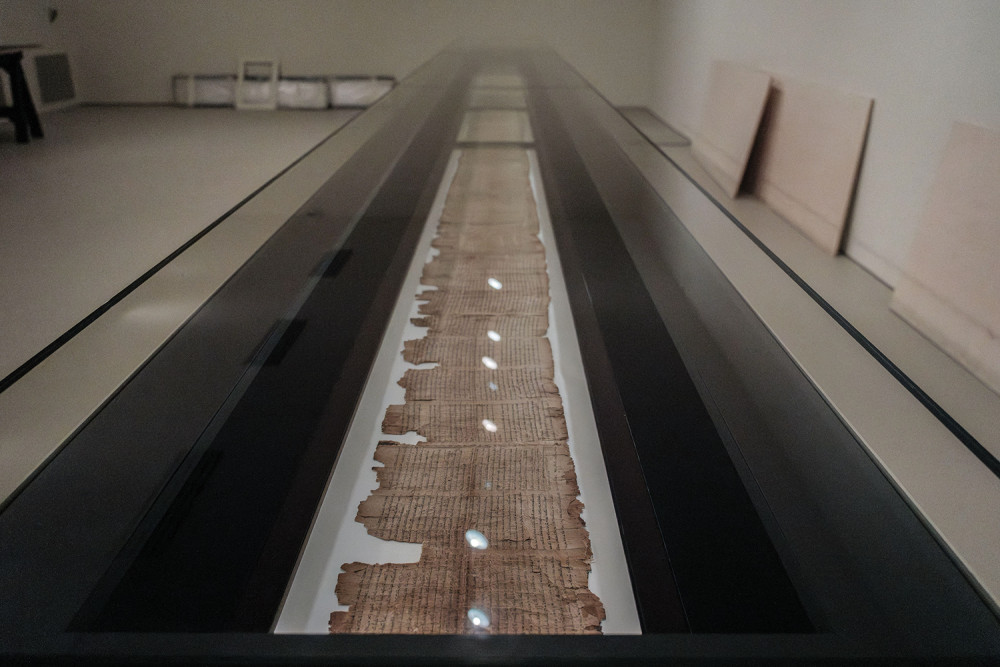
The Greeks have the Acropolis, the Romans their Colosseum, the Egyptians the pyramids, and the people of Israel their writings. These writings can easily be read today, 2,000 years after they were committed to parchment, since they are written in the same Hebrew that is still used by contemporary Hebrew speakers in Israel and elsewhere. Not stone, not brick, but the word of the living God as delivered through the prophets some 2,800 years ago.
This summer, the Israel Museum in Jerusalem exhibited one of the most important of these writings. The exhibit, titled A Voice from the Desert, presented the entire book of Isaiah in a single scroll. It was found alongside many incomplete parchments some 70 years ago in the arid desert lands adjacent to the Dead Sea in what was then part of Jordan. Between 1947 and 1954, the Dead Sea Scrolls were discovered in caves, where they had been stowed long ago, wrapped up and secreted away in cooking jars. Their inaccessibility, plus the desiccated desert climate, helped preserve them through the long centuries until a Bedouin shepherd boy stumbled upon seven of them in 1947 while looking for his lost goat.
Then another miracle took place. Not knowing the value of what he found, the young shepherd sold the fragments to a Bethlehem antiquities dealer, who brought four of them—including the Great Isaiah Scroll—to Athanasius Samuel, the metropolitan of the Syrian Jacobite monastery in Jerusalem’s Old City. Samuel realized that the parchments were written in ancient Hebrew and thought he could sell them for a small sum to collectors, so he purchased them.