“God, it’s so painful when something that’s so close is still so far out of reach.”
When Tom Petty sings that line in “American Girl”—the last needle drop in Paul Thomas Anderson’s Oscar-winning film One Battle After Another—my soul aches. Not often is such yearning captured so succinctly, so prayerfully. It’s the perfect exclamation point for a film that lingers in that unbearable distance between the hope for freedom and the weight of the present.
This year’s Oscar winners include multiple films that provide opportunities to voice our desire for freedom—and to lament the forces that keep it “so far out of reach.” In Kpop Demon Hunters, lead characters Rumi (Ejae) and Jinu (Andrew Choi) sing about breaking free from a past of suffocating shame that keeps them internally in chains. Sinners explores the blood-sucking oppression of racism in America and the power of music to provide real, embodied liberation. As Stack (Michael B. Jordan) reflects, “Just for a few hours, we was free.”
In Anderson’s best picture winner, the pursuit of freedom is explored through a cross-section of competing visions. Set in a slightly altered present-day America, the film gathers violent revolutionaries, humble community leaders, and White supremacist groups, allowing for a rich consideration of the political-cultural moment we find ourselves in and the struggle to live life freely and without fear. While the film is deeply political in its consideration of how people negotiate power and seek to effect change, it makes no argument for the “right” sort of revolutionary action. Rather, One Battle After Another is concerned with something more intimate: the shape of intergenerational relationships, especially between parents and children.
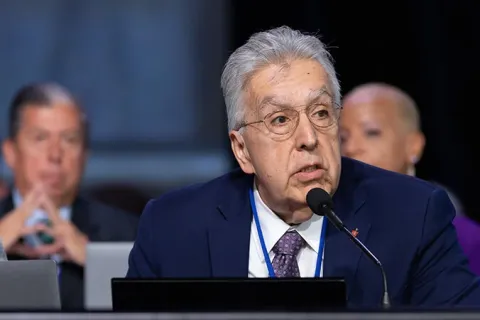
The importance of this theme came into focus Sunday night when Anderson said, in his first acceptance speech of the night, “I wrote this movie for my kids to say sorry for the housekeeping mess that we left in this world we’re handing off to them, but also with the encouragement that they will be the generation that hopefully brings us some common sense and decency.”
I heard in these remarks the same earnest hope and regard for children that I see in Anderson’s work. In Magnolia, the mistreatment of children is so pervasive that when young Stanley Spector (Jeremy Blackman) tells his exploitative father, “You need to be nicer to me,” it lands as a moment of piercing clarity implicating the audience. In There Will Be Blood, Daniel Plainview (Daniel Day-Lewis) abandons his adopted son, H.W. (Dillon Freasier and Russell Harvard), whom he has used for economic gain. In the end, H.W. rejects his violent father and chooses to live life with love rather than continue a legacy of exploitation and competition.
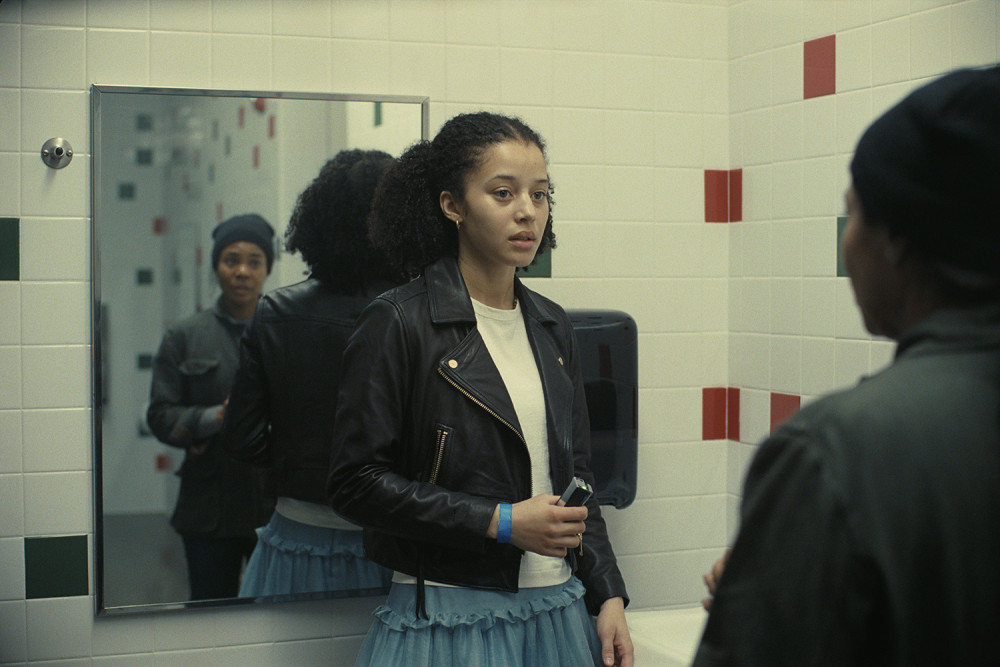
This theme comes clearly into focus again in One Battle After Another, where the young Charlene Calhoun (Chase Infiniti), living in hiding as Willa Ferguson, inherits a “housekeeping mess” from three different parental figures. Her mother, Perfidia Beverly Hills (Teyana Taylor), first abandons her in pursuit of a higher revolutionary purpose, then later runs away to preserve her own safety after being arrested. Her father, Pat Calhoun/Bob Ferguson (Leonardo DiCaprio), is emotionally and mentally absent, and his paranoia, alcoholism, and drug abuse cause Willa to function as his babysitter. Finally, her birth father, Col. Steven J. Lockjaw (best supporting actor winner Sean Penn), attempts to kill Willa in order to uphold the evil lie of his racial purity. A housekeeping mess indeed. Like the voice of Lamentations, Anderson’s young characters continually bear out the punishments for their ancestors’ sins.
But One Battle After Another isn’t simply a lament. The film’s propulsive pace is charged with hope, as is Willa/Charlene’s hinted pursuit of justice in the film’s final moments. This is the same hope Anderson voiced in his acceptance speech: The next generation can bring us some common sense and decency. The freedom that seems so close, as Tom Petty sings, will not be out of reach forever.
I love the regard Anderson’s film has for children. It recalls a Christlike perspective that embraces children as whole human beings, as images of the Divine, worthy of love, welcome, and imitation. It recalls the imagination of the book of Isaiah, in which it is not the powerful who lead but instead a little child (11:6). And it recalls the words of James Baldwin, echoed this week by fellow Oscar winner Joachim Trier: “The children are always ours, every single one of them, all over the globe; and I am beginning to suspect that whoever is incapable of recognizing this may be incapable of morality.” The experience of freedom requires that we take our relationship to the children around us seriously.
A word of caution and clarification here: I grew up with a lot of evangelical rhetoric that, on the surface, sounds similar to Anderson’s comment. We talked about a youthful generation on fire for God that would shake the earth and do hard things. This sort of rhetoric often served to form children as instruments of a particular mission through persuasion and control, rather than as humans with the freedom of imagination and agency. A power adjustment is needed here. As Lacy Finn Borgo writes to adults in Spiritual Conversations with Children, “If we want relationship rather than rule, we must shift the power.”
As I watched One Battle After Another, I saw how freedom can be experienced when relationship is chosen over rule and the exertion of power (Sensei Sergio St. Carlos, played by Benicio del Toro, is another wonderful character who embodies this). Those relationships—between parents and children or across generations—can be strengthened by adults who willingly repent, who shift the power by recognizing the messes we (and our ancestors) made and then joining in with the vision of the youth to embody something greater—something still messy but marked by love, dignity, and a freedom that no longer feels quite so far out of reach.