For the last decade, Donald Trump has been the central figure in US politics. It’s been a violent, chaotic time and, for those who oppose the MAGA agenda, a deeply frustrating one. It’s also been a notably lonely time for a subset of that group: conservatives who don’t buy what Trump is selling. They are in true political isolation, estranged from both parties in an intractable two-party system.
There is plenty for them to criticize. The Democratic Party purports to represent the working class but takes most of its cues from the donor class. It underestimates the liberal leanings of US cultural production and the ways this feeds conservative resentment. It is beholden largely to groups wired for narrow policy advocacy, not broad coalition building. As for the Republican Party, it has devolved into a toxic stew of nihilism, bigotry, personality cult, and general nastiness. Faced with a tricky governance question—should we prop up a president of demonstrable ignorance, shamelessness, and cruelty who governs mostly on feel?—most GOP responses have fallen somewhere between a shrug and a cheer.

Read our latest issue or browse back issues.
Yes, there is blame to go around. But are the parties equally to blame? These days, the idea is hard to even take seriously.
Some conservatives see this and have had the courage to say so. Elected officials have sacrificed their careers to join liberals in opposing MAGA. Commentators have been crystal clear that whatever their differences with the Democrats, the Republicans are the ones doing most of the harm. (“For the record,” neocon Bill Kristol wrote recently on social media, “The Resistance Libs Were Right.”) But others, while they too might offer unflinching censure of Trump and his GOP, continue to suggest that today’s liberalism is somehow just as bad.
Our political culture assigns a certain mystique to the notion of a renegade centrist, a freethinker who considers the two parties and bravely says, “Neither!” But lacking a party isn’t the same thing as being between two poles, much less equidistant from them. It doesn’t mean that the two parties pose comparable threats to everything you cherish. Not, that is, if what you cherish is defined by core principles of some kind—as opposed to empty positioning, a centrism that stands simply for being centrist.
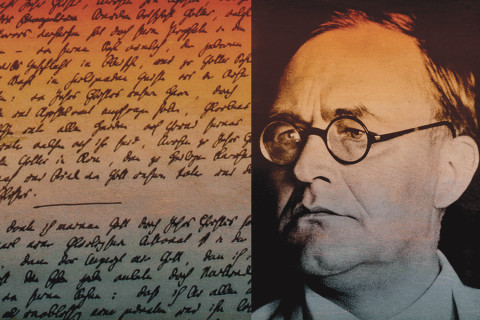
Wendell Berry was hard to pin down politically, but he was nobody’s centrist (see tribute, p. 50). He was pretty liberal here, more conservative there, not infrequently a bit radical. And his politics flowed directly from his deepest convictions. Among these was the importance of citizenship, by which he meant a thick sort of membership in a local place and community. Not just having a particular passport, but existing within strong, human-scale bonds of mutual accountability.
It’s a vision that underwrites the health and durability of a democracy. Neither major party has lived up to it. But which party is pushing us hard in the other direction, toward unabashed disregard for others, the outright denial of human dignity, and a public life that’s accountable to no one? Which party is actively dismantling our democracy?
Anti-Trump conservatives who feel caught between Scylla and Charybdis might recall that Homer’s two sea monsters aren’t equally dangerous. While Odysseus faces a gut-wrenching choice, it’s one with a correct answer: Choose certain sacrifice over likely destruction. American democracy isn’t dead yet, but Trump still has time. Stopping him will require difficult choices and genuine sacrifice.