The Lamb
A Novel
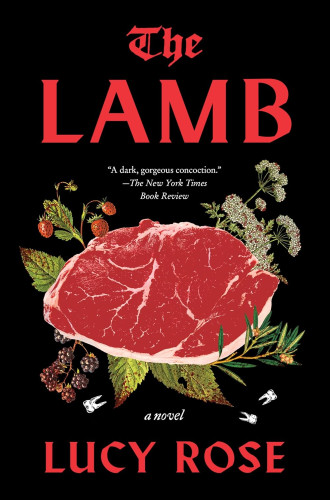
What if the witch in “Hansel and Gretel” had a daughter? In Lucy Rose’s sideways reimagining of the fairy tale, the child is as monstrous as the cannibalistic crone who lures people to her house in the woods to bake them into pies. Margot doesn’t know any better. Mama is just . . . mama.
The allegory might feel heavy-handed if the prose weren’t so beautiful and the writing so perceptive about how our reproductive functions can make women feel like animals. “Humanity, Margot, is made up,” says the strange and terrifying Eden, who escapes being made into supper to embark on a sapphic, cannibalistic love affair with Mama that creates an even more nightmarish existence for Margot. When Eden tells a dreadful yarn about eating her own, the cultural anxiety around recent losses of abortion rights is loud on the page. Motherhood is eat or be eaten: “That’s the thing with babies,” Eden says, “they’re destructive little things before they’re even out of you.”
Rose knows that even as we spin tales of infanticidal women lurking in the woods or worldwide cabals of sexual predators, “the most dreadful things happen out in the open while the sun shines bright up in the sky and no one can do a thing about it.” There’s no comfort in this book, only grim wisdom.
Nothing Tastes as Good
A Novel
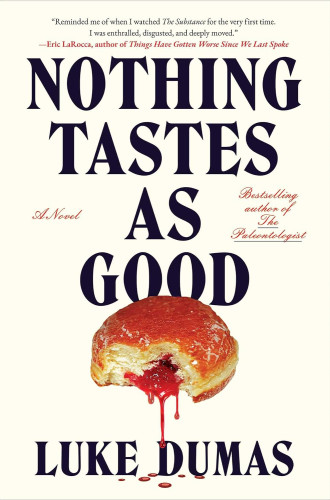
Luke Dumas has written a rollicking installment in the “good for them!” subgenre of horror, in which a bullied protagonist finally snaps and wreaks revenge on the abusers. Emmett Truesdale is kinda like if Carrie was a fat gay man who works at Target. His fatness keeps him from finding a more fulfilling job, he’s too big for the chairs, and his shirt keeps coming untucked. When he joins a clinical trial for a new miracle weight loss drug, the pounds melt away, and his “weight loss journey” attracts thousands of adoring followers on social media. He lands a dream job at a local museum and a hot boyfriend with a foot fetish.
But unlike the real-life GLP-1s that flood our markets and social feeds, this miracle drug enables Emmett to eat anything and everything he wants while still losing weight at an astonishing pace. Soon he realizes that only one thing will truly satisfy him: human flesh. Dumas skewers late capitalism, our cultural obsession with thinness, and the countless ways we dehumanize each other, and yet this book is a delight—relatable, gross, funny, mean, and genuinely moving.

All Flesh
A Novel
All Flesh can also be read as a literary fable about consumer culture. The teenage narrator was a 22-pound newborn who absorbed her twin sister in the womb. Her mother, exhausted by her daughter’s ravenous appetite, abandoned the family. Her father, a doting cookbook author, feeds her multicourse meals, and she grows ever larger, so large that she can’t, as that awful fat-shaming playground rhyme goes, fit through her bedroom door.
Ananda Devi is an extraordinary writer, and Jeffrey Zuckerman’s translation captures the hypnotic, horrifying beauty of her prose. She wants us to recognize ourselves in this cautionary tale about overconsumption and information overload. And yet there’s no effort to make the character relatable; it’s as if she isn’t a real person at all but a purely monstrous amalgam of disordered desires, expressed in some of the most fat-phobic language imaginable. “I am the psychical mirror of our time,” she says. “I'm immoderation made manifest, a terror and a death spiral.” Elsewhere she describes herself as “the love child of the unholy marriage between glut and sloth,” a bearer of “the grotesque spread of superfluity.” To use a character’s fatness as an object lesson in this way feels cruel, and the book is all the more horrifying for it.
The Starving Saints
A Novel
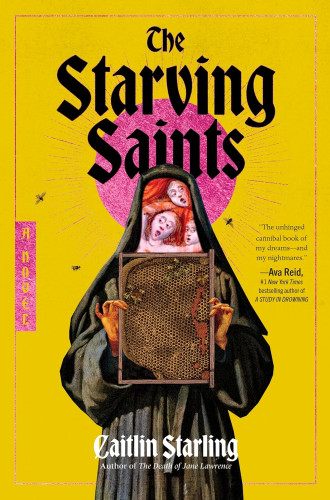
This historical fantasy novel is set in a medieval castle under siege as a thousand people are slowly and painfully starving to death. Among them are the battle-hardened lady knight Ser Voyne (who reminds me of the glorious Brienne of Tarth from Game of Thrones); the heretic ex-nun Phosyne, who magically cleanses the water in the cisterns; the former noblewoman Treila, who catches rats while nursing a secret dream of avenging her father’s death; and the prioress Jacynde, whose religious order keeps bees for the sacred honey used in ritual worship.
When their deities—the Constant Lady and her saints—suddenly materialize within the castle gates and conjure feasts like magic, it should feel like an answered prayer. Instead, it’s cosmic horror. Anyone who tastes the Constant Lady’s food falls under her spell. They don’t realize they’re feasting on the remains of their own dead. The cosmic dread, the crumbling of belief systems, and the challenge to survive extreme deprivations as a woman in a system designed to consume her make for a grueling read, even if the novel isn’t nearly as gory as you might expect for a book about an extended cannibalistic orgy. The novel thrums with the hum of bees and sapphic tension as the intrepid heroines struggle to survive and break the spell.
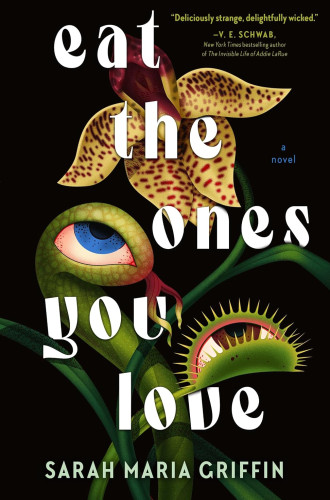
Eat the Ones You Love
A Novel
Instead of devouring each other, Sarah Maria Griffin’s characters are gobbled up by greenery—the book’s omniscient narrator, a sentient plant unfurling in the back rooms of a dying shopping center in Dublin. The decaying brutalist structure may be our age’s haunted house, but the only entities haunting this gothic ruin are late capitalism and a nasty orchid named Baby, who is in an abusive relationship with Neve, the gamine florist who keeps him alive and covers up his crimes.
When thirtysomething Shell responds to a help wanted sign in the florist’s window and becomes Neve’s assistant, Baby gets jealous of their blossoming romance and decides he’ll have to consume them both. Welcome to gothic, queer plant horror!
But the real heart of the book is the charming cast of Irish millennials working in the crumbling mall, a found family that meets for smokes in the abandoned food court after hours. Contrary to what Shell’s tonier friends think when they tell her how far they think she’s fallen, her colleagues all love their jobs and mourn the mall’s impending closure. That unexpected dose of tenderness is a lovely stem in this unsettling bouquet of class consciousness, desire, and decay.