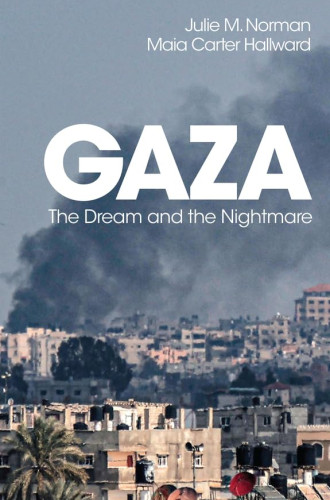
Gaza
The Dream and the Nightmare
Gaza: The Dream and the Nightmare
By Julie M. Norman and
Maia Carter Hallward
Polity
Hamas’s terrorist attacks of October 2023 and Israel’s subsequent destruction of Gaza didn’t happen in a vacuum. The land we now call Gaza has a long, complex history. While several new books tell this story, Julie Norman and Maia Carter Hallward’s is my favorite because it anchors its unbiased overarching narrative within the everyday experiences of dozens of Gazan civilians who were interviewed for the book.
Norman and Hallward write about events such as the Palestinians’ mass displacement in 1948, the transition from Egyptian control to Israeli military occupation in 1967, Hamas’s expansion of the tunnel economy after the 2006 blockade, and the multiple wars between Israel and Hamas between 2008 and 2019. But readers also get to envision the sweets Ibrahim helps his grandmother sell in the Jabalya refugee camp, the traveling cinema for children that Sami and his friend create, the beach that Ala’a loves, and the oranges that Nahil shares with beggars on the street. Gaza has long been colonized at the expense of its civilians, but this book’s commitment to creating space for Palestinians to tell their own stories helps readers see that Gazans are far from faceless pawns. They’re people who eat and sleep and work and love and pray and dream—even amid the current nightmare.

Read our latest issue or browse back issues.
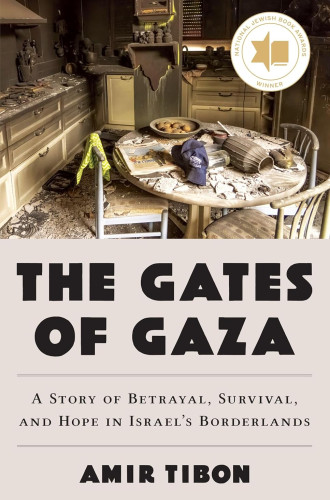
The Gates of Gaza
A Story of Betrayal, Survival, and Hope in Israel’s Borderlands
The Gates of Gaza: A Story of Betrayal, Survival, and Hope in Israel’s Borderlands
By Amir Tibon
Little, Brown
The current war began with a devastating terror attack in Israel’s borderlands. Haaretz journalist Amir Tibon tells the harrowing story of surviving this attack with his wife and two young daughters by hiding for ten hours in a safe room while the kibbutz around them, Nahal Oz, was destroyed by Hamas militants. The Gates of Gaza is hard to read, but Tibon is skilled at layering multiple stories to ease the tension. He alternates his family’s survival story with a narrative history of Nahal Oz since its creation in 1951 and a political history of Gaza since 1906.
Tibon has written about the Israel/Gaza relationship for decades, and he is clear-eyed as he analyzes the region’s politics, noting the effects of events such as Ehud Olmert’s withdrawal of settlements and troops in 2005, the Arab Spring, the 2011 release of 1,027 Palestinian prisoners in exchange for a single Israeli hostage, and Benjamin Netanyahu’s recent collaboration with Qatar to funnel money to Hamas. Tibon laments how often political leaders sacrifice the civilians of Gaza to achieve their own goals: “There are no leaders in this land these days—not on the Israeli side or on the Palestinian one. In their place are psychopaths and egomaniacs.”
Although Tibon writes from a place of trauma, his idealism is evident. He tells of a time in the 1990s when the kibbutz hosted a festival of peace at which Gazans and Israelis gathered to share food, kites, music, and arts and crafts. He sees the humanity of those around him, noting that one of the IDF soldiers on his rescue team is “still a boy.” He insists that the people of Gaza don’t deserve the devastation that his government has wrought. Against all probability, he still seems to have hope—or at least a dream—for Palestinian statehood and Israel’s security.
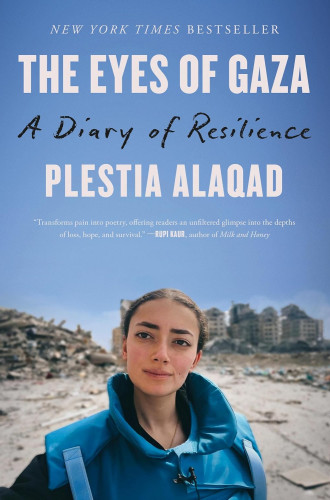
The Eyes of Gaza
A Diary of Resilience
The Eyes of Gaza: A Diary of Resilience
By Plestia Alaqad
Little, Brown
“My grandmother Fatma was two years old when she was displaced from Jaffa in 1948. She was seventy-seven years old when she was displaced from Gaza in 2023.” This story of multigenerational displacement frames Plestia Alaqad’s experience of the Israel-Gaza war, which broke out shortly after she earned her journalism degree. The Eyes of Gaza offers a vivid picture of civilian life in Gaza during the war’s early days—as seen through the eyes of this 21-year-old descendant of the Nakba and unapologetic advocate for Palestinians’ right to return to Israel.
As she travels around with two other journalists in October and November of 2023, Alaqad documents the horror of war in real time and quickly becomes TikTok famous for her video reports. She also keeps a written diary. Day 1: “I’m four Israeli Aggressions old, so I’m familiar with what the steps taken during an emergency situation look like.” Day 3: “I don’t want to die in my neighbour’s kitchen.” Day 4: “My whole life is now in a bag that will keep moving with me wherever I go.” Day 7: “I am stuck in a hospital, waiting for a collective death.” Day 12: “I spot a baby bottle in the church, under the rubble, full of milk. What happened to that baby?” Day 18: “My existence is an increasingly suffocating nightmare.” Day 41: “The hospitals in Gaza are full of amputee kids.” Month 7, after escaping to Australia: “All I feel is emptiness.”
Alaqad anticipates that her Western readers will flatten Gazans into victims with no agency or personhood, so she repeatedly highlights small moments of beauty that exemplify Palestinian culture. Day 3:
“Because our neighbours have rescued us, we eat lunch with them.” Day 6: “I believe the kindest people are the most powerful.” Day 9: “In Palestine, most families have incredibly close relationships with one another. Usually, parents build their sons’ houses above their own.” Day 16: We manage to get our hands on some cookies. COOKIES!” Day 39: “Two kids, probably four or five years old, throw caution to the wind and dance in the rain. It is a beautiful, reckless scene—full of freedom.”
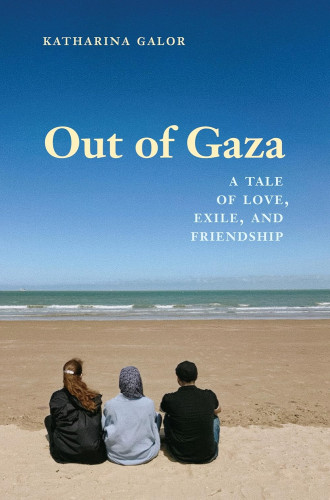
Out of Gaza
A Tale of Love, Exile, and Friendship
Out of Gaza: A Tale of Love, Exile, and Friendship
By Katharina Galor
Potomac
In this narrative biography with interwoven elements of memoir, Katharina Galor tells the story of her online Arabic teacher, a stateless young woman named Dima who moved from the Palestinian diaspora in Jordan to her ancestral Gaza and eventually to Belgium, where she was imprisoned while seeking asylum. Out of Gaza chronicles the decade from 2011 to 2021 as Dima attends university, gets a job teaching English, falls in love, gets married, and attempts to reunite with her husband, who has fled to Belgium after receiving death threats for resisting Hamas.
Galor, a Hungarian German-born Israeli anthropologist who teaches at Brown University, portrays her friend with sensitivity to the stark disparities between them. She quotes Dima profusely, ponders the ethics of telling someone else’s story, and admits that writing the book has helped her process her own inherited trauma as the daughter of an Auschwitz survivor. Both women recognize that “to relate the entangled lives of a Palestinian and Israeli beyond the battlefield is to take an active stand in the conflict, because doing so implies a partnership of consent, and expectation of trust and commitment on both sides.” While the storyline ends with Dima’s resettlement in 2021, Galor concludes by noting that the current Israel-Gaza war has made her friendship with Dima “stronger, more intense, more committed” and “the importance of bridging divides ever more urgent” for both of them.