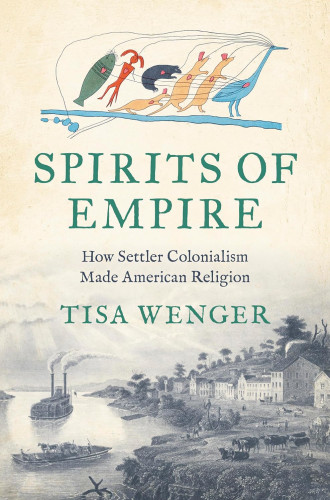
Spirits of Empire
How Settler Colonialism Made American Religion
In the 1880s, interior secretary Henry Moore Teller was a passionate supporter of Native American causes, and he struggled to defend their land rights. However, he strongly supported the draconian Code of Indian Offenses, which prohibited a sweeping range of practices including ceremonials, funeral rites, the work of “medicine men,” and “old heathenish dances.” Teller would have been appalled if anyone had accused him of religious persecution. Indians were welcome to pursue their religion as they wished, to worship the Great Spirit and pray to him, but the government was free to suppress those customs and rituals that manifested Native “savagery.” As everyone in Teller’s culture knew, religion was a well-defined category, and it was inward, cerebral, and ideally textual. Customs and rituals were something totally different. Native peoples, in contrast, had no doubt of the spiritual value of those rituals and dances, although they never felt the need to mark them off from other aspects of life or to identify them as religious.
Such a fundamental clash of worldviews stands at the heart of Tisa Wenger’s massively researched and brilliantly expounded Spirits of Empire. She focuses on the settler colonialist project by which new European migrants not only conquered the lands of North America but resettled them and re-created them in their own image, replacing not just the original peoples but also every aspect of their lands and culture, as well as their place names.
At every stage, religion was at the heart of this overwhelming imperial project. The settlers justified their conquests in religious terms, citing the imperative need to extend godly rule over the continent and to evangelize the Natives. Although the language of manifest destiny dates to the 1840s, the concept is far older. When settlers encountered Native resistance, that too fitted perfectly into the religious framework—as manifestations of satanic anger against the advances of the gospel. As those settlers knew, those Indians had no “religion.”