Books

Lonely conspiracists

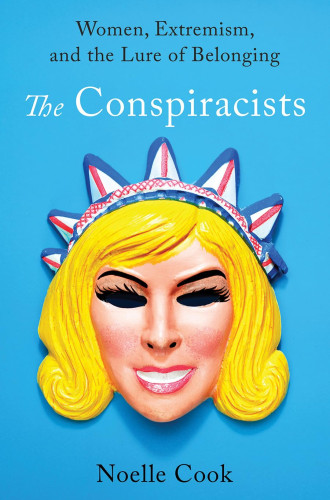
Noelle Cook opens a window into the lives of two insurrectionists, Yvonne and Tammy, as they navigate the world after January 6.

In her debut work, Noelle Cook offers a window into the world of something that many of us are fortunate enough not to have heard of but which we cannot afford to ignore: conspirituality. Scholars Charlotte Ward and David Voas coined this term to describe a worldview that Cook describes as “a blend of New Age religion, anti-vaccination advocacy, and anti-­government extremism, all mixed with various right-wing conspiracy theories and heaping spoonfuls of antisemitism and white supremacy.”

In an attempt to understand what drives so many middle-­aged White women into conspiracism and leads them to act on their beliefs in violent ways, Cook, an ethnographer, followed two January 6 insurrectionists from different parts of the country, Tammy and Yvonne, for four years. What she learned from them makes up the bulk of The Conspiracists.

What Cook discovered in her conversations with Tammy and Yvonne does not surprise me since I work with children’s services: Both women had incredibly traumatic childhoods that primed them for troubled relationships and social disconnection as adults. When the COVID pandemic devastated their social networks, which were already tenuous, they each fell headfirst into a growing culture of online conspiracies blended with New Age ideas.

This culture provided a community of sorts, or at least the illusion of one, but it also caused Tammy and Yvonne to become even more isolated from real-world social connections. Cook uses long-form narrative to describe how each woman fell into a pattern that will be familiar to those who have watched their loved ones get sucked into the rabbit hole of online conspiracy: Socially isolated individuals spend more and more time on screens and fall into online algorithms that promote more and more conspiratorial ideas. As these people share their newfound conspiracies with their loved ones, they find themselves shut out and more disconnected than ever. The anger that results fuels a backlash that heightens the conspiracist’s social isolation and further entrenches their conspiratorial beliefs.

At the heart of this vicious cycle is a lack of meaningful human connection. Research into childhood trauma consistently shows that excessive hardship does not build resiliency in children but rather destroys it. Children who grow up without strong connections to their families, community support, or safe spaces in which to develop resiliency become easy targets for the culture of conspiracy that took over Tammy and Yvonne’s lives and, on a macro level, led up to January 6.

Cook traces how the COVID shutdowns, combined with a growing loss of faith in organized religion, accelerated the women’s turns to conspiracism. Churches, synagogues, temples, and mosques have long functioned as places where people can gather with like-minded individuals and find social connections, food pantries, daycares, clothes closets, AA meetings, support groups, and outreach ministries that extend to prisons, hospitals, and nursing homes. What happens when people trade Sunday school and choir practice for a social media algorithm that has zero concern for human welfare?

After leaving her evangelical church early in the pandemic because her pastor chastised her for not wearing a mask, Yvonne turned to various New Age beliefs which align with aspects of Nazism in Germany and extreme racism in the United States. She explored Love Has Won, QAnon, and a starseed group. Cook shows how Yvonne’s conspirituality became increasingly time-consuming in its daily rituals and expensive because of the alternative health products and educational offerings that were required. Tammy fell into the conspiracism rabbit hole when she became lonely during the COVID shutdowns. Both women were glad to share their beliefs with Cook as they talked about their lives before, during, and after their arrests for participating in the January 6 insurrection.

Because of the extensive focus on two women, the book reads more as a documentary than as a monograph or research guide. Indeed, while Cook was writing the book, she was also creating a documentary film called The Conspiracists, directed by British filmmaker Liz Smith (and featuring Yvonne as the main character). The film and the book serve as companion pieces in the complex story Cook tells.

Yet there is another compelling reason why the book was written this way. In the final chapter, Cook shares that when Tammy experienced a life-­altering tragedy, she called Cook, having no real-life connections to anyone else who could support her. To provide Tammy with resources and support, Cook would have to commit the unpardonable sin of an ethnographer and move from being an impartial observer to an active participant. In other words, she would have to cross a line that would prevent her from being able to complete her master’s thesis.

Cook chose Tammy.

She sacrificed her master’s degree in order to help someone who had been disregarded and cast aside by much of our society over and over again, and whose conspiritual beliefs had led her to participate in an attempted coup on American democracy. In making this choice, Cook shows us something more valuable than an academic study would have provided: The way to navigate our current polarization and conspiracy-
tainted milieu is by rediscovering our connections to each other.

Keri Ladner

Keri Ladner is author of American Dominion: The Rise and Radicalization of a New Christendom (Bloomsbury).

All articles »