When We See You Again
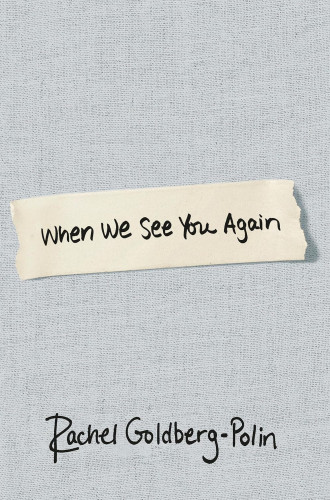
“Everyone has a crush on their oldest child,” one of my parents’ oldest friends said to me years before I was anywhere near having a child of my own. When We See You Again is a recounting of Rachel Goldberg-Polin’s crush on her oldest child, Hersh, the suffering she endured while he was held captive in the tunnels of Gaza for 332 days, and her family’s devastation at his killing by Hamas on August 31, 2024. Hersh was kidnapped from a music festival he was attending with his best friend, Aner Shapira. Shapira was killed that day throwing grenades back at the Hamas fighters, which saved the lives of Hersh and many others. The day that Shapira’s family finished the 11 months of reciting kaddish for him was the day of Hersh’s funeral; as Hersh’s father noted, one year wasn’t enough to say kaddish for the two of them.
But we should start where Goldberg-Polin does, with her love for her only son: his raspy voice, the way he always carried her bag when they walked together, that his “nostrils were shaped like small kidney beans” and his “eyes were cookies,” that he “had a quiet presence and way of being without taking up room or air.” On Friday nights when she would give him the blessing of parents to children (Num. 6:24–26), “he bent toward me and put his face downward to receive my words and love.” He wrote a text to his parents before the last Yom Kippur of his life that said he was sorry for anything wrong he’d done and thanked them “for being good supportive parents.” Readers are glad to know that mother and son expressed their feelings, and yet the depth of their love makes reading about the loss all the more painful.
This memoir shows in real time how one person copes with intense grief, an anguish so deep that Goldberg-Polin’s body morphs in its wake: She never gets another period after Hersh’s kidnapping, she gets shorter, and her hair visibly grays. But the book also witnesses the faith that enables her to get up and say the traditional Jewish morning prayers each day. Her favorite prayer is, “God has great faith in me.” She explains, “I always liked the idea that God believes in us. Right after that prayer, every single day, I would say out loud my mantra, ‘HOPE IS MANDATORY. Go.’ Then I would fling back the blanket, and thrust myself into another day of torture.”