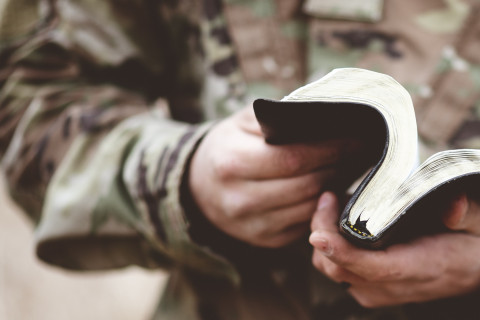

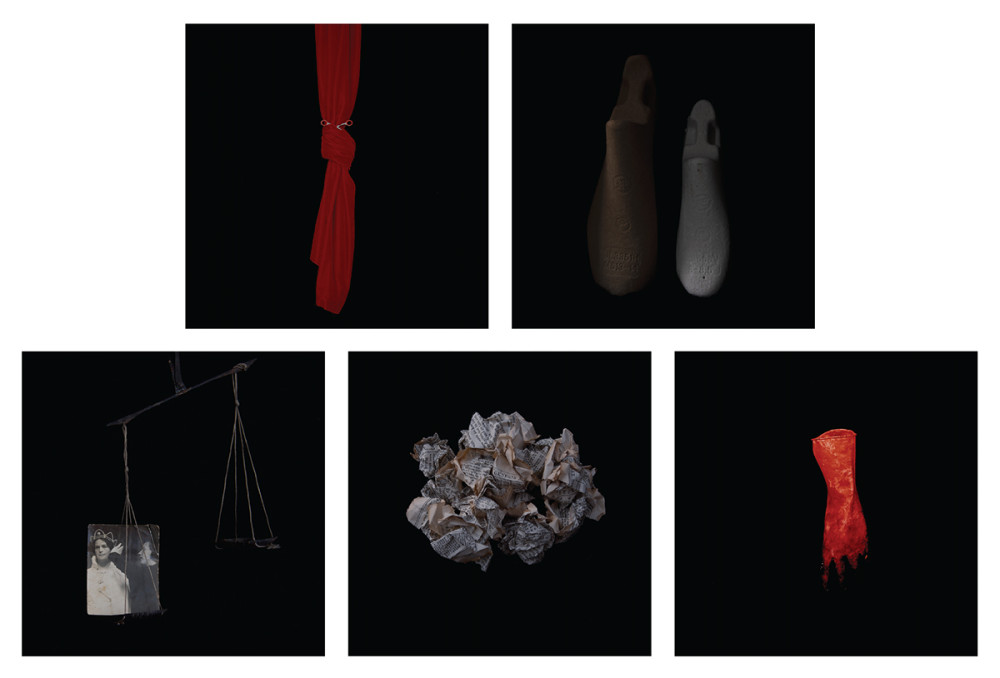
The camera is a liberatory device for Louise Fago-Ruskin. She turned to it in her 30s in order to document and analyze her life in a moment of profound rupture as she left a fundamentalist church movement where she had been a dedicated member for two decades. Through the camera lens, Fago-Ruskin began to summon dark, shrouded images laced with ambiguity and unease. On the one hand, these photographs possessed a hermetic quality, echoing the closed religious world that she had recently left behind. On the other hand, the dark, almost velvety spaces she depicted also became generative places, in which she could develop a new sense of self.
Over the years, as Fago-Ruskin probed this darkness intuitively, she found within it a potent symbolic lexicon, connected not to the high-control community she had left behind but to her family’s Eastern European Jewish roots. In this world, the material trappings of traditional Jewish trades predominate, from cobblers’ shoe molds to embroidery scissors and bolts of fabric. These objects speak to a life of quiet rituals and humble creativity, which Fago-Ruskin carefully braided into her own renascent sense of identity.
Yet after the Shoah, these objects also stand as markers of a lost world, suspended in limbo between memory and imagination. Fago-Ruskin is haunted above all, she notes in her artist’s statement, by stories of her Great-Uncle Moszek, who miraculously cheated assassination but then died in the Warsaw Ghetto. In this body of work, Fago-Ruskin enacts an impossible journey, seeking personal renewal in family history only to find that the past cannot offer any refuge.
From this personal vantage point, she seeks to create work that speaks to the experiences of other communities caught up in “the anguish of exile, displacement and exclusion,” as she puts it. “We are in the midst of global conflict, migration and displacement on a monumental scale.” In the face of such rupture, we must strive toward restoration—Til All Is Correct, in the words of Fago-Ruskin’s title—while knowing the scales may never be balanced.